BitcoinWorld Crypto Futures Liquidation: Sudden $343 Million Plunge Shocks Market The crypto market recently experienced a significant event: a massive crypto futures liquidation that sent ripples across major exchanges. In a single hour, an astounding $343 million worth of futures positions were liquidated. This sudden plunge naturally raises questions about market stability and the inherent risks of leveraged trading. However, this was not an isolated incident; the past 24 hours saw a staggering $852 million in total liquidations. What is Crypto Futures Liquidation and Why Does It Happen? To understand the impact of such an event, it is crucial to grasp what crypto futures liquidation truly means. Futures contracts allow traders to bet on the future price of an asset without owning it directly. Many traders use leverage, borrowing funds to amplify their potential returns. While leverage can increase profits, it also magnifies losses. When the market moves against a highly leveraged position, a trader’s margin – the capital they put up as collateral – may no longer be sufficient to cover potential losses. At this point, the exchange automatically closes the position to prevent further losses, a process known as liquidation. This protects both the trader (from going into deeper debt) and the exchange. The Immediate Impact: Unpacking the Recent Crypto Futures Liquidation The numbers from the recent crypto futures liquidation are stark. Major exchanges collectively witnessed $343 million in liquidations within just one hour. This rapid sell-off indicates a swift and significant price movement that caught many leveraged traders off guard. Moreover, the broader 24-hour figure of $852 million highlights a period of sustained market turbulence. Such large-scale liquidations often create a cascading effect. As positions are forcibly closed, it adds selling pressure to the market, which can drive prices down further. This, in turn, triggers more liquidations, creating a feedback loop that exacerbates market volatility. It’s a challenging scenario for traders, especially those with high-risk strategies. How Does Crypto Futures Liquidation Affect Traders? For individual traders, a crypto futures liquidation event can be devastating. Those holding long positions (betting on price increases) are liquidated when prices fall sharply, while those with short positions (betting on price decreases) face liquidation if prices suddenly surge. This results in the loss of their entire margin, and sometimes more, depending on the contract terms. Key challenges for traders: Capital Loss: Traders lose the capital committed to their liquidated positions. Emotional Stress: Rapid losses can lead to panic and irrational decisions. Market Uncertainty: Increased volatility makes it harder to predict future price movements. Therefore, understanding the mechanics of leverage and setting appropriate risk parameters are vital for anyone participating in futures trading. Navigating Volatility: Strategies After a Major Crypto Futures Liquidation Event While a massive crypto futures liquidation can be alarming, it also serves as a crucial reminder about prudent trading practices. Traders can implement several strategies to mitigate risks and navigate such volatile periods more effectively. Actionable insights for traders: Manage Leverage Wisely: Avoid excessively high leverage, which leaves little room for market fluctuations. Set Stop-Loss Orders: These automatically close a position if it reaches a predetermined loss level, limiting downside. Diversify Your Portfolio: Do not put all your capital into highly leveraged futures. Stay Informed: Keep abreast of market news, economic indicators, and technical analysis. Practice Risk Management: Only trade with capital you can afford to lose. These practices are essential for building resilience in your trading strategy, especially when faced with unpredictable market swings. The recent $343 million crypto futures liquidation is a stark reminder of the inherent risks and rapid shifts within the cryptocurrency market. While such events can cause significant short-term pain for many traders, they also highlight the importance of disciplined risk management and a thorough understanding of leveraged products. By learning from these occurrences, traders can refine their strategies and approach the volatile world of crypto futures with greater caution and informed decision-making. Frequently Asked Questions (FAQs) 1. What exactly is a crypto futures liquidation? A crypto futures liquidation occurs when an exchange automatically closes a trader’s leveraged position because their margin collateral falls below a required level. This happens when the market moves significantly against their bet, and they can no longer cover potential losses. 2. What typically causes massive crypto futures liquidation events? Large-scale liquidations are usually triggered by sudden and significant price movements in the underlying cryptocurrency. High market volatility, unexpected news, or large institutional trades can initiate a cascade where one liquidation triggers others, amplifying the price swing. 3. How can traders protect themselves from a crypto futures liquidation? Traders can protect themselves by using lower leverage, setting strict stop-loss orders to limit potential losses, and maintaining sufficient margin in their accounts. Diversifying one’s portfolio and avoiding over-exposure to a single asset or highly leveraged positions are also crucial. 4. Does a large crypto futures liquidation signal a market crash? Not necessarily. While a large liquidation event indicates significant volatility and often a sharp price correction, it doesn’t always lead to a sustained market crash. Markets can recover quickly, but it does highlight periods of heightened risk and uncertainty. 5. Were all crypto exchanges equally affected by this liquidation event? While the overall figures represent liquidations across major exchanges, the impact can vary. Different exchanges may have different liquidity pools and user bases, leading to slightly varied liquidation volumes and timing, though the overall market trend affects all. Did you find this article insightful? Share it with your friends and fellow crypto enthusiasts on social media to help them understand the dynamics of crypto futures liquidation and navigate the volatile market more effectively! To learn more about the latest crypto market trends, explore our article on key developments shaping Bitcoin price action. This post Crypto Futures Liquidation: Sudden $343 Million Plunge Shocks Market first appeared on BitcoinWorld and is written by Editorial TeamBitcoinWorld Crypto Futures Liquidation: Sudden $343 Million Plunge Shocks Market The crypto market recently experienced a significant event: a massive crypto futures liquidation that sent ripples across major exchanges. In a single hour, an astounding $343 million worth of futures positions were liquidated. This sudden plunge naturally raises questions about market stability and the inherent risks of leveraged trading. However, this was not an isolated incident; the past 24 hours saw a staggering $852 million in total liquidations. What is Crypto Futures Liquidation and Why Does It Happen? To understand the impact of such an event, it is crucial to grasp what crypto futures liquidation truly means. Futures contracts allow traders to bet on the future price of an asset without owning it directly. Many traders use leverage, borrowing funds to amplify their potential returns. While leverage can increase profits, it also magnifies losses. When the market moves against a highly leveraged position, a trader’s margin – the capital they put up as collateral – may no longer be sufficient to cover potential losses. At this point, the exchange automatically closes the position to prevent further losses, a process known as liquidation. This protects both the trader (from going into deeper debt) and the exchange. The Immediate Impact: Unpacking the Recent Crypto Futures Liquidation The numbers from the recent crypto futures liquidation are stark. Major exchanges collectively witnessed $343 million in liquidations within just one hour. This rapid sell-off indicates a swift and significant price movement that caught many leveraged traders off guard. Moreover, the broader 24-hour figure of $852 million highlights a period of sustained market turbulence. Such large-scale liquidations often create a cascading effect. As positions are forcibly closed, it adds selling pressure to the market, which can drive prices down further. This, in turn, triggers more liquidations, creating a feedback loop that exacerbates market volatility. It’s a challenging scenario for traders, especially those with high-risk strategies. How Does Crypto Futures Liquidation Affect Traders? For individual traders, a crypto futures liquidation event can be devastating. Those holding long positions (betting on price increases) are liquidated when prices fall sharply, while those with short positions (betting on price decreases) face liquidation if prices suddenly surge. This results in the loss of their entire margin, and sometimes more, depending on the contract terms. Key challenges for traders: Capital Loss: Traders lose the capital committed to their liquidated positions. Emotional Stress: Rapid losses can lead to panic and irrational decisions. Market Uncertainty: Increased volatility makes it harder to predict future price movements. Therefore, understanding the mechanics of leverage and setting appropriate risk parameters are vital for anyone participating in futures trading. Navigating Volatility: Strategies After a Major Crypto Futures Liquidation Event While a massive crypto futures liquidation can be alarming, it also serves as a crucial reminder about prudent trading practices. Traders can implement several strategies to mitigate risks and navigate such volatile periods more effectively. Actionable insights for traders: Manage Leverage Wisely: Avoid excessively high leverage, which leaves little room for market fluctuations. Set Stop-Loss Orders: These automatically close a position if it reaches a predetermined loss level, limiting downside. Diversify Your Portfolio: Do not put all your capital into highly leveraged futures. Stay Informed: Keep abreast of market news, economic indicators, and technical analysis. Practice Risk Management: Only trade with capital you can afford to lose. These practices are essential for building resilience in your trading strategy, especially when faced with unpredictable market swings. The recent $343 million crypto futures liquidation is a stark reminder of the inherent risks and rapid shifts within the cryptocurrency market. While such events can cause significant short-term pain for many traders, they also highlight the importance of disciplined risk management and a thorough understanding of leveraged products. By learning from these occurrences, traders can refine their strategies and approach the volatile world of crypto futures with greater caution and informed decision-making. Frequently Asked Questions (FAQs) 1. What exactly is a crypto futures liquidation? A crypto futures liquidation occurs when an exchange automatically closes a trader’s leveraged position because their margin collateral falls below a required level. This happens when the market moves significantly against their bet, and they can no longer cover potential losses. 2. What typically causes massive crypto futures liquidation events? Large-scale liquidations are usually triggered by sudden and significant price movements in the underlying cryptocurrency. High market volatility, unexpected news, or large institutional trades can initiate a cascade where one liquidation triggers others, amplifying the price swing. 3. How can traders protect themselves from a crypto futures liquidation? Traders can protect themselves by using lower leverage, setting strict stop-loss orders to limit potential losses, and maintaining sufficient margin in their accounts. Diversifying one’s portfolio and avoiding over-exposure to a single asset or highly leveraged positions are also crucial. 4. Does a large crypto futures liquidation signal a market crash? Not necessarily. While a large liquidation event indicates significant volatility and often a sharp price correction, it doesn’t always lead to a sustained market crash. Markets can recover quickly, but it does highlight periods of heightened risk and uncertainty. 5. Were all crypto exchanges equally affected by this liquidation event? While the overall figures represent liquidations across major exchanges, the impact can vary. Different exchanges may have different liquidity pools and user bases, leading to slightly varied liquidation volumes and timing, though the overall market trend affects all. Did you find this article insightful? Share it with your friends and fellow crypto enthusiasts on social media to help them understand the dynamics of crypto futures liquidation and navigate the volatile market more effectively! To learn more about the latest crypto market trends, explore our article on key developments shaping Bitcoin price action. This post Crypto Futures Liquidation: Sudden $343 Million Plunge Shocks Market first appeared on BitcoinWorld and is written by Editorial Team

Crypto Futures Liquidation: Sudden $343 Million Plunge Shocks Market

2025/08/26 05:00
Okuma süresi: 5 dk
Bu içerikle ilgili geri bildirim veya endişeleriniz için lütfen [email protected] üzerinden bizimle iletişime geçin.

BitcoinWorld

Crypto Futures Liquidation: Sudden $343 Million Plunge Shocks Market

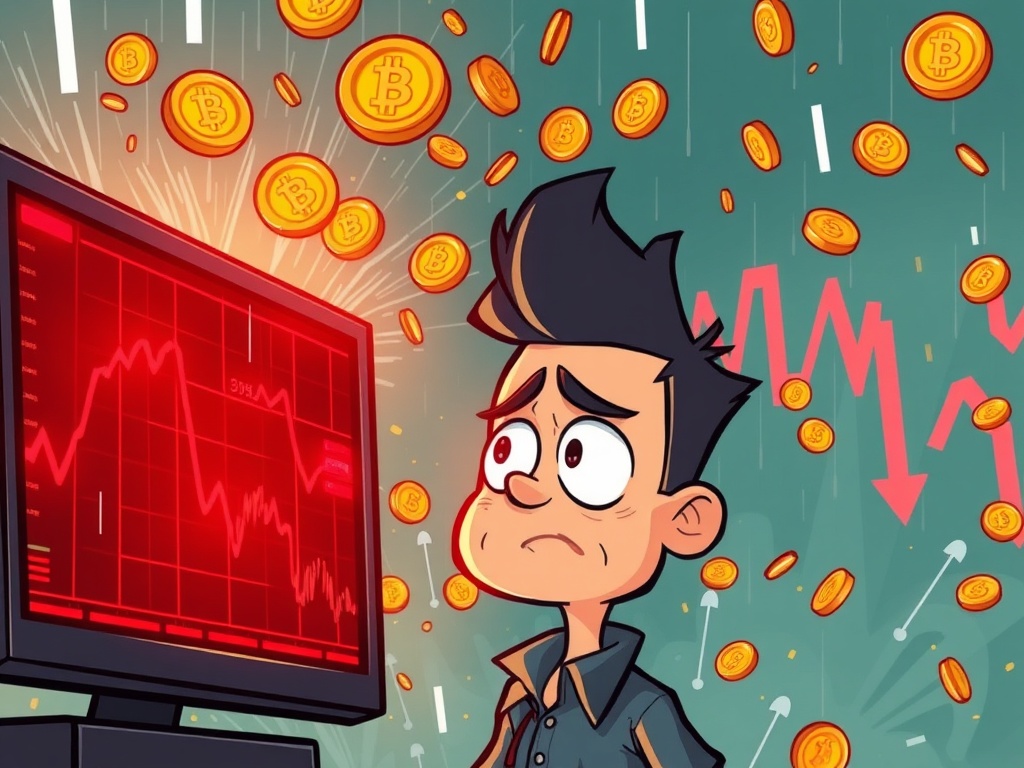
The crypto market recently experienced a significant event: a massive crypto futures liquidation that sent ripples across major exchanges. In a single hour, an astounding $343 million worth of futures positions were liquidated. This sudden plunge naturally raises questions about market stability and the inherent risks of leveraged trading. However, this was not an isolated incident; the past 24 hours saw a staggering $852 million in total liquidations.

What is Crypto Futures Liquidation and Why Does It Happen?

To understand the impact of such an event, it is crucial to grasp what crypto futures liquidation truly means. Futures contracts allow traders to bet on the future price of an asset without owning it directly. Many traders use leverage, borrowing funds to amplify their potential returns. While leverage can increase profits, it also magnifies losses.

When the market moves against a highly leveraged position, a trader’s margin – the capital they put up as collateral – may no longer be sufficient to cover potential losses. At this point, the exchange automatically closes the position to prevent further losses, a process known as liquidation. This protects both the trader (from going into deeper debt) and the exchange.

The Immediate Impact: Unpacking the Recent Crypto Futures Liquidation

The numbers from the recent crypto futures liquidation are stark. Major exchanges collectively witnessed $343 million in liquidations within just one hour. This rapid sell-off indicates a swift and significant price movement that caught many leveraged traders off guard. Moreover, the broader 24-hour figure of $852 million highlights a period of sustained market turbulence.

Such large-scale liquidations often create a cascading effect. As positions are forcibly closed, it adds selling pressure to the market, which can drive prices down further. This, in turn, triggers more liquidations, creating a feedback loop that exacerbates market volatility. It’s a challenging scenario for traders, especially those with high-risk strategies.

How Does Crypto Futures Liquidation Affect Traders?

For individual traders, a crypto futures liquidation event can be devastating. Those holding long positions (betting on price increases) are liquidated when prices fall sharply, while those with short positions (betting on price decreases) face liquidation if prices suddenly surge. This results in the loss of their entire margin, and sometimes more, depending on the contract terms.

Key challenges for traders:

  • Capital Loss: Traders lose the capital committed to their liquidated positions.
  • Emotional Stress: Rapid losses can lead to panic and irrational decisions.
  • Market Uncertainty: Increased volatility makes it harder to predict future price movements.

Therefore, understanding the mechanics of leverage and setting appropriate risk parameters are vital for anyone participating in futures trading.

Navigating Volatility: Strategies After a Major Crypto Futures Liquidation Event

While a massive crypto futures liquidation can be alarming, it also serves as a crucial reminder about prudent trading practices. Traders can implement several strategies to mitigate risks and navigate such volatile periods more effectively.

Actionable insights for traders:

  • Manage Leverage Wisely: Avoid excessively high leverage, which leaves little room for market fluctuations.
  • Set Stop-Loss Orders: These automatically close a position if it reaches a predetermined loss level, limiting downside.
  • Diversify Your Portfolio: Do not put all your capital into highly leveraged futures.
  • Stay Informed: Keep abreast of market news, economic indicators, and technical analysis.
  • Practice Risk Management: Only trade with capital you can afford to lose.

These practices are essential for building resilience in your trading strategy, especially when faced with unpredictable market swings.

The recent $343 million crypto futures liquidation is a stark reminder of the inherent risks and rapid shifts within the cryptocurrency market. While such events can cause significant short-term pain for many traders, they also highlight the importance of disciplined risk management and a thorough understanding of leveraged products. By learning from these occurrences, traders can refine their strategies and approach the volatile world of crypto futures with greater caution and informed decision-making.

Frequently Asked Questions (FAQs)

1. What exactly is a crypto futures liquidation?

A crypto futures liquidation occurs when an exchange automatically closes a trader’s leveraged position because their margin collateral falls below a required level. This happens when the market moves significantly against their bet, and they can no longer cover potential losses.

2. What typically causes massive crypto futures liquidation events?

Large-scale liquidations are usually triggered by sudden and significant price movements in the underlying cryptocurrency. High market volatility, unexpected news, or large institutional trades can initiate a cascade where one liquidation triggers others, amplifying the price swing.

3. How can traders protect themselves from a crypto futures liquidation?

Traders can protect themselves by using lower leverage, setting strict stop-loss orders to limit potential losses, and maintaining sufficient margin in their accounts. Diversifying one’s portfolio and avoiding over-exposure to a single asset or highly leveraged positions are also crucial.

4. Does a large crypto futures liquidation signal a market crash?

Not necessarily. While a large liquidation event indicates significant volatility and often a sharp price correction, it doesn’t always lead to a sustained market crash. Markets can recover quickly, but it does highlight periods of heightened risk and uncertainty.

5. Were all crypto exchanges equally affected by this liquidation event?

While the overall figures represent liquidations across major exchanges, the impact can vary. Different exchanges may have different liquidity pools and user bases, leading to slightly varied liquidation volumes and timing, though the overall market trend affects all.

Did you find this article insightful? Share it with your friends and fellow crypto enthusiasts on social media to help them understand the dynamics of crypto futures liquidation and navigate the volatile market more effectively!

To learn more about the latest crypto market trends, explore our article on key developments shaping Bitcoin price action.

This post Crypto Futures Liquidation: Sudden $343 Million Plunge Shocks Market first appeared on BitcoinWorld and is written by Editorial Team

Piyasa Fırsatı
LETSTOP Logosu
LETSTOP Fiyatı(STOP)
$0.01177
$0.01177$0.01177
+1.55%
USD
LETSTOP (STOP) Canlı Fiyat Grafiği
Sorumluluk Reddi: Bu sitede yeniden yayınlanan makaleler, halka açık platformlardan alınmıştır ve yalnızca bilgilendirme amaçlıdır. MEXC'nin görüşlerini yansıtmayabilir. Tüm hakları telif sahiplerine aittir. Herhangi bir içeriğin üçüncü taraf haklarını ihlal ettiğini düşünüyorsanız, kaldırılması için lütfen [email protected] ile iletişime geçin. MEXC, içeriğin doğruluğu, eksiksizliği veya güncelliği konusunda hiçbir garanti vermez ve sağlanan bilgilere dayalı olarak alınan herhangi bir eylemden sorumlu değildir. İçerik, finansal, yasal veya diğer profesyonel tavsiye niteliğinde değildir ve MEXC tarafından bir tavsiye veya onay olarak değerlendirilmemelidir.

Ayrıca Şunları da Beğenebilirsiniz

REX Shares’ Solana staking ETF sees $10M inflows, AUM tops $289M for first time

REX Shares’ Solana staking ETF sees $10M inflows, AUM tops $289M for first time

The post REX Shares’ Solana staking ETF sees $10M inflows, AUM tops $289M for first time appeared on BitcoinEthereumNews.com. Key Takeaways REX Shares’ Solana staking ETF saw $10 million in inflows in one day. Total inflows over the past three days amount to $23 million. REX Shares’ Solana staking ETF recorded $10 million in inflows yesterday, bringing total additions to $23 million over the past three days. The fund’s assets under management climbed above $289.0 million for the first time. The SSK ETF is the first U.S. exchange-traded fund focused on Solana staking. Source: https://cryptobriefing.com/rex-shares-solana-staking-etf-aum-289m/
Paylaş
BitcoinEthereumNews2025/09/18 02:34
A Netflix ‘KPop Demon Hunters’ Short Film Has Been Rated For Release

A Netflix ‘KPop Demon Hunters’ Short Film Has Been Rated For Release

The post A Netflix ‘KPop Demon Hunters’ Short Film Has Been Rated For Release appeared on BitcoinEthereumNews.com. KPop Demon Hunters Netflix Everyone has wondered what may be the next step for KPop Demon Hunters as an IP, given its record-breaking success on Netflix. Now, the answer may be something exactly no one predicted. According to a new filing with the MPA, something called Debut: A KPop Demon Hunters Story has been rated PG by the ratings body. It’s listed alongside some other films, and this is obviously something that has not been publicly announced. A short film could be well, very short, a few minutes, and likely no more than ten. Even that might be pushing it. Using say, Pixar shorts as a reference, most are between 4 and 8 minutes. The original movie is an hour and 36 minutes. The “Debut” in the title indicates some sort of flashback, perhaps to when HUNTR/X first arrived on the scene before they blew up. Previously, director Maggie Kang has commented about how there were more backstory components that were supposed to be in the film that were cut, but hinted those could be explored in a sequel. But perhaps some may be put into a short here. I very much doubt those scenes were fully produced and simply cut, but perhaps they were finished up for this short film here. When would Debut: KPop Demon Hunters theoretically arrive? I’m not sure the other films on the list are much help. Dead of Winter is out in less than two weeks. Mother Mary does not have a release date. Ne Zha 2 came out earlier this year. I’ve only seen news stories saying The Perfect Gamble was supposed to come out in Q1 2025, but I’ve seen no evidence that it actually has. KPop Demon Hunters Netflix It could be sooner rather than later as Netflix looks to capitalize…
Paylaş
BitcoinEthereumNews2025/09/18 02:23
Academic Publishing and Fairness: A Game-Theoretic Model of Peer-Review Bias

Academic Publishing and Fairness: A Game-Theoretic Model of Peer-Review Bias

Exploring how biases in the peer-review system impact researchers' choices, showing how principles of fairness relate to the production of scientific knowledge based on topic importance and hardness.
Paylaş
Hackernoon2025/09/17 23:15