The post Lagarde May Exit ECB Early as EU Moves Ahead With Digital Euro appeared on BitcoinEthereumNews.com. European Central Bank President Christine Lagarde isThe post Lagarde May Exit ECB Early as EU Moves Ahead With Digital Euro appeared on BitcoinEthereumNews.com. European Central Bank President Christine Lagarde is

Lagarde May Exit ECB Early as EU Moves Ahead With Digital Euro

2026/02/19 03:17
Okuma süresi: 3 dk

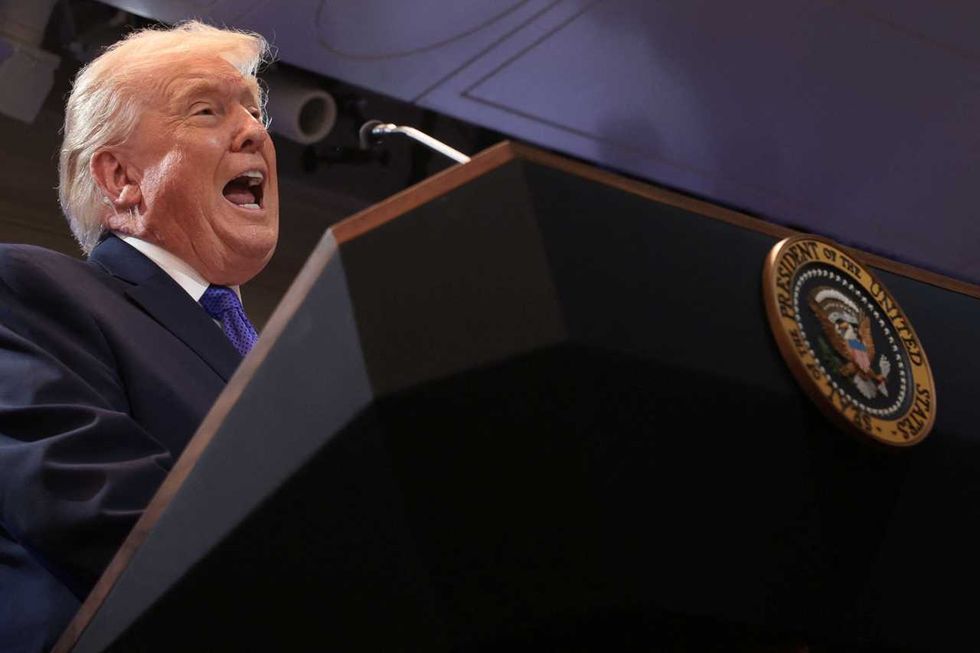
European Central Bank President Christine Lagarde is reportedly considering leaving office early, just as the digital euro enters a critical implementation phase, according to The Financial Times, which cited a source familiar with her plans.

Lagarde assumed the ECB presidency in November 2019, with her eight-year term set to expire in October 2027. However, she may step down before the French presidential election in April 2027 to allow President Emmanuel Macron and German Chancellor Friedrich Merz time to coordinate on a successor.

The ECB, however, has stated that Lagarde is “fully focused on her mission and has not made any decision regarding the end of her term.”

Digital Euro and Stablecoin Oversight

Lagarde’s possible departure comes at a pivotal moment for the ECB’s digital agenda. Under her leadership, the bank has advanced preparatory work on the digital euro and emphasized the importance of controlling risks from private digital currencies, including stablecoins, within the MiCA framework. ECB officials have warned that the rapidly growing stablecoin market could threaten financial stability and monetary policy in the eurozone, even with MiCA safeguards in place.

Lagarde has repeatedly criticized Bitcoin and other cryptocurrencies as “highly speculative,” highlighting concerns over illicit activity and money laundering. Changes in ECB leadership could influence the prioritization of the digital euro, stablecoin regulation, and crypto payment integration within the EU regulatory framework.

Succession and Crypto Policy

Potential ECB successors include former Bank of Spain Governor Pablo Hernández de Cos, Dutch central bank head Klaas Knot, ECB Executive Board member Isabel Schnabel, and Bundesbank President Joachim Nagel. All four take cautious stances on cryptocurrencies:

  • De Cos considers crypto assets a threat to financial stability requiring strict regulation.
  • Knot advocates for a global regulatory framework for digital currencies.
  • Nagel promotes the digital euro but calls Bitcoin a “digital tulip,” opposing its use as a reserve asset.
  • Schnabel describes Bitcoin as a “speculative asset without recognized fundamental value.”

The digital euro project still awaits EU legislative approval. The ECB has advanced technical preparations and is forming partnerships to ensure universal access. EU lawmakers expect the regulation to be adopted in 2026, paving the way for a 12-month pilot in the second half of 2027 and eventual issuance in 2029. The choice of Lagarde’s successor will play a crucial role in the digital euro’s final implementation and the bank’s approach to crypto oversight.

Strategic Implications

Long-term institutional analysis shows that projects like the digital euro often outlive two or three leaders, causing delays of 12–18 months each time priorities shift.

The longer legislative approval is delayed, the more entrenched dollar-denominated stablecoins become in the market, creating challenges for euro-based digital payments. Lagarde’s decision and her successor’s priorities will shape Europe’s digital currency landscape for years to come.

Source: https://coinpaper.com/14723/lagarde-may-exit-ecb-early-as-eu-moves-ahead-with-digital-euro
Piyasa Fırsatı
Lorenzo Protocol Logosu
Lorenzo Protocol Fiyatı(BANK)
$0.04004
$0.04004$0.04004
+0.93%
USD
Lorenzo Protocol (BANK) Canlı Fiyat Grafiği
Sorumluluk Reddi: Bu sitede yeniden yayınlanan makaleler, halka açık platformlardan alınmıştır ve yalnızca bilgilendirme amaçlıdır. MEXC'nin görüşlerini yansıtmayabilir. Tüm hakları telif sahiplerine aittir. Herhangi bir içeriğin üçüncü taraf haklarını ihlal ettiğini düşünüyorsanız, kaldırılması için lütfen [email protected] ile iletişime geçin. MEXC, içeriğin doğruluğu, eksiksizliği veya güncelliği konusunda hiçbir garanti vermez ve sağlanan bilgilere dayalı olarak alınan herhangi bir eylemden sorumlu değildir. İçerik, finansal, yasal veya diğer profesyonel tavsiye niteliğinde değildir ve MEXC tarafından bir tavsiye veya onay olarak değerlendirilmemelidir.

Ayrıca Şunları da Beğenebilirsiniz

Trump 'ashamed' of 'unpatriotic and disloyal' Supreme Court after tariff decision

Trump 'ashamed' of 'unpatriotic and disloyal' Supreme Court after tariff decision

President Donald Trump blasted members of the Supreme Court who ruled against his ability to impose tariffs in a 6-3 decision.During a White House news conference
Paylaş
Rawstory2026/02/21 03:13
The Evolution of Fashion Trends in 2026

The Evolution of Fashion Trends in 2026

Fashion is an ever-changing reflection of culture, technology, and personal identity. In 2026, fashion trends are influenced not only by designers and celebrities
Paylaş
Techbullion2026/02/21 03:34
Google's AP2 protocol has been released. Does encrypted AI still have a chance?

Google's AP2 protocol has been released. Does encrypted AI still have a chance?

Following the MCP and A2A protocols, the AI Agent market has seen another blockbuster arrival: the Agent Payments Protocol (AP2), developed by Google. This will clearly further enhance AI Agents' autonomous multi-tasking capabilities, but the unfortunate reality is that it has little to do with web3AI. Let's take a closer look: What problem does AP2 solve? Simply put, the MCP protocol is like a universal hook, enabling AI agents to connect to various external tools and data sources; A2A is a team collaboration communication protocol that allows multiple AI agents to cooperate with each other to complete complex tasks; AP2 completes the last piece of the puzzle - payment capability. In other words, MCP opens up connectivity, A2A promotes collaboration efficiency, and AP2 achieves value exchange. The arrival of AP2 truly injects "soul" into the autonomous collaboration and task execution of Multi-Agents. Imagine AI Agents connecting Qunar, Meituan, and Didi to complete the booking of flights, hotels, and car rentals, but then getting stuck at the point of "self-payment." What's the point of all that multitasking? So, remember this: AP2 is an extension of MCP+A2A, solving the last mile problem of AI Agent automated execution. What are the technical highlights of AP2? The core innovation of AP2 is the Mandates mechanism, which is divided into real-time authorization mode and delegated authorization mode. Real-time authorization is easy to understand. The AI Agent finds the product and shows it to you. The operation can only be performed after the user signs. Delegated authorization requires the user to set rules in advance, such as only buying the iPhone 17 when the price drops to 5,000. The AI Agent monitors the trigger conditions and executes automatically. The implementation logic is cryptographically signed using Verifiable Credentials (VCs). Users can set complex commission conditions, including price ranges, time limits, and payment method priorities, forming a tamper-proof digital contract. Once signed, the AI Agent executes according to the conditions, with VCs ensuring auditability and security at every step. Of particular note is the "A2A x402" extension, a technical component developed by Google specifically for crypto payments, developed in collaboration with Coinbase and the Ethereum Foundation. This extension enables AI Agents to seamlessly process stablecoins, ETH, and other blockchain assets, supporting native payment scenarios within the Web3 ecosystem. What kind of imagination space can AP2 bring? After analyzing the technical principles, do you think that's it? Yes, in fact, the AP2 is boring when it is disassembled alone. Its real charm lies in connecting and opening up the "MCP+A2A+AP2" technology stack, completely opening up the complete link of AI Agent's autonomous analysis+execution+payment. From now on, AI Agents can open up many application scenarios. For example, AI Agents for stock investment and financial management can help us monitor the market 24/7 and conduct independent transactions. Enterprise procurement AI Agents can automatically replenish and renew without human intervention. AP2's complementary payment capabilities will further expand the penetration of the Agent-to-Agent economy into more scenarios. Google obviously understands that after the technical framework is established, the ecological implementation must be relied upon, so it has brought in more than 60 partners to develop it, almost covering the entire payment and business ecosystem. Interestingly, it also involves major Crypto players such as Ethereum, Coinbase, MetaMask, and Sui. Combined with the current trend of currency and stock integration, the imagination space has been doubled. Is web3 AI really dead? Not entirely. Google's AP2 looks complete, but it only achieves technical compatibility with Crypto payments. It can only be regarded as an extension of the traditional authorization framework and belongs to the category of automated execution. There is a "paradigm" difference between it and the autonomous asset management pursued by pure Crypto native solutions. The Crypto-native solutions under exploration are taking the "decentralized custody + on-chain verification" route, including AI Agent autonomous asset management, AI Agent autonomous transactions (DeFAI), AI Agent digital identity and on-chain reputation system (ERC-8004...), AI Agent on-chain governance DAO framework, AI Agent NPC and digital avatars, and many other interesting and fun directions. Ultimately, once users get used to AI Agent payments in traditional fields, their acceptance of AI Agents autonomously owning digital assets will also increase. And for those scenarios that AP2 cannot reach, such as anonymous transactions, censorship-resistant payments, and decentralized asset management, there will always be a time for crypto-native solutions to show their strength? The two are more likely to be complementary rather than competitive, but to be honest, the key technological advancements behind AI Agents currently all come from web2AI, and web3AI still needs to keep up the good work!
Paylaş
PANews2025/09/18 07:00