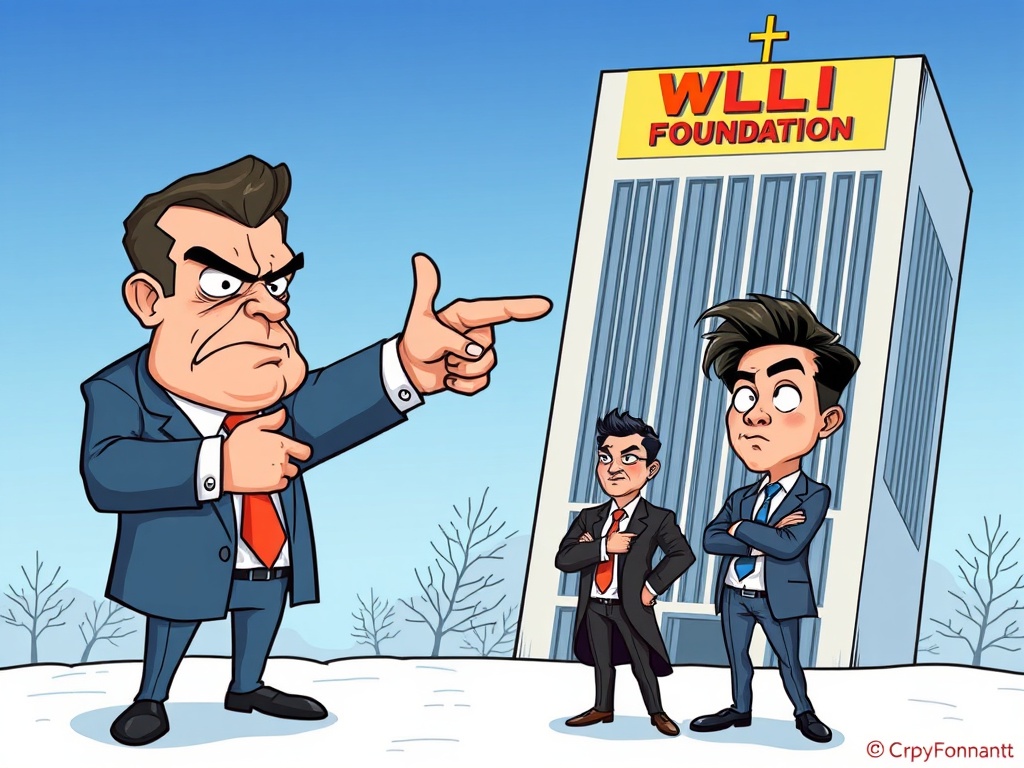
BitcoinWorld WLFI Foundation’s Urgent Challenge: CryptoQuant CEO Defends Justin Sun Amidst Asset Freeze The cryptocurrency world is buzzing with an urgent and significant controversy involving Tron founder Justin Sun and the WLFI Foundation. This dispute highlights crucial questions about asset control and the responsibilities of decentralized autonomous organizations (DAOs) or foundations. When CryptoQuant CEO Ju Ki-young publicly sided with Justin Sun, it sent ripples across the industry, challenging the WLFI Foundation‘s recent actions. What’s the Dispute with the WLFI Foundation All About? The core of the issue revolves around the WLFI Foundation‘s decision to blacklist Justin Sun’s address. Consequently, his WLFI tokens were frozen. This move has drawn sharp criticism from prominent figures like Ju Ki-young, the CEO of CryptoQuant. Ju Ki-young voiced his strong disapproval on X, arguing that Sun did not sell the tokens in question. Moreover, he emphasized that even if Sun had chosen to sell them, it would not have been problematic. Why? Because the tokens were explicitly unlocked, granting Sun full discretion over their use. Blacklisting: The WLFI Foundation blacklisted Justin Sun’s address. Asset Freeze: His WLFI tokens were subsequently frozen. Ju Ki-young’s Stance: He argues Sun had every right to the tokens, whether sold or not, due to their unlocked status. Why is the WLFI Foundation’s Action So Controversial? The controversy stems from the fundamental principles of crypto: ownership and control. When a foundation, even one associated with a decentralized project, takes action to freeze a user’s assets, it raises serious alarms. Ju Ki-young described this as “seizing a user’s assets,” a powerful phrase that resonates with many in the crypto community. This situation directly challenges the idea of immutable ownership often touted in blockchain technology. If tokens can be frozen or blacklisted at will, what does that mean for the security and autonomy of users? It sets a worrying precedent for how projects might handle disagreements or perceived misconduct in the future. Many believe that such actions undermine the trust users place in a project and its governing entities. It shifts power away from individual holders and towards a centralized decision-making body, even if that body is a foundation. What Does This Mean for User Trust and the WLFI Foundation’s Future? The implications of the WLFI Foundation‘s actions extend beyond Justin Sun. This incident could significantly impact user trust across the broader crypto ecosystem. Users are increasingly concerned about the security of their digital assets and the potential for unilateral actions by project teams or foundations. For the WLFI Foundation itself, this event presents a crucial moment for reflection. Transparency and clear, pre-defined policies are paramount in the crypto space. Without these, any foundation risks alienating its community and damaging its reputation. Accountability for such decisions is vital to maintain credibility. Key Challenges for the WLFI Foundation: Restoring Trust: How will the foundation regain the confidence of its users and the wider crypto community? Policy Clarity: Are there clear, publicly available policies outlining the circumstances under which assets can be frozen? Decentralization Ethos: Does such a centralized action align with the decentralized principles often promoted by crypto projects? Navigating the Future: Lessons for Decentralized Projects and the WLFI Foundation This incident serves as a powerful reminder for all decentralized projects and their associated foundations. The line between protecting a project and infringing on user rights can be thin. Establishing robust governance models that prioritize transparency, user autonomy, and due process is not just good practice; it’s essential for long-term sustainability. Moving forward, the WLFI Foundation faces the task of addressing these concerns head-on. A clear explanation of their reasoning, coupled with a commitment to review and clarify their policies, could help mitigate the damage. The crypto community watches closely, hoping for resolutions that uphold the principles of digital asset ownership. Ultimately, the strength of any crypto project lies in its community’s trust. Actions that appear to arbitrarily seize assets can erode that trust rapidly. Therefore, open dialogue and a commitment to fair practices are the bedrock upon which the future of decentralized finance must be built. In conclusion, the ongoing dispute between CryptoQuant CEO Ju Ki-young, Justin Sun, and the WLFI Foundation underscores a critical debate within the crypto world. It’s a stark reminder that while innovation drives the industry forward, fundamental principles of ownership, transparency, and accountability must remain at its core. The resolution of this issue will undoubtedly set a precedent for how similar challenges are addressed in the future, making it a pivotal moment for digital asset governance. Frequently Asked Questions (FAQs) Q1: Who is Ju Ki-young and what is his role in this dispute? A1: Ju Ki-young is the CEO of CryptoQuant, a prominent on-chain analytics firm. He publicly sided with Justin Sun, criticizing the WLFI Foundation‘s decision to freeze Sun’s tokens and arguing for the foundation’s accountability. Q2: Why does Ju Ki-young believe Justin Sun’s tokens should not have been frozen? A2: Ju Ki-young asserts that Justin Sun did not sell the tokens. More importantly, he highlighted that even if Sun had sold them, it would not have been an issue because the tokens were “unlocked,” meaning Sun had full legitimate control over them. Q3: What are the main concerns raised by the WLFI Foundation’s action? A3: The primary concerns include the perceived “seizing of user assets,” which challenges fundamental crypto principles of ownership and decentralization. It raises questions about user autonomy, trust in foundations, and the potential for unilateral actions in the crypto space. Q4: How might this incident impact the broader cryptocurrency industry? A4: This dispute could set a precedent for how other decentralized projects and foundations manage user assets and disputes. It emphasizes the critical need for transparent policies, robust governance, and accountability to maintain user trust and uphold the ethos of decentralized finance. Q5: What is the WLFI Foundation expected to do next? A5: While specific actions are yet to be seen, the WLFI Foundation is under pressure to provide clear explanations for its decision, review its policies, and demonstrate a commitment to transparency and fair practices to mitigate reputational damage and restore community trust. What are your thoughts on this unfolding controversy? Share this article with your network and join the conversation about asset ownership, decentralization, and accountability in the crypto world. Your insights help shape the future of our digital financial landscape! To learn more about the latest crypto market trends, explore our article on key developments shaping the crypto market’s institutional adoption. This post WLFI Foundation’s Urgent Challenge: CryptoQuant CEO Defends Justin Sun Amidst Asset Freeze first appeared on BitcoinWorld and is written by Editorial TeamBitcoinWorld WLFI Foundation’s Urgent Challenge: CryptoQuant CEO Defends Justin Sun Amidst Asset Freeze The cryptocurrency world is buzzing with an urgent and significant controversy involving Tron founder Justin Sun and the WLFI Foundation. This dispute highlights crucial questions about asset control and the responsibilities of decentralized autonomous organizations (DAOs) or foundations. When CryptoQuant CEO Ju Ki-young publicly sided with Justin Sun, it sent ripples across the industry, challenging the WLFI Foundation‘s recent actions. What’s the Dispute with the WLFI Foundation All About? The core of the issue revolves around the WLFI Foundation‘s decision to blacklist Justin Sun’s address. Consequently, his WLFI tokens were frozen. This move has drawn sharp criticism from prominent figures like Ju Ki-young, the CEO of CryptoQuant. Ju Ki-young voiced his strong disapproval on X, arguing that Sun did not sell the tokens in question. Moreover, he emphasized that even if Sun had chosen to sell them, it would not have been problematic. Why? Because the tokens were explicitly unlocked, granting Sun full discretion over their use. Blacklisting: The WLFI Foundation blacklisted Justin Sun’s address. Asset Freeze: His WLFI tokens were subsequently frozen. Ju Ki-young’s Stance: He argues Sun had every right to the tokens, whether sold or not, due to their unlocked status. Why is the WLFI Foundation’s Action So Controversial? The controversy stems from the fundamental principles of crypto: ownership and control. When a foundation, even one associated with a decentralized project, takes action to freeze a user’s assets, it raises serious alarms. Ju Ki-young described this as “seizing a user’s assets,” a powerful phrase that resonates with many in the crypto community. This situation directly challenges the idea of immutable ownership often touted in blockchain technology. If tokens can be frozen or blacklisted at will, what does that mean for the security and autonomy of users? It sets a worrying precedent for how projects might handle disagreements or perceived misconduct in the future. Many believe that such actions undermine the trust users place in a project and its governing entities. It shifts power away from individual holders and towards a centralized decision-making body, even if that body is a foundation. What Does This Mean for User Trust and the WLFI Foundation’s Future? The implications of the WLFI Foundation‘s actions extend beyond Justin Sun. This incident could significantly impact user trust across the broader crypto ecosystem. Users are increasingly concerned about the security of their digital assets and the potential for unilateral actions by project teams or foundations. For the WLFI Foundation itself, this event presents a crucial moment for reflection. Transparency and clear, pre-defined policies are paramount in the crypto space. Without these, any foundation risks alienating its community and damaging its reputation. Accountability for such decisions is vital to maintain credibility. Key Challenges for the WLFI Foundation: Restoring Trust: How will the foundation regain the confidence of its users and the wider crypto community? Policy Clarity: Are there clear, publicly available policies outlining the circumstances under which assets can be frozen? Decentralization Ethos: Does such a centralized action align with the decentralized principles often promoted by crypto projects? Navigating the Future: Lessons for Decentralized Projects and the WLFI Foundation This incident serves as a powerful reminder for all decentralized projects and their associated foundations. The line between protecting a project and infringing on user rights can be thin. Establishing robust governance models that prioritize transparency, user autonomy, and due process is not just good practice; it’s essential for long-term sustainability. Moving forward, the WLFI Foundation faces the task of addressing these concerns head-on. A clear explanation of their reasoning, coupled with a commitment to review and clarify their policies, could help mitigate the damage. The crypto community watches closely, hoping for resolutions that uphold the principles of digital asset ownership. Ultimately, the strength of any crypto project lies in its community’s trust. Actions that appear to arbitrarily seize assets can erode that trust rapidly. Therefore, open dialogue and a commitment to fair practices are the bedrock upon which the future of decentralized finance must be built. In conclusion, the ongoing dispute between CryptoQuant CEO Ju Ki-young, Justin Sun, and the WLFI Foundation underscores a critical debate within the crypto world. It’s a stark reminder that while innovation drives the industry forward, fundamental principles of ownership, transparency, and accountability must remain at its core. The resolution of this issue will undoubtedly set a precedent for how similar challenges are addressed in the future, making it a pivotal moment for digital asset governance. Frequently Asked Questions (FAQs) Q1: Who is Ju Ki-young and what is his role in this dispute? A1: Ju Ki-young is the CEO of CryptoQuant, a prominent on-chain analytics firm. He publicly sided with Justin Sun, criticizing the WLFI Foundation‘s decision to freeze Sun’s tokens and arguing for the foundation’s accountability. Q2: Why does Ju Ki-young believe Justin Sun’s tokens should not have been frozen? A2: Ju Ki-young asserts that Justin Sun did not sell the tokens. More importantly, he highlighted that even if Sun had sold them, it would not have been an issue because the tokens were “unlocked,” meaning Sun had full legitimate control over them. Q3: What are the main concerns raised by the WLFI Foundation’s action? A3: The primary concerns include the perceived “seizing of user assets,” which challenges fundamental crypto principles of ownership and decentralization. It raises questions about user autonomy, trust in foundations, and the potential for unilateral actions in the crypto space. Q4: How might this incident impact the broader cryptocurrency industry? A4: This dispute could set a precedent for how other decentralized projects and foundations manage user assets and disputes. It emphasizes the critical need for transparent policies, robust governance, and accountability to maintain user trust and uphold the ethos of decentralized finance. Q5: What is the WLFI Foundation expected to do next? A5: While specific actions are yet to be seen, the WLFI Foundation is under pressure to provide clear explanations for its decision, review its policies, and demonstrate a commitment to transparency and fair practices to mitigate reputational damage and restore community trust. What are your thoughts on this unfolding controversy? Share this article with your network and join the conversation about asset ownership, decentralization, and accountability in the crypto world. Your insights help shape the future of our digital financial landscape! To learn more about the latest crypto market trends, explore our article on key developments shaping the crypto market’s institutional adoption. This post WLFI Foundation’s Urgent Challenge: CryptoQuant CEO Defends Justin Sun Amidst Asset Freeze first appeared on BitcoinWorld and is written by Editorial Team

WLFI Foundation’s Urgent Challenge: CryptoQuant CEO Defends Justin Sun Amidst Asset Freeze

2025/09/06 19:25
Okuma süresi: 6 dk
Bu içerikle ilgili geri bildirim veya endişeleriniz için lütfen [email protected] üzerinden bizimle iletişime geçin.

BitcoinWorld

WLFI Foundation’s Urgent Challenge: CryptoQuant CEO Defends Justin Sun Amidst Asset Freeze

The cryptocurrency world is buzzing with an urgent and significant controversy involving Tron founder Justin Sun and the WLFI Foundation. This dispute highlights crucial questions about asset control and the responsibilities of decentralized autonomous organizations (DAOs) or foundations. When CryptoQuant CEO Ju Ki-young publicly sided with Justin Sun, it sent ripples across the industry, challenging the WLFI Foundation‘s recent actions.

What’s the Dispute with the WLFI Foundation All About?

The core of the issue revolves around the WLFI Foundation‘s decision to blacklist Justin Sun’s address. Consequently, his WLFI tokens were frozen. This move has drawn sharp criticism from prominent figures like Ju Ki-young, the CEO of CryptoQuant.

Ju Ki-young voiced his strong disapproval on X, arguing that Sun did not sell the tokens in question. Moreover, he emphasized that even if Sun had chosen to sell them, it would not have been problematic. Why? Because the tokens were explicitly unlocked, granting Sun full discretion over their use.

  • Blacklisting: The WLFI Foundation blacklisted Justin Sun’s address.
  • Asset Freeze: His WLFI tokens were subsequently frozen.
  • Ju Ki-young’s Stance: He argues Sun had every right to the tokens, whether sold or not, due to their unlocked status.

Why is the WLFI Foundation’s Action So Controversial?

The controversy stems from the fundamental principles of crypto: ownership and control. When a foundation, even one associated with a decentralized project, takes action to freeze a user’s assets, it raises serious alarms. Ju Ki-young described this as “seizing a user’s assets,” a powerful phrase that resonates with many in the crypto community.

This situation directly challenges the idea of immutable ownership often touted in blockchain technology. If tokens can be frozen or blacklisted at will, what does that mean for the security and autonomy of users? It sets a worrying precedent for how projects might handle disagreements or perceived misconduct in the future.

Many believe that such actions undermine the trust users place in a project and its governing entities. It shifts power away from individual holders and towards a centralized decision-making body, even if that body is a foundation.

What Does This Mean for User Trust and the WLFI Foundation’s Future?

The implications of the WLFI Foundation‘s actions extend beyond Justin Sun. This incident could significantly impact user trust across the broader crypto ecosystem. Users are increasingly concerned about the security of their digital assets and the potential for unilateral actions by project teams or foundations.

For the WLFI Foundation itself, this event presents a crucial moment for reflection. Transparency and clear, pre-defined policies are paramount in the crypto space. Without these, any foundation risks alienating its community and damaging its reputation. Accountability for such decisions is vital to maintain credibility.

Key Challenges for the WLFI Foundation:

  • Restoring Trust: How will the foundation regain the confidence of its users and the wider crypto community?
  • Policy Clarity: Are there clear, publicly available policies outlining the circumstances under which assets can be frozen?
  • Decentralization Ethos: Does such a centralized action align with the decentralized principles often promoted by crypto projects?

Navigating the Future: Lessons for Decentralized Projects and the WLFI Foundation

This incident serves as a powerful reminder for all decentralized projects and their associated foundations. The line between protecting a project and infringing on user rights can be thin. Establishing robust governance models that prioritize transparency, user autonomy, and due process is not just good practice; it’s essential for long-term sustainability.

Moving forward, the WLFI Foundation faces the task of addressing these concerns head-on. A clear explanation of their reasoning, coupled with a commitment to review and clarify their policies, could help mitigate the damage. The crypto community watches closely, hoping for resolutions that uphold the principles of digital asset ownership.

Ultimately, the strength of any crypto project lies in its community’s trust. Actions that appear to arbitrarily seize assets can erode that trust rapidly. Therefore, open dialogue and a commitment to fair practices are the bedrock upon which the future of decentralized finance must be built.

In conclusion, the ongoing dispute between CryptoQuant CEO Ju Ki-young, Justin Sun, and the WLFI Foundation underscores a critical debate within the crypto world. It’s a stark reminder that while innovation drives the industry forward, fundamental principles of ownership, transparency, and accountability must remain at its core. The resolution of this issue will undoubtedly set a precedent for how similar challenges are addressed in the future, making it a pivotal moment for digital asset governance.

Frequently Asked Questions (FAQs)

Q1: Who is Ju Ki-young and what is his role in this dispute?
A1: Ju Ki-young is the CEO of CryptoQuant, a prominent on-chain analytics firm. He publicly sided with Justin Sun, criticizing the WLFI Foundation‘s decision to freeze Sun’s tokens and arguing for the foundation’s accountability.

Q2: Why does Ju Ki-young believe Justin Sun’s tokens should not have been frozen?
A2: Ju Ki-young asserts that Justin Sun did not sell the tokens. More importantly, he highlighted that even if Sun had sold them, it would not have been an issue because the tokens were “unlocked,” meaning Sun had full legitimate control over them.

Q3: What are the main concerns raised by the WLFI Foundation’s action?
A3: The primary concerns include the perceived “seizing of user assets,” which challenges fundamental crypto principles of ownership and decentralization. It raises questions about user autonomy, trust in foundations, and the potential for unilateral actions in the crypto space.

Q4: How might this incident impact the broader cryptocurrency industry?
A4: This dispute could set a precedent for how other decentralized projects and foundations manage user assets and disputes. It emphasizes the critical need for transparent policies, robust governance, and accountability to maintain user trust and uphold the ethos of decentralized finance.

Q5: What is the WLFI Foundation expected to do next?
A5: While specific actions are yet to be seen, the WLFI Foundation is under pressure to provide clear explanations for its decision, review its policies, and demonstrate a commitment to transparency and fair practices to mitigate reputational damage and restore community trust.

What are your thoughts on this unfolding controversy? Share this article with your network and join the conversation about asset ownership, decentralization, and accountability in the crypto world. Your insights help shape the future of our digital financial landscape!

To learn more about the latest crypto market trends, explore our article on key developments shaping the crypto market’s institutional adoption.

This post WLFI Foundation’s Urgent Challenge: CryptoQuant CEO Defends Justin Sun Amidst Asset Freeze first appeared on BitcoinWorld and is written by Editorial Team

Piyasa Fırsatı
SUN Logosu
SUN Fiyatı(SUN)
$0.016297
$0.016297$0.016297
-1.57%
USD
SUN (SUN) Canlı Fiyat Grafiği
Sorumluluk Reddi: Bu sitede yeniden yayınlanan makaleler, halka açık platformlardan alınmıştır ve yalnızca bilgilendirme amaçlıdır. MEXC'nin görüşlerini yansıtmayabilir. Tüm hakları telif sahiplerine aittir. Herhangi bir içeriğin üçüncü taraf haklarını ihlal ettiğini düşünüyorsanız, kaldırılması için lütfen [email protected] ile iletişime geçin. MEXC, içeriğin doğruluğu, eksiksizliği veya güncelliği konusunda hiçbir garanti vermez ve sağlanan bilgilere dayalı olarak alınan herhangi bir eylemden sorumlu değildir. İçerik, finansal, yasal veya diğer profesyonel tavsiye niteliğinde değildir ve MEXC tarafından bir tavsiye veya onay olarak değerlendirilmemelidir.

Ayrıca Şunları da Beğenebilirsiniz

Bitcoin ETFs Outpace Ethereum With $2.9B Weekly Surge

Bitcoin ETFs Outpace Ethereum With $2.9B Weekly Surge

The surge follows a difficult August, when investors pulled out more than $750 million while rotating capital into Ethereum-focused funds. […] The post Bitcoin ETFs Outpace Ethereum With $2.9B Weekly Surge appeared first on Coindoo.
Paylaş
Coindoo2025/09/18 01:15
Best Crypto to Buy as Saylor & Crypto Execs Meet in US Treasury Council

Best Crypto to Buy as Saylor & Crypto Execs Meet in US Treasury Council

The post Best Crypto to Buy as Saylor & Crypto Execs Meet in US Treasury Council appeared on BitcoinEthereumNews.com. Michael Saylor and a group of crypto executives met in Washington, D.C. yesterday to push for the Strategic Bitcoin Reserve Bill (the BITCOIN Act), which would see the U.S. acquire up to 1M $BTC over five years. With Bitcoin being positioned yet again as a cornerstone of national monetary policy, many investors are turning their eyes to projects that lean into this narrative – altcoins, meme coins, and presales that could ride on the same wave. Read on for three of the best crypto projects that seem especially well‐suited to benefit from this macro shift:  Bitcoin Hyper, Best Wallet Token, and Remittix. These projects stand out for having a strong use case and high adoption potential, especially given the push for a U.S. Bitcoin reserve.   Why the Bitcoin Reserve Bill Matters for Crypto Markets The strategic Bitcoin Reserve Bill could mark a turning point for the U.S. approach to digital assets. The proposal would see America build a long-term Bitcoin reserve by acquiring up to one million $BTC over five years. To make this happen, lawmakers are exploring creative funding methods such as revaluing old gold certificates. The plan also leans on confiscated Bitcoin already held by the government, worth an estimated $15–20B. This isn’t just a headline for policy wonks. It signals that Bitcoin is moving from the margins into the core of financial strategy. Industry figures like Michael Saylor, Senator Cynthia Lummis, and Marathon Digital’s Fred Thiel are all backing the bill. They see Bitcoin not just as an investment, but as a hedge against systemic risks. For the wider crypto market, this opens the door for projects tied to Bitcoin and the infrastructure that supports it. 1. Bitcoin Hyper ($HYPER) – Turning Bitcoin Into More Than Just Digital Gold The U.S. may soon treat Bitcoin as…
Paylaş
BitcoinEthereumNews2025/09/18 00:27
SEC Signals Crypto Markets Shift as Tokenized Equity Framework Debate Intensifies

SEC Signals Crypto Markets Shift as Tokenized Equity Framework Debate Intensifies

The post SEC Signals Crypto Markets Shift as Tokenized Equity Framework Debate Intensifies appeared on BitcoinEthereumNews.com. U.S. regulators are weighing how
Paylaş
BitcoinEthereumNews2026/03/15 04:43