Spot limit orders are a type of order you place on the MEXC spot trading market to buy or sell a certain quantity of assets at a specific price or better price. Setting stop-loss (SL) and take-profitSpot limit orders are a type of order you place on the MEXC spot trading market to buy or sell a certain quantity of assets at a specific price or better price. Setting stop-loss (SL) and take-profit
Learn/Beginner's Guides/Spot/How to Use ...imit Orders

How to Use the TP/SL Feature for Limit Orders

Jul 16, 2025
0m
Orderly Network
ORDER$0.0283+1.79%
4
4$0.009006+6.35%
LETSTOP
STOP$0.001847+0.32%


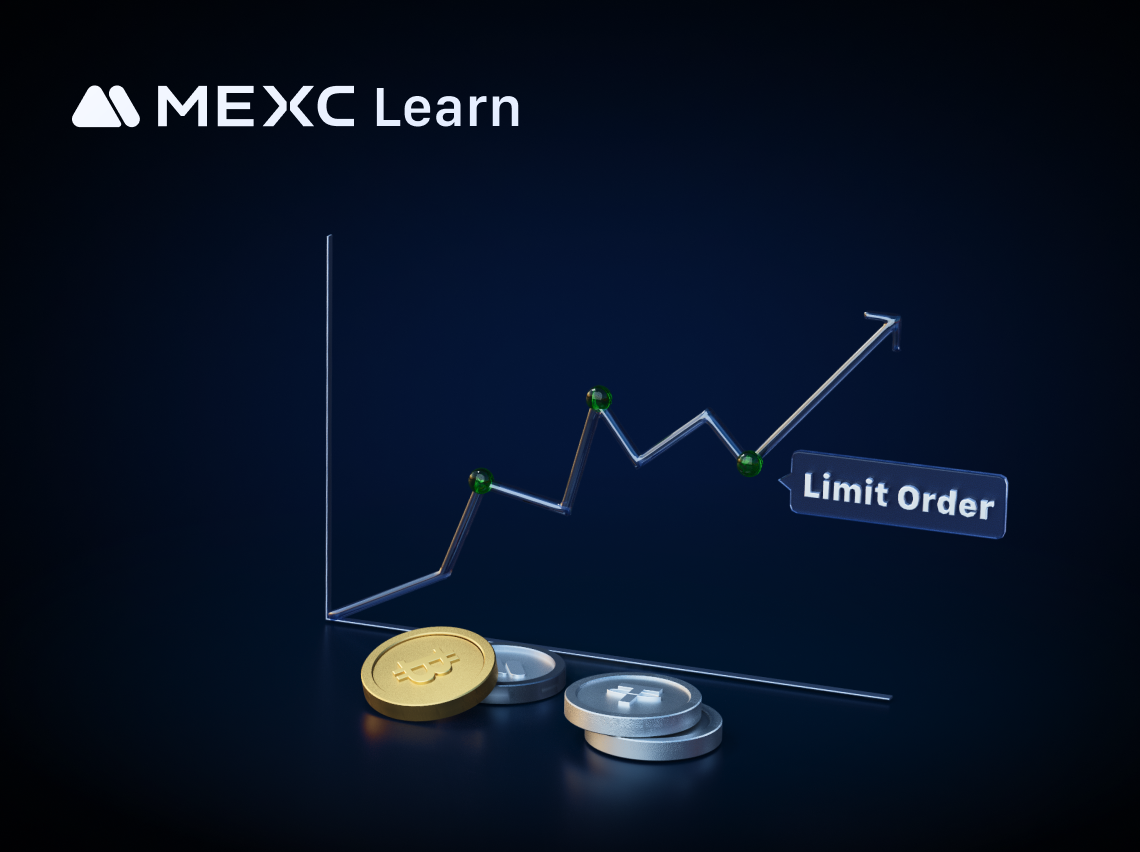
Spot limit orders are a type of order you place on the MEXC spot trading market to buy or sell a certain quantity of assets at a specific price or better price. Setting stop-loss (SL) and take-profit (TP) points involves simultaneously setting two price trigger conditions when placing such an order. These conditions ensure the automatic execution of corresponding trading operations upon reaching a certain profit or preventing excessive losses.

1. Definition of Limit Order TP/SL


The limit order TP/SL feature involves simultaneously setting a TP price and/or SL price when placing a limit order (i.e., buying or selling at a specific price). These two prices are pre-set levels used to trigger the trading system to automatically execute specific operations when they are reached.

2. Effective Conditions


2.1 One-way Limit Order: Buying Digital Assets


  • The TP/SL feature of the limit order can only be triggered after the limit buy order is completely filled.

  • You can set up the TP/SL feature for sell orders simultaneously when placing the limit order.

  • Within your TP/SL feature, only one sell order will be triggered, and the other sell order will be canceled.

2.2 One-way Limit Order: Selling Digital Assets


  • The TP/SL feature of the limit order can only be triggered after the limit sell order is completely filled.

  • You can set up the TP/SL feature for buy orders simultaneously when placing the limit order.

  • Within your TP/SL feature, only one buy order will be triggered, and the other buy order will be canceled.

2.3 Usage Example (Using MX Token as an Example)


If the current price of the MX token is 2.75 USDT/MX, and you wish to buy it at a lower price, you will set the buy price for your limit order at 2 USDT/MX along with the quantity of MX you wish to purchase. Additionally, if you anticipate the MX token to rise to 3.5 USDT/MX, you would like to lock in your profits at this price point.


1. Setting Limit Orders


  • Set your desired buy price and buy quantity, e.g. 2 USDT/MX and 100 MX tokens.

  • After completing the setup, the limit buy order will be waiting to be triggered.

2. Using TP Feature with Limit Orders


At this point, you need to set a TP price:

  • TP (Sell Order) Trigger Price: When the MX token is on an upward trend, this price (B) will be triggered. In this scenario, you can set it at 3.5 USDT/MX.

3. Using SL Feature with Limit Orders


  • If you are concerned that MX might not rise to 3.5 USDT/MX and a downtrend might occur, and you wish to exit at 1.5 USDT/MX.

At this point, you need to set an SL feature price:

  • SL (Sell Order) Trigger Price: When the MX token is in a downtrend, this price (B1) will be triggered. In this scenario, you can set it at 1.5 USDT/MX.

4. Estimated Profit/Loss (Excluding Trading Fees)


  • Expected Profit:

= 3.5 USDT/MX x 100 - 2 USDT/MX x 100
= 350 USDT - 200 USDT
= 150 USDT

  • Expected Loss:

= 2 USDT/MX x 100 - 1.5 USDT/MX x 100
= 200 USDT - 150 USDT
= - 50 USDT

2.4 Limit Order TP/SL feature vs Stop-Limit Orders


1. Trading Methods


  • The Limit Order TP/SL feature includes two trading behaviors: Buy first, then sell, or sell first, then buy.

  • Stop-limit orders only include one trading behavior:buy or sell.

2. Applicability


  • The Limit Order TP/SL feature is suitable for complex trading systems:

For instance, trading strategies like selling high and buying low can be made, akin to the practice of "shorting" digital assets.

  • Stop-limit orders are suitable for relatively simple trading systems:

For example, use this feature to execute a single buy or sell order that suits your preferences.

3. Operational Pathway (Using MX Token as an Example)


3.1 MEXC Official Website


1. Open the MEXC website.

2. Navigate to the MEXC spot trading interface.

3. Set the parameters related to [Limit] orders.


4. Set TP/SL parameters.


3.2 Gentle Reminder


  • The TP/SL points are triggered effectively when the corresponding limit order is completely filled. If the limit order is only partially filled, the TP/SL functions will not activate, even if the set trigger prices for TP/SL are reached.

  • When a limit order (buy order) and TP/SL points are set, the system will use the quantity of the completely filled limit order as the order quantity for TP/SL.

  • When a limit order (sell order) and TP/SL points are set, the system will use the amount of the completely filled limit order as the order amount for TP/SL.

  • Reasons why TP/SL points may become ineffective upon reaching the specified prices:

a. Insufficient balance in the user's account during the generation of TP/SL orders leads to order generation failure.

b. The pre-generated TP/SL orders fail to meet the platform's minimum order amount, resulting in order generation failure.

  • Tutorials and guides may vary across different operating systems. Please refer to yourcurrent operating system for accuracy.

4. Conclusion


The Limit Order TP/SL feature can assist you in achieving profits and limiting losses in both bid and ask markets of spot trading. In practical operations, you can set predefined price levels for TP/SL. During actual trading, once your limit order is executed, the TP/SL prices will be triggered based on market conditions.

Risk Warning: The advantage of setting SL/TP points for limit orders is that it can help investors control risks and automate trading. However, the disadvantage is that market volatility may cause conditional orders to not execute as expected. When using this feature, it is important to closely monitor market fluctuations and risks, and ensure that your trading strategy aligns with your investment goals and risk tolerance.

Disclaimer: Cryptocurrency trading involves risk. This information does not provide advice on investment, taxation, legal, financial, accounting, or any other related services, nor does it constitute advice to purchase, sell, or hold any assets. MEXC Learn provides information for reference purposes only and does not constitute investment advice. Please ensure you fully understand the risks involved and exercise caution when investing. The platform is not responsible for users' investment decisions.


Market Opportunity
Orderly Network Logo
Orderly Network Price(ORDER)
$0.0283
$0.0283$0.0283
+1.79%
USD
Orderly Network (ORDER) Live Price Chart

Popular Articles

View More
Argentina Crypto Tax Guide 2026: Rates, Rules, and Reporting

Argentina Crypto Tax Guide 2026: Rates, Rules, and Reporting

Key Takeaways Crypto capital gains in Argentina are taxed at a flat 15% rate, while crypto income is taxed at progressive rates of 5%–35%. Holding crypto is not taxed, but selling, trading, or earning

Crypto Tax in Egypt 2026: Laws, Risks & Regulations

Crypto Tax in Egypt 2026: Laws, Risks & Regulations

Key Takeaways: Legal Ban: Cryptocurrency operations remain effectively banned without a license under Central Bank regulations. Hidden Tax Risks: While no formal crypto tax exists, sudden fiat profits


Updated 2026 Guide: Taiwan Crypto Tax Rates & Reporting

Updated 2026 Guide: Taiwan Crypto Tax Rates & Reporting

Key Takeaways: Tax Classification: Crypto profits are assessed as standard income (5-40% rates). Enforcement: The NTB is conducting more rigorous cross-check audits in 2026. Filing Deadline: Report ga

2026 Puerto Rico Crypto Tax Framework: Act 60 Guidelines and Rates

2026 Puerto Rico Crypto Tax Framework: Act 60 Guidelines and Rates

Key Takeaways: 0% capital gains tax applied to locally sourced digital assets post-residency 2% to 4% corporate tax rate applicable to eligible blockchain enterprises Mandatory compliance with a 183-d

Related Articles

View More
Spot Market Trading Rules

Spot Market Trading Rules

In cryptocurrency spot trading, beyond price analysis and strategy selection, understanding and following the trading platform's market rules is equally crucial. For MEXC users, each trading pair not
What is a Limit Order?

What is a Limit Order?

In the cryptocurrency market, limit orders serve as a critical trading mechanism, enabling investors to exercise precise control over the execution price of their trades.1. What Is Limit Order?1.1 Def
What are Take-Profit/Stop-Loss Orders? Your Automated Tool for Risk Management and Profit Locking

What are Take-Profit/Stop-Loss Orders? Your Automated Tool for Risk Management and Profit Locking

1. What Is a Take-Profit/Stop-Loss Order? A Take-Profit/Stop-Loss order lets users set a trigger price in advance, along with the price and quantity to buy or sell once the trigger is reached. When th

What Is MEXC Hold and Earn?

What Is MEXC Hold and Earn?

1. What Is MEXC Hold and Earn?MEXC Hold and Earn allows users to generate returns on designated tokens held in their Spot account. The product offers full flexibility: users can trade, withdraw, or us

Sign Up on MEXC
Sign Up & Receive Up to 10,000 USDT Bonus
Is Your Stablecoin Truly Safe?
Is Your Stablecoin Truly Safe?Is Your Stablecoin Truly Safe?
Know the risks of USDT, USDC, OpenUSD & USD1