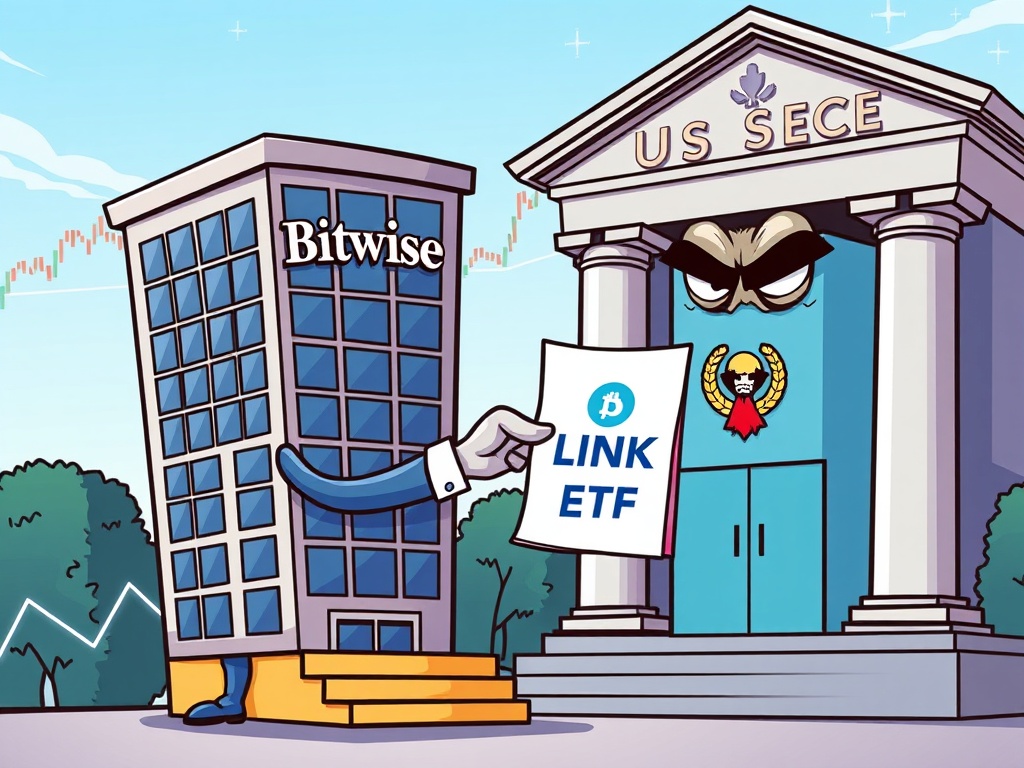
BitcoinWorld Chainlink ETF: Bitwise Files Crucial S-1 Application with SEC The cryptocurrency world is buzzing with significant news as Bitwise, a prominent crypto asset manager, has officially filed an S-1 application for a Chainlink ETF with the U.S. Securities and Exchange Commission (SEC). This pivotal development, initially reported by BWE News, marks a crucial step in the ongoing mainstream integration of digital assets. For many in the crypto community, this move signifies growing institutional interest and potential new avenues for investors to gain exposure to the Chainlink network. What Does This Chainlink ETF Filing Mean? When Bitwise filed its S-1 application, it signaled a formal intent to launch a Chainlink ETF. An S-1 is essentially a registration statement required by the SEC for U.S. companies planning to offer securities to the public. In this context, it details the structure, investment objectives, risks, and operational procedures of the proposed exchange-traded fund. Bitwise’s Role: As a well-respected crypto asset manager, Bitwise has a history of pioneering digital asset investment products. Their move to introduce a Chainlink ETF highlights their belief in Chainlink’s long-term potential. Chainlink (LINK): Chainlink is a decentralized oracle network that connects smart contracts with real-world data and off-chain computations. Its LINK token is vital for paying for these oracle services. ETF Structure: A Chainlink ETF would allow traditional investors to gain exposure to LINK’s price movements without directly buying and holding the cryptocurrency. This simplifies access and often provides a regulated investment vehicle. Why is a Chainlink ETF So Significant? The potential approval of a Chainlink ETF carries immense significance for the broader crypto market and Chainlink specifically. It represents a bridge between traditional finance and the decentralized world, opening doors for a new wave of capital. Here’s why this development is attracting so much attention: Increased Institutional Access: ETFs are familiar investment vehicles for institutional investors, pension funds, and wealth managers. A Chainlink ETF would provide a regulated, liquid, and easily accessible way for these entities to invest in LINK. Market Legitimacy and Trust: SEC approval would lend significant credibility to Chainlink as an asset class. It suggests that regulators are becoming more comfortable with digital assets, potentially paving the way for further crypto product approvals. Potential Price Impact: Increased demand from institutional investors could positively impact LINK’s price. As more capital flows into the market through an ETF, the underlying asset often sees appreciation. Simplified Investment: Retail investors who might be hesitant to navigate crypto exchanges can invest in a Chainlink ETF through their traditional brokerage accounts, making participation much simpler. Navigating the Regulatory Path for a Chainlink ETF While the filing is a positive step, the path to a fully approved Chainlink ETF is not without its challenges. The SEC has historically been cautious regarding cryptocurrency-related investment products, citing concerns about market manipulation, investor protection, and custody. The SEC’s review process is rigorous and involves several stages: Initial Review: The SEC staff examines the S-1 application for completeness and compliance with securities laws. Public Comment Period: The public, including industry experts and concerned citizens, can submit comments on the proposed ETF. Amendments and Resubmissions: Bitwise may need to amend its S-1 multiple times based on SEC feedback and market developments. Final Decision: The SEC will ultimately approve, disapprove, or delay the application. Previous Bitcoin spot ETF applications faced numerous rejections before recent approvals, indicating the SEC’s meticulous approach. This history underscores the importance of a well-structured application and ongoing dialogue with regulators for a Chainlink ETF. What Happens After a Chainlink ETF Filing? The filing of the S-1 application is just the beginning of a potentially lengthy process. Investors and market observers will now closely watch the SEC’s response and any subsequent updates from Bitwise. Key things to look out for include: SEC Communications: The SEC will issue notices regarding the application’s status, including requests for public comments or amendments. Market Reaction: The crypto market, particularly LINK holders, will likely react to each stage of the approval process. Competitive Landscape: Other asset managers might also consider filing for a Chainlink ETF or similar products, intensifying the race for first-mover advantage. Broader Crypto Sentiment: The outcome could influence the regulatory landscape for other altcoin ETFs, setting a precedent for future digital asset products. Bitwise’s S-1 filing for a Chainlink ETF represents a significant milestone in the evolution of cryptocurrency investment. While the journey to approval is complex and subject to regulatory scrutiny, this move highlights the increasing maturity and institutional acceptance of digital assets. It offers a tantalizing glimpse into a future where accessing innovative blockchain projects like Chainlink becomes as straightforward as investing in traditional stocks, potentially unlocking massive capital flows and solidifying crypto’s place in mainstream finance. The coming months will be crucial in determining the fate of this groundbreaking proposal. Frequently Asked Questions (FAQs) 1. What is an S-1 application in the context of a Chainlink ETF? An S-1 application is a registration statement required by the U.S. SEC for new securities offerings. For a Chainlink ETF, it details the fund’s structure, investment strategy, risks, and operational aspects, providing transparency for potential investors. 2. What is Chainlink (LINK) and why is it important? Chainlink is a decentralized oracle network that securely connects smart contracts on various blockchains with real-world data, events, and off-chain computations. Its importance lies in enabling smart contracts to interact with external data, making them more powerful and useful for real-world applications. 3. How does a Chainlink ETF benefit investors? A Chainlink ETF offers investors exposure to LINK’s price movements without the complexities of direct cryptocurrency ownership, such as setting up wallets or managing private keys. It provides a regulated and accessible investment vehicle through traditional brokerage accounts. 4. What are the next steps after Bitwise files for a Chainlink ETF? After filing, the SEC will review the S-1 application. This process involves staff evaluations, potential public comment periods, and requests for amendments from Bitwise. The SEC will eventually issue a decision to approve, deny, or delay the Chainlink ETF. 5. Has the SEC approved other crypto ETFs? Yes, the SEC has approved several Bitcoin futures ETFs and, more recently, a spot Bitcoin ETF. These approvals set precedents and indicate a potential shift in the SEC’s approach to cryptocurrency-related investment products, which could bode well for a Chainlink ETF. 6. What are the main challenges for a Chainlink ETF to get approved? Key challenges include addressing SEC concerns about market manipulation, ensuring adequate investor protection, and establishing robust custody solutions for the underlying LINK assets. The SEC’s historical caution with crypto products means thorough scrutiny is expected. If you found this article insightful, please share it with your network! Your support helps us bring more crucial crypto news and analysis to a wider audience. Join the conversation and spread the word about this significant development for the Chainlink ETF. To learn more about the latest crypto market trends, explore our article on key developments shaping Chainlink institutional adoption. This post Chainlink ETF: Bitwise Files Crucial S-1 Application with SEC first appeared on BitcoinWorld and is written by Editorial TeamBitcoinWorld Chainlink ETF: Bitwise Files Crucial S-1 Application with SEC The cryptocurrency world is buzzing with significant news as Bitwise, a prominent crypto asset manager, has officially filed an S-1 application for a Chainlink ETF with the U.S. Securities and Exchange Commission (SEC). This pivotal development, initially reported by BWE News, marks a crucial step in the ongoing mainstream integration of digital assets. For many in the crypto community, this move signifies growing institutional interest and potential new avenues for investors to gain exposure to the Chainlink network. What Does This Chainlink ETF Filing Mean? When Bitwise filed its S-1 application, it signaled a formal intent to launch a Chainlink ETF. An S-1 is essentially a registration statement required by the SEC for U.S. companies planning to offer securities to the public. In this context, it details the structure, investment objectives, risks, and operational procedures of the proposed exchange-traded fund. Bitwise’s Role: As a well-respected crypto asset manager, Bitwise has a history of pioneering digital asset investment products. Their move to introduce a Chainlink ETF highlights their belief in Chainlink’s long-term potential. Chainlink (LINK): Chainlink is a decentralized oracle network that connects smart contracts with real-world data and off-chain computations. Its LINK token is vital for paying for these oracle services. ETF Structure: A Chainlink ETF would allow traditional investors to gain exposure to LINK’s price movements without directly buying and holding the cryptocurrency. This simplifies access and often provides a regulated investment vehicle. Why is a Chainlink ETF So Significant? The potential approval of a Chainlink ETF carries immense significance for the broader crypto market and Chainlink specifically. It represents a bridge between traditional finance and the decentralized world, opening doors for a new wave of capital. Here’s why this development is attracting so much attention: Increased Institutional Access: ETFs are familiar investment vehicles for institutional investors, pension funds, and wealth managers. A Chainlink ETF would provide a regulated, liquid, and easily accessible way for these entities to invest in LINK. Market Legitimacy and Trust: SEC approval would lend significant credibility to Chainlink as an asset class. It suggests that regulators are becoming more comfortable with digital assets, potentially paving the way for further crypto product approvals. Potential Price Impact: Increased demand from institutional investors could positively impact LINK’s price. As more capital flows into the market through an ETF, the underlying asset often sees appreciation. Simplified Investment: Retail investors who might be hesitant to navigate crypto exchanges can invest in a Chainlink ETF through their traditional brokerage accounts, making participation much simpler. Navigating the Regulatory Path for a Chainlink ETF While the filing is a positive step, the path to a fully approved Chainlink ETF is not without its challenges. The SEC has historically been cautious regarding cryptocurrency-related investment products, citing concerns about market manipulation, investor protection, and custody. The SEC’s review process is rigorous and involves several stages: Initial Review: The SEC staff examines the S-1 application for completeness and compliance with securities laws. Public Comment Period: The public, including industry experts and concerned citizens, can submit comments on the proposed ETF. Amendments and Resubmissions: Bitwise may need to amend its S-1 multiple times based on SEC feedback and market developments. Final Decision: The SEC will ultimately approve, disapprove, or delay the application. Previous Bitcoin spot ETF applications faced numerous rejections before recent approvals, indicating the SEC’s meticulous approach. This history underscores the importance of a well-structured application and ongoing dialogue with regulators for a Chainlink ETF. What Happens After a Chainlink ETF Filing? The filing of the S-1 application is just the beginning of a potentially lengthy process. Investors and market observers will now closely watch the SEC’s response and any subsequent updates from Bitwise. Key things to look out for include: SEC Communications: The SEC will issue notices regarding the application’s status, including requests for public comments or amendments. Market Reaction: The crypto market, particularly LINK holders, will likely react to each stage of the approval process. Competitive Landscape: Other asset managers might also consider filing for a Chainlink ETF or similar products, intensifying the race for first-mover advantage. Broader Crypto Sentiment: The outcome could influence the regulatory landscape for other altcoin ETFs, setting a precedent for future digital asset products. Bitwise’s S-1 filing for a Chainlink ETF represents a significant milestone in the evolution of cryptocurrency investment. While the journey to approval is complex and subject to regulatory scrutiny, this move highlights the increasing maturity and institutional acceptance of digital assets. It offers a tantalizing glimpse into a future where accessing innovative blockchain projects like Chainlink becomes as straightforward as investing in traditional stocks, potentially unlocking massive capital flows and solidifying crypto’s place in mainstream finance. The coming months will be crucial in determining the fate of this groundbreaking proposal. Frequently Asked Questions (FAQs) 1. What is an S-1 application in the context of a Chainlink ETF? An S-1 application is a registration statement required by the U.S. SEC for new securities offerings. For a Chainlink ETF, it details the fund’s structure, investment strategy, risks, and operational aspects, providing transparency for potential investors. 2. What is Chainlink (LINK) and why is it important? Chainlink is a decentralized oracle network that securely connects smart contracts on various blockchains with real-world data, events, and off-chain computations. Its importance lies in enabling smart contracts to interact with external data, making them more powerful and useful for real-world applications. 3. How does a Chainlink ETF benefit investors? A Chainlink ETF offers investors exposure to LINK’s price movements without the complexities of direct cryptocurrency ownership, such as setting up wallets or managing private keys. It provides a regulated and accessible investment vehicle through traditional brokerage accounts. 4. What are the next steps after Bitwise files for a Chainlink ETF? After filing, the SEC will review the S-1 application. This process involves staff evaluations, potential public comment periods, and requests for amendments from Bitwise. The SEC will eventually issue a decision to approve, deny, or delay the Chainlink ETF. 5. Has the SEC approved other crypto ETFs? Yes, the SEC has approved several Bitcoin futures ETFs and, more recently, a spot Bitcoin ETF. These approvals set precedents and indicate a potential shift in the SEC’s approach to cryptocurrency-related investment products, which could bode well for a Chainlink ETF. 6. What are the main challenges for a Chainlink ETF to get approved? Key challenges include addressing SEC concerns about market manipulation, ensuring adequate investor protection, and establishing robust custody solutions for the underlying LINK assets. The SEC’s historical caution with crypto products means thorough scrutiny is expected. If you found this article insightful, please share it with your network! Your support helps us bring more crucial crypto news and analysis to a wider audience. Join the conversation and spread the word about this significant development for the Chainlink ETF. To learn more about the latest crypto market trends, explore our article on key developments shaping Chainlink institutional adoption. This post Chainlink ETF: Bitwise Files Crucial S-1 Application with SEC first appeared on BitcoinWorld and is written by Editorial Team

Chainlink ETF: Bitwise Files Crucial S-1 Application with SEC

2025/08/26 18:30

BitcoinWorld

Chainlink ETF: Bitwise Files Crucial S-1 Application with SEC

The cryptocurrency world is buzzing with significant news as Bitwise, a prominent crypto asset manager, has officially filed an S-1 application for a Chainlink ETF with the U.S. Securities and Exchange Commission (SEC). This pivotal development, initially reported by BWE News, marks a crucial step in the ongoing mainstream integration of digital assets. For many in the crypto community, this move signifies growing institutional interest and potential new avenues for investors to gain exposure to the Chainlink network.

When Bitwise filed its S-1 application, it signaled a formal intent to launch a Chainlink ETF. An S-1 is essentially a registration statement required by the SEC for U.S. companies planning to offer securities to the public. In this context, it details the structure, investment objectives, risks, and operational procedures of the proposed exchange-traded fund.

  • Bitwise’s Role: As a well-respected crypto asset manager, Bitwise has a history of pioneering digital asset investment products. Their move to introduce a Chainlink ETF highlights their belief in Chainlink’s long-term potential.
  • Chainlink (LINK): Chainlink is a decentralized oracle network that connects smart contracts with real-world data and off-chain computations. Its LINK token is vital for paying for these oracle services.
  • ETF Structure: A Chainlink ETF would allow traditional investors to gain exposure to LINK’s price movements without directly buying and holding the cryptocurrency. This simplifies access and often provides a regulated investment vehicle.

The potential approval of a Chainlink ETF carries immense significance for the broader crypto market and Chainlink specifically. It represents a bridge between traditional finance and the decentralized world, opening doors for a new wave of capital.

Here’s why this development is attracting so much attention:

  • Increased Institutional Access: ETFs are familiar investment vehicles for institutional investors, pension funds, and wealth managers. A Chainlink ETF would provide a regulated, liquid, and easily accessible way for these entities to invest in LINK.
  • Market Legitimacy and Trust: SEC approval would lend significant credibility to Chainlink as an asset class. It suggests that regulators are becoming more comfortable with digital assets, potentially paving the way for further crypto product approvals.
  • Potential Price Impact: Increased demand from institutional investors could positively impact LINK’s price. As more capital flows into the market through an ETF, the underlying asset often sees appreciation.
  • Simplified Investment: Retail investors who might be hesitant to navigate crypto exchanges can invest in a Chainlink ETF through their traditional brokerage accounts, making participation much simpler.

While the filing is a positive step, the path to a fully approved Chainlink ETF is not without its challenges. The SEC has historically been cautious regarding cryptocurrency-related investment products, citing concerns about market manipulation, investor protection, and custody.

The SEC’s review process is rigorous and involves several stages:

  1. Initial Review: The SEC staff examines the S-1 application for completeness and compliance with securities laws.
  2. Public Comment Period: The public, including industry experts and concerned citizens, can submit comments on the proposed ETF.
  3. Amendments and Resubmissions: Bitwise may need to amend its S-1 multiple times based on SEC feedback and market developments.
  4. Final Decision: The SEC will ultimately approve, disapprove, or delay the application.

Previous Bitcoin spot ETF applications faced numerous rejections before recent approvals, indicating the SEC’s meticulous approach. This history underscores the importance of a well-structured application and ongoing dialogue with regulators for a Chainlink ETF.

The filing of the S-1 application is just the beginning of a potentially lengthy process. Investors and market observers will now closely watch the SEC’s response and any subsequent updates from Bitwise.

Key things to look out for include:

  • SEC Communications: The SEC will issue notices regarding the application’s status, including requests for public comments or amendments.
  • Market Reaction: The crypto market, particularly LINK holders, will likely react to each stage of the approval process.
  • Competitive Landscape: Other asset managers might also consider filing for a Chainlink ETF or similar products, intensifying the race for first-mover advantage.
  • Broader Crypto Sentiment: The outcome could influence the regulatory landscape for other altcoin ETFs, setting a precedent for future digital asset products.

Bitwise’s S-1 filing for a Chainlink ETF represents a significant milestone in the evolution of cryptocurrency investment. While the journey to approval is complex and subject to regulatory scrutiny, this move highlights the increasing maturity and institutional acceptance of digital assets. It offers a tantalizing glimpse into a future where accessing innovative blockchain projects like Chainlink becomes as straightforward as investing in traditional stocks, potentially unlocking massive capital flows and solidifying crypto’s place in mainstream finance. The coming months will be crucial in determining the fate of this groundbreaking proposal.

Frequently Asked Questions (FAQs)

An S-1 application is a registration statement required by the U.S. SEC for new securities offerings. For a Chainlink ETF, it details the fund’s structure, investment strategy, risks, and operational aspects, providing transparency for potential investors.

Chainlink is a decentralized oracle network that securely connects smart contracts on various blockchains with real-world data, events, and off-chain computations. Its importance lies in enabling smart contracts to interact with external data, making them more powerful and useful for real-world applications.

A Chainlink ETF offers investors exposure to LINK’s price movements without the complexities of direct cryptocurrency ownership, such as setting up wallets or managing private keys. It provides a regulated and accessible investment vehicle through traditional brokerage accounts.

After filing, the SEC will review the S-1 application. This process involves staff evaluations, potential public comment periods, and requests for amendments from Bitwise. The SEC will eventually issue a decision to approve, deny, or delay the Chainlink ETF.

5. Has the SEC approved other crypto ETFs?

Yes, the SEC has approved several Bitcoin futures ETFs and, more recently, a spot Bitcoin ETF. These approvals set precedents and indicate a potential shift in the SEC’s approach to cryptocurrency-related investment products, which could bode well for a Chainlink ETF.

Key challenges include addressing SEC concerns about market manipulation, ensuring adequate investor protection, and establishing robust custody solutions for the underlying LINK assets. The SEC’s historical caution with crypto products means thorough scrutiny is expected.

If you found this article insightful, please share it with your network! Your support helps us bring more crucial crypto news and analysis to a wider audience. Join the conversation and spread the word about this significant development for the Chainlink ETF.

To learn more about the latest crypto market trends, explore our article on key developments shaping Chainlink institutional adoption.

This post Chainlink ETF: Bitwise Files Crucial S-1 Application with SEC first appeared on BitcoinWorld and is written by Editorial Team

Piyasa Fırsatı
RealLink Logosu
RealLink Fiyatı(REAL)
$0.07412
$0.07412$0.07412
-1.95%
USD
RealLink (REAL) Canlı Fiyat Grafiği
Sorumluluk Reddi: Bu sitede yeniden yayınlanan makaleler, halka açık platformlardan alınmıştır ve yalnızca bilgilendirme amaçlıdır. MEXC'nin görüşlerini yansıtmayabilir. Tüm hakları telif sahiplerine aittir. Herhangi bir içeriğin üçüncü taraf haklarını ihlal ettiğini düşünüyorsanız, kaldırılması için lütfen [email protected] ile iletişime geçin. MEXC, içeriğin doğruluğu, eksiksizliği veya güncelliği konusunda hiçbir garanti vermez ve sağlanan bilgilere dayalı olarak alınan herhangi bir eylemden sorumlu değildir. İçerik, finansal, yasal veya diğer profesyonel tavsiye niteliğinde değildir ve MEXC tarafından bir tavsiye veya onay olarak değerlendirilmemelidir.

Ayrıca Şunları da Beğenebilirsiniz

Uniswap stemt in met token burn van 100 miljoen UNI

Uniswap stemt in met token burn van 100 miljoen UNI

Uniswap (UNI) heeft een belangrijke stap gezet in de verdere ontwikkeling van zijn tokenomics. In een recente governance-stemming hebben houders van het UNI-token
Paylaş
Coinstats2025/12/26 21:47
Which Crypto to Buy Today for Long-Term Growth? One DeFi Crypto Stands Out
Which Crypto to Buy Today for Long-Term Growth? One DeFi Crypto Stands Out

The post Which Crypto to Buy Today for Long-Term Growth? One DeFi Crypto Stands Out appeared on BitcoinEthereumNews.com. Crypto Projects Investors searching for
Paylaş
BitcoinEthereumNews2025/12/26 22:32
Ethereum koers toont zeldzaam dubbel koopsignaal en richt zich op $4.550

Ethereum koers toont zeldzaam dubbel koopsignaal en richt zich op $4.550

Connect met Like-minded Crypto Enthusiasts! Connect op Discord! Check onze Discord   Ethereum laat op de uurgrafiek twee opeenvolgende TD Sequential koopsignalen zien. Deze indicator meet uitputting in een trend en geeft vaak een signaal dat de verkoopdruk kan afnemen. Dit dubbele signaal verschijnt rond het niveau van $4.516, waar de ETH prijs kortstondig steun vindt. Dit type formatie komt zelden voor en wordt daarom extra nauwlettend gevolgd. Wat gaat de Ethereum koers hiermee doen? Ethereum koers test steun rond $4.516 De scherpe daling van de Ethereum koers vanaf de prijszone rond $4.800 bracht de ETH prijs in korte tijd naar ongeveer $4.516. Op dit niveau trad duidelijke koopactiviteit op, waardoor de neerwaartse beweging tijdelijk werd gestopt. Het dubbele signaal dat door de TD Sequential indicator is gegenereerd, viel precies samen met dit prijspunt. De TD Sequential is opgebouwd uit negen candles die een trend meetellen. Wanneer de negende candle verschijnt, kan dit duiden op een trendomslag. In dit geval verschenen zelfs twee signalen kort na elkaar, wat aangeeft dat de verkoopdruk mogelijk uitgeput is. Het feit dat dit gebeurde in een zone waar ETH kopers actief bleven, maakt het patroon extra opvallend. TD Sequential just flashed two buy signals for Ethereum $ETH! pic.twitter.com/JPO8EhiEPi — Ali (@ali_charts) September 16, 2025 Welke crypto nu kopen?Lees onze uitgebreide gids en leer welke crypto nu kopen verstandig kan zijn! Welke crypto nu kopen? Fed-voorzitter Jerome Powell heeft aangekondigd dat de rentes binnenkort zomaar eens omlaag zouden kunnen gaan, en tegelijkertijd blijft BlackRock volop crypto kopen, en dus lijkt de markt klaar om te gaan stijgen. Eén vraag komt telkens terug: welke crypto moet je nu kopen? In dit artikel bespreken we de munten die… Continue reading Ethereum koers toont zeldzaam dubbel koopsignaal en richt zich op $4.550 document.addEventListener('DOMContentLoaded', function() { var screenWidth = window.innerWidth; var excerpts = document.querySelectorAll('.lees-ook-description'); excerpts.forEach(function(description) { var excerpt = description.getAttribute('data-description'); var wordLimit = screenWidth wordLimit) { var trimmedDescription = excerpt.split(' ').slice(0, wordLimit).join(' ') + '...'; description.textContent = trimmedDescription; } }); }); Technische indicatoren schetsen herstelkans voor ETH Naast de dubbele koopsignalen verstrekken ook andere indicatoren belangrijke aanwijzingen. Tijdens de daling van de ETH koers waren grote rode candles zichtbaar, maar na de test van $4.516 stabiliseerde de Ethereum koers. Dit wijst op een mogelijke verschuiving in het evenwicht tussen de bears en bulls. Als deze opwaartse beweging doorzet, liggen de eerste weerstanden rond $4.550. Daarboven wacht een sterkere zone rond $4.650. Deze niveaus zijn in eerdere Ethereum sessies al meerdere keren getest. Een doorbraak zou ruimte openen richting de all-time high van ETH rond $4.953. Wanneer de prijs toch opnieuw onder $4.516 zakt, liggen er zones rond $4.500 en $4.450 waar grotere kooporders worden verwacht. Deze niveaus kunnen als een vangnet fungeren, mocht de druk opnieuw toenemen. Marktdynamiek bevestigt technische indicatoren De huidige situatie volgt op een bredere correctie in de cryptomarkt. Verschillende vooraanstaande crypto tokens zagen scherpe koersdalingen, waarna traders op zoek gingen naar signalen voor een mogelijke ommekeer. Dat juist Ethereum nu een dubbel TD Sequential signaal toont, versterkt de interesse in dit scenario. Fundamenteel blijft Ethereum sterk. Het aantal ETH tokens dat via staking is vastgezet, blijft groeien. Dat verkleint de vrije circulatie en vermindert verkoopdruk. Tegelijk blijft het netwerk intensief gebruikt voor DeFi, NFT’s en stablecoins. Deze activiteiten zorgen voor een stabiele vraag naar ETH, ook wanneer de prijs tijdelijk onder druk staat. Fundamentele drijfveren achter de Ethereum koers De Ethereum koers wordt echter niet alleen bepaald door candles en patronen, maar ook door bredere factoren. Een stijgend percentage van de totale ETH supply staat vast in staking contracten. Hierdoor neemt de liquiditeit op exchanges af. Dit kan prijsschommelingen versterken wanneer er plotseling meer koopdruk ontstaat. Daarnaast is Ethereum nog steeds het grootste smart contract platform. Nieuwe standaarden zoals ERC-8004 en ontwikkelingen rond layer-2 oplossingen houden de activiteit hoog. Deze technologische vooruitgang kan de waardepropositie ondersteunen en zo indirect bijdragen aan een ETH prijsherstel. Het belang van de korte termijn dynamiek De komende handelsdagen zullen duidelijk maken of de bulls genoeg kracht hebben om door de weerstandszone rond $4.550 te breken. Voor de bears ligt de focus juist op het verdedigen van de prijsregio rond $4.516. De whales, die met grote handelsorders opereren, kunnen hierin een beslissende rol spelen. Het dubbele TD Sequential signaal blijft hoe dan ook een zeldzame gebeurtenis. Voor cryptoanalisten vormt het een objectief aanknopingspunt om de kracht van de huidige Ethereum trend te toetsen. Vooruitblik op de ETH koers Ethereum liet twee opeenvolgende TD Sequential signalen zien op de uurgrafiek, iets wat zelden voorkomt. Deze formatie viel samen met steun rond $4.516, waar de bulls actief werden. Als de Ethereum koers boven dit niveau blijft, kan er ruimte ontstaan richting $4.550 en mogelijk $4.650. Zakt de prijs toch opnieuw onder $4.516, dan komen $4.500 en $4.450 in beeld als nieuwe steunzones. De combinatie van zeldzame indicatoren en een sterke fundamentele basis maakt Ethereum interessant voor zowel technische als fundamentele analyses. Of de bulls het momentum echt kunnen overnemen, zal blijken zodra de Ethereum koers de eerstvolgende weerstanden opnieuw test. Koop je crypto via Best Wallet Best wallet is een topklasse crypto wallet waarmee je anoniem crypto kan kopen. Met meer dan 60 chains gesupport kan je al je main crypto coins aanschaffen via Best Wallet. Best wallet - betrouwbare en anonieme wallet Best wallet - betrouwbare en anonieme wallet Meer dan 60 chains beschikbaar voor alle crypto Vroege toegang tot nieuwe projecten Hoge staking belongingen Lage transactiekosten Best wallet review Koop nu via Best Wallet Let op: cryptocurrency is een zeer volatiele en ongereguleerde investering. Doe je eigen onderzoek. Het bericht Ethereum koers toont zeldzaam dubbel koopsignaal en richt zich op $4.550 is geschreven door Dirk van Haaster en verscheen als eerst op Bitcoinmagazine.nl.
Paylaş
Coinstats2025/09/17 23:31