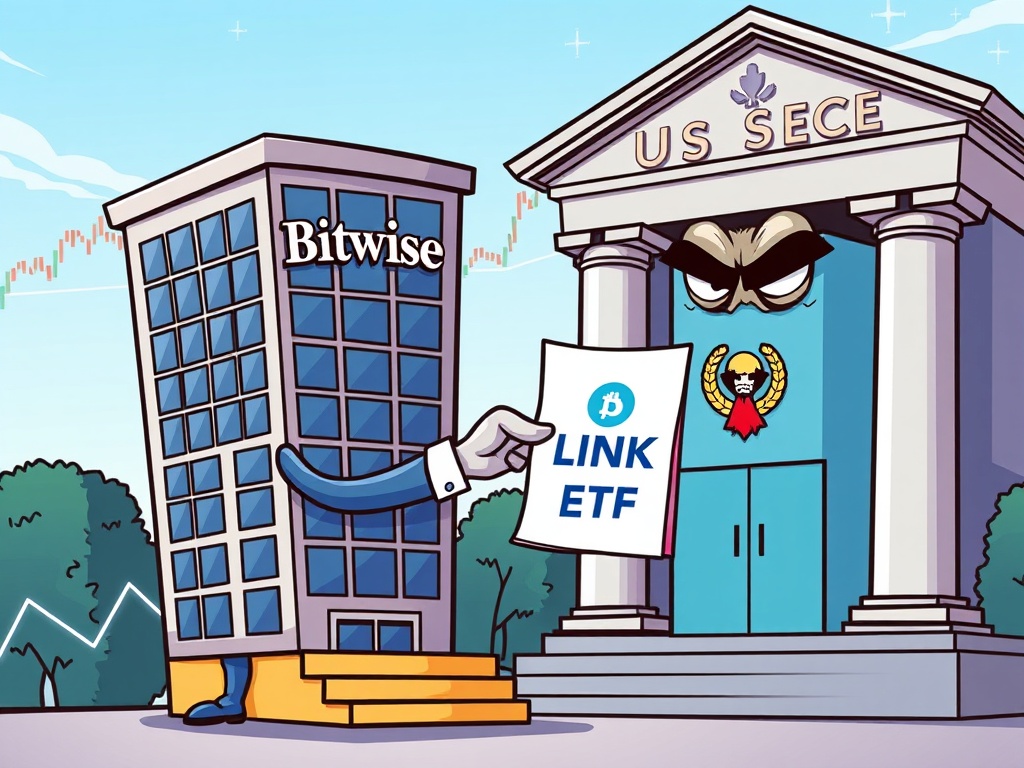
BitcoinWorld Chainlink ETF: Bitwise Files Crucial S-1 Application with SEC The cryptocurrency world is buzzing with significant news as Bitwise, a prominent crypto asset manager, has officially filed an S-1 application for a Chainlink ETF with the U.S. Securities and Exchange Commission (SEC). This pivotal development, initially reported by BWE News, marks a crucial step in the ongoing mainstream integration of digital assets. For many in the crypto community, this move signifies growing institutional interest and potential new avenues for investors to gain exposure to the Chainlink network. What Does This Chainlink ETF Filing Mean? When Bitwise filed its S-1 application, it signaled a formal intent to launch a Chainlink ETF. An S-1 is essentially a registration statement required by the SEC for U.S. companies planning to offer securities to the public. In this context, it details the structure, investment objectives, risks, and operational procedures of the proposed exchange-traded fund. Bitwise’s Role: As a well-respected crypto asset manager, Bitwise has a history of pioneering digital asset investment products. Their move to introduce a Chainlink ETF highlights their belief in Chainlink’s long-term potential. Chainlink (LINK): Chainlink is a decentralized oracle network that connects smart contracts with real-world data and off-chain computations. Its LINK token is vital for paying for these oracle services. ETF Structure: A Chainlink ETF would allow traditional investors to gain exposure to LINK’s price movements without directly buying and holding the cryptocurrency. This simplifies access and often provides a regulated investment vehicle. Why is a Chainlink ETF So Significant? The potential approval of a Chainlink ETF carries immense significance for the broader crypto market and Chainlink specifically. It represents a bridge between traditional finance and the decentralized world, opening doors for a new wave of capital. Here’s why this development is attracting so much attention: Increased Institutional Access: ETFs are familiar investment vehicles for institutional investors, pension funds, and wealth managers. A Chainlink ETF would provide a regulated, liquid, and easily accessible way for these entities to invest in LINK. Market Legitimacy and Trust: SEC approval would lend significant credibility to Chainlink as an asset class. It suggests that regulators are becoming more comfortable with digital assets, potentially paving the way for further crypto product approvals. Potential Price Impact: Increased demand from institutional investors could positively impact LINK’s price. As more capital flows into the market through an ETF, the underlying asset often sees appreciation. Simplified Investment: Retail investors who might be hesitant to navigate crypto exchanges can invest in a Chainlink ETF through their traditional brokerage accounts, making participation much simpler. Navigating the Regulatory Path for a Chainlink ETF While the filing is a positive step, the path to a fully approved Chainlink ETF is not without its challenges. The SEC has historically been cautious regarding cryptocurrency-related investment products, citing concerns about market manipulation, investor protection, and custody. The SEC’s review process is rigorous and involves several stages: Initial Review: The SEC staff examines the S-1 application for completeness and compliance with securities laws. Public Comment Period: The public, including industry experts and concerned citizens, can submit comments on the proposed ETF. Amendments and Resubmissions: Bitwise may need to amend its S-1 multiple times based on SEC feedback and market developments. Final Decision: The SEC will ultimately approve, disapprove, or delay the application. Previous Bitcoin spot ETF applications faced numerous rejections before recent approvals, indicating the SEC’s meticulous approach. This history underscores the importance of a well-structured application and ongoing dialogue with regulators for a Chainlink ETF. What Happens After a Chainlink ETF Filing? The filing of the S-1 application is just the beginning of a potentially lengthy process. Investors and market observers will now closely watch the SEC’s response and any subsequent updates from Bitwise. Key things to look out for include: SEC Communications: The SEC will issue notices regarding the application’s status, including requests for public comments or amendments. Market Reaction: The crypto market, particularly LINK holders, will likely react to each stage of the approval process. Competitive Landscape: Other asset managers might also consider filing for a Chainlink ETF or similar products, intensifying the race for first-mover advantage. Broader Crypto Sentiment: The outcome could influence the regulatory landscape for other altcoin ETFs, setting a precedent for future digital asset products. Bitwise’s S-1 filing for a Chainlink ETF represents a significant milestone in the evolution of cryptocurrency investment. While the journey to approval is complex and subject to regulatory scrutiny, this move highlights the increasing maturity and institutional acceptance of digital assets. It offers a tantalizing glimpse into a future where accessing innovative blockchain projects like Chainlink becomes as straightforward as investing in traditional stocks, potentially unlocking massive capital flows and solidifying crypto’s place in mainstream finance. The coming months will be crucial in determining the fate of this groundbreaking proposal. Frequently Asked Questions (FAQs) 1. What is an S-1 application in the context of a Chainlink ETF? An S-1 application is a registration statement required by the U.S. SEC for new securities offerings. For a Chainlink ETF, it details the fund’s structure, investment strategy, risks, and operational aspects, providing transparency for potential investors. 2. What is Chainlink (LINK) and why is it important? Chainlink is a decentralized oracle network that securely connects smart contracts on various blockchains with real-world data, events, and off-chain computations. Its importance lies in enabling smart contracts to interact with external data, making them more powerful and useful for real-world applications. 3. How does a Chainlink ETF benefit investors? A Chainlink ETF offers investors exposure to LINK’s price movements without the complexities of direct cryptocurrency ownership, such as setting up wallets or managing private keys. It provides a regulated and accessible investment vehicle through traditional brokerage accounts. 4. What are the next steps after Bitwise files for a Chainlink ETF? After filing, the SEC will review the S-1 application. This process involves staff evaluations, potential public comment periods, and requests for amendments from Bitwise. The SEC will eventually issue a decision to approve, deny, or delay the Chainlink ETF. 5. Has the SEC approved other crypto ETFs? Yes, the SEC has approved several Bitcoin futures ETFs and, more recently, a spot Bitcoin ETF. These approvals set precedents and indicate a potential shift in the SEC’s approach to cryptocurrency-related investment products, which could bode well for a Chainlink ETF. 6. What are the main challenges for a Chainlink ETF to get approved? Key challenges include addressing SEC concerns about market manipulation, ensuring adequate investor protection, and establishing robust custody solutions for the underlying LINK assets. The SEC’s historical caution with crypto products means thorough scrutiny is expected. If you found this article insightful, please share it with your network! Your support helps us bring more crucial crypto news and analysis to a wider audience. Join the conversation and spread the word about this significant development for the Chainlink ETF. To learn more about the latest crypto market trends, explore our article on key developments shaping Chainlink institutional adoption. This post Chainlink ETF: Bitwise Files Crucial S-1 Application with SEC first appeared on BitcoinWorld and is written by Editorial TeamBitcoinWorld Chainlink ETF: Bitwise Files Crucial S-1 Application with SEC The cryptocurrency world is buzzing with significant news as Bitwise, a prominent crypto asset manager, has officially filed an S-1 application for a Chainlink ETF with the U.S. Securities and Exchange Commission (SEC). This pivotal development, initially reported by BWE News, marks a crucial step in the ongoing mainstream integration of digital assets. For many in the crypto community, this move signifies growing institutional interest and potential new avenues for investors to gain exposure to the Chainlink network. What Does This Chainlink ETF Filing Mean? When Bitwise filed its S-1 application, it signaled a formal intent to launch a Chainlink ETF. An S-1 is essentially a registration statement required by the SEC for U.S. companies planning to offer securities to the public. In this context, it details the structure, investment objectives, risks, and operational procedures of the proposed exchange-traded fund. Bitwise’s Role: As a well-respected crypto asset manager, Bitwise has a history of pioneering digital asset investment products. Their move to introduce a Chainlink ETF highlights their belief in Chainlink’s long-term potential. Chainlink (LINK): Chainlink is a decentralized oracle network that connects smart contracts with real-world data and off-chain computations. Its LINK token is vital for paying for these oracle services. ETF Structure: A Chainlink ETF would allow traditional investors to gain exposure to LINK’s price movements without directly buying and holding the cryptocurrency. This simplifies access and often provides a regulated investment vehicle. Why is a Chainlink ETF So Significant? The potential approval of a Chainlink ETF carries immense significance for the broader crypto market and Chainlink specifically. It represents a bridge between traditional finance and the decentralized world, opening doors for a new wave of capital. Here’s why this development is attracting so much attention: Increased Institutional Access: ETFs are familiar investment vehicles for institutional investors, pension funds, and wealth managers. A Chainlink ETF would provide a regulated, liquid, and easily accessible way for these entities to invest in LINK. Market Legitimacy and Trust: SEC approval would lend significant credibility to Chainlink as an asset class. It suggests that regulators are becoming more comfortable with digital assets, potentially paving the way for further crypto product approvals. Potential Price Impact: Increased demand from institutional investors could positively impact LINK’s price. As more capital flows into the market through an ETF, the underlying asset often sees appreciation. Simplified Investment: Retail investors who might be hesitant to navigate crypto exchanges can invest in a Chainlink ETF through their traditional brokerage accounts, making participation much simpler. Navigating the Regulatory Path for a Chainlink ETF While the filing is a positive step, the path to a fully approved Chainlink ETF is not without its challenges. The SEC has historically been cautious regarding cryptocurrency-related investment products, citing concerns about market manipulation, investor protection, and custody. The SEC’s review process is rigorous and involves several stages: Initial Review: The SEC staff examines the S-1 application for completeness and compliance with securities laws. Public Comment Period: The public, including industry experts and concerned citizens, can submit comments on the proposed ETF. Amendments and Resubmissions: Bitwise may need to amend its S-1 multiple times based on SEC feedback and market developments. Final Decision: The SEC will ultimately approve, disapprove, or delay the application. Previous Bitcoin spot ETF applications faced numerous rejections before recent approvals, indicating the SEC’s meticulous approach. This history underscores the importance of a well-structured application and ongoing dialogue with regulators for a Chainlink ETF. What Happens After a Chainlink ETF Filing? The filing of the S-1 application is just the beginning of a potentially lengthy process. Investors and market observers will now closely watch the SEC’s response and any subsequent updates from Bitwise. Key things to look out for include: SEC Communications: The SEC will issue notices regarding the application’s status, including requests for public comments or amendments. Market Reaction: The crypto market, particularly LINK holders, will likely react to each stage of the approval process. Competitive Landscape: Other asset managers might also consider filing for a Chainlink ETF or similar products, intensifying the race for first-mover advantage. Broader Crypto Sentiment: The outcome could influence the regulatory landscape for other altcoin ETFs, setting a precedent for future digital asset products. Bitwise’s S-1 filing for a Chainlink ETF represents a significant milestone in the evolution of cryptocurrency investment. While the journey to approval is complex and subject to regulatory scrutiny, this move highlights the increasing maturity and institutional acceptance of digital assets. It offers a tantalizing glimpse into a future where accessing innovative blockchain projects like Chainlink becomes as straightforward as investing in traditional stocks, potentially unlocking massive capital flows and solidifying crypto’s place in mainstream finance. The coming months will be crucial in determining the fate of this groundbreaking proposal. Frequently Asked Questions (FAQs) 1. What is an S-1 application in the context of a Chainlink ETF? An S-1 application is a registration statement required by the U.S. SEC for new securities offerings. For a Chainlink ETF, it details the fund’s structure, investment strategy, risks, and operational aspects, providing transparency for potential investors. 2. What is Chainlink (LINK) and why is it important? Chainlink is a decentralized oracle network that securely connects smart contracts on various blockchains with real-world data, events, and off-chain computations. Its importance lies in enabling smart contracts to interact with external data, making them more powerful and useful for real-world applications. 3. How does a Chainlink ETF benefit investors? A Chainlink ETF offers investors exposure to LINK’s price movements without the complexities of direct cryptocurrency ownership, such as setting up wallets or managing private keys. It provides a regulated and accessible investment vehicle through traditional brokerage accounts. 4. What are the next steps after Bitwise files for a Chainlink ETF? After filing, the SEC will review the S-1 application. This process involves staff evaluations, potential public comment periods, and requests for amendments from Bitwise. The SEC will eventually issue a decision to approve, deny, or delay the Chainlink ETF. 5. Has the SEC approved other crypto ETFs? Yes, the SEC has approved several Bitcoin futures ETFs and, more recently, a spot Bitcoin ETF. These approvals set precedents and indicate a potential shift in the SEC’s approach to cryptocurrency-related investment products, which could bode well for a Chainlink ETF. 6. What are the main challenges for a Chainlink ETF to get approved? Key challenges include addressing SEC concerns about market manipulation, ensuring adequate investor protection, and establishing robust custody solutions for the underlying LINK assets. The SEC’s historical caution with crypto products means thorough scrutiny is expected. If you found this article insightful, please share it with your network! Your support helps us bring more crucial crypto news and analysis to a wider audience. Join the conversation and spread the word about this significant development for the Chainlink ETF. To learn more about the latest crypto market trends, explore our article on key developments shaping Chainlink institutional adoption. This post Chainlink ETF: Bitwise Files Crucial S-1 Application with SEC first appeared on BitcoinWorld and is written by Editorial Team

Chainlink ETF: Bitwise Files Crucial S-1 Application with SEC

2025/08/26 18:30

BitcoinWorld

Chainlink ETF: Bitwise Files Crucial S-1 Application with SEC

The cryptocurrency world is buzzing with significant news as Bitwise, a prominent crypto asset manager, has officially filed an S-1 application for a Chainlink ETF with the U.S. Securities and Exchange Commission (SEC). This pivotal development, initially reported by BWE News, marks a crucial step in the ongoing mainstream integration of digital assets. For many in the crypto community, this move signifies growing institutional interest and potential new avenues for investors to gain exposure to the Chainlink network.

When Bitwise filed its S-1 application, it signaled a formal intent to launch a Chainlink ETF. An S-1 is essentially a registration statement required by the SEC for U.S. companies planning to offer securities to the public. In this context, it details the structure, investment objectives, risks, and operational procedures of the proposed exchange-traded fund.

  • Bitwise’s Role: As a well-respected crypto asset manager, Bitwise has a history of pioneering digital asset investment products. Their move to introduce a Chainlink ETF highlights their belief in Chainlink’s long-term potential.
  • Chainlink (LINK): Chainlink is a decentralized oracle network that connects smart contracts with real-world data and off-chain computations. Its LINK token is vital for paying for these oracle services.
  • ETF Structure: A Chainlink ETF would allow traditional investors to gain exposure to LINK’s price movements without directly buying and holding the cryptocurrency. This simplifies access and often provides a regulated investment vehicle.

The potential approval of a Chainlink ETF carries immense significance for the broader crypto market and Chainlink specifically. It represents a bridge between traditional finance and the decentralized world, opening doors for a new wave of capital.

Here’s why this development is attracting so much attention:

  • Increased Institutional Access: ETFs are familiar investment vehicles for institutional investors, pension funds, and wealth managers. A Chainlink ETF would provide a regulated, liquid, and easily accessible way for these entities to invest in LINK.
  • Market Legitimacy and Trust: SEC approval would lend significant credibility to Chainlink as an asset class. It suggests that regulators are becoming more comfortable with digital assets, potentially paving the way for further crypto product approvals.
  • Potential Price Impact: Increased demand from institutional investors could positively impact LINK’s price. As more capital flows into the market through an ETF, the underlying asset often sees appreciation.
  • Simplified Investment: Retail investors who might be hesitant to navigate crypto exchanges can invest in a Chainlink ETF through their traditional brokerage accounts, making participation much simpler.

While the filing is a positive step, the path to a fully approved Chainlink ETF is not without its challenges. The SEC has historically been cautious regarding cryptocurrency-related investment products, citing concerns about market manipulation, investor protection, and custody.

The SEC’s review process is rigorous and involves several stages:

  1. Initial Review: The SEC staff examines the S-1 application for completeness and compliance with securities laws.
  2. Public Comment Period: The public, including industry experts and concerned citizens, can submit comments on the proposed ETF.
  3. Amendments and Resubmissions: Bitwise may need to amend its S-1 multiple times based on SEC feedback and market developments.
  4. Final Decision: The SEC will ultimately approve, disapprove, or delay the application.

Previous Bitcoin spot ETF applications faced numerous rejections before recent approvals, indicating the SEC’s meticulous approach. This history underscores the importance of a well-structured application and ongoing dialogue with regulators for a Chainlink ETF.

The filing of the S-1 application is just the beginning of a potentially lengthy process. Investors and market observers will now closely watch the SEC’s response and any subsequent updates from Bitwise.

Key things to look out for include:

  • SEC Communications: The SEC will issue notices regarding the application’s status, including requests for public comments or amendments.
  • Market Reaction: The crypto market, particularly LINK holders, will likely react to each stage of the approval process.
  • Competitive Landscape: Other asset managers might also consider filing for a Chainlink ETF or similar products, intensifying the race for first-mover advantage.
  • Broader Crypto Sentiment: The outcome could influence the regulatory landscape for other altcoin ETFs, setting a precedent for future digital asset products.

Bitwise’s S-1 filing for a Chainlink ETF represents a significant milestone in the evolution of cryptocurrency investment. While the journey to approval is complex and subject to regulatory scrutiny, this move highlights the increasing maturity and institutional acceptance of digital assets. It offers a tantalizing glimpse into a future where accessing innovative blockchain projects like Chainlink becomes as straightforward as investing in traditional stocks, potentially unlocking massive capital flows and solidifying crypto’s place in mainstream finance. The coming months will be crucial in determining the fate of this groundbreaking proposal.

Frequently Asked Questions (FAQs)

An S-1 application is a registration statement required by the U.S. SEC for new securities offerings. For a Chainlink ETF, it details the fund’s structure, investment strategy, risks, and operational aspects, providing transparency for potential investors.

Chainlink is a decentralized oracle network that securely connects smart contracts on various blockchains with real-world data, events, and off-chain computations. Its importance lies in enabling smart contracts to interact with external data, making them more powerful and useful for real-world applications.

A Chainlink ETF offers investors exposure to LINK’s price movements without the complexities of direct cryptocurrency ownership, such as setting up wallets or managing private keys. It provides a regulated and accessible investment vehicle through traditional brokerage accounts.

After filing, the SEC will review the S-1 application. This process involves staff evaluations, potential public comment periods, and requests for amendments from Bitwise. The SEC will eventually issue a decision to approve, deny, or delay the Chainlink ETF.

5. Has the SEC approved other crypto ETFs?

Yes, the SEC has approved several Bitcoin futures ETFs and, more recently, a spot Bitcoin ETF. These approvals set precedents and indicate a potential shift in the SEC’s approach to cryptocurrency-related investment products, which could bode well for a Chainlink ETF.

Key challenges include addressing SEC concerns about market manipulation, ensuring adequate investor protection, and establishing robust custody solutions for the underlying LINK assets. The SEC’s historical caution with crypto products means thorough scrutiny is expected.

If you found this article insightful, please share it with your network! Your support helps us bring more crucial crypto news and analysis to a wider audience. Join the conversation and spread the word about this significant development for the Chainlink ETF.

To learn more about the latest crypto market trends, explore our article on key developments shaping Chainlink institutional adoption.

This post Chainlink ETF: Bitwise Files Crucial S-1 Application with SEC first appeared on BitcoinWorld and is written by Editorial Team

Piyasa Fırsatı
RealLink Logosu
RealLink Fiyatı(REAL)
$0.07429
$0.07429$0.07429
+0.21%
USD
RealLink (REAL) Canlı Fiyat Grafiği
Sorumluluk Reddi: Bu sitede yeniden yayınlanan makaleler, halka açık platformlardan alınmıştır ve yalnızca bilgilendirme amaçlıdır. MEXC'nin görüşlerini yansıtmayabilir. Tüm hakları telif sahiplerine aittir. Herhangi bir içeriğin üçüncü taraf haklarını ihlal ettiğini düşünüyorsanız, kaldırılması için lütfen [email protected] ile iletişime geçin. MEXC, içeriğin doğruluğu, eksiksizliği veya güncelliği konusunda hiçbir garanti vermez ve sağlanan bilgilere dayalı olarak alınan herhangi bir eylemden sorumlu değildir. İçerik, finansal, yasal veya diğer profesyonel tavsiye niteliğinde değildir ve MEXC tarafından bir tavsiye veya onay olarak değerlendirilmemelidir.

Ayrıca Şunları da Beğenebilirsiniz

SBI Shinsei Bank Moves Toward Multicurrency Tokenized Payments

SBI Shinsei Bank Moves Toward Multicurrency Tokenized Payments

SBI Shinsei Bank explores tokenized payments with DeCurret and Partior, aiming to modernize secure cross-border financial transactions. Japan’s SBI Shinsei Bank is taking new steps in digital finance. In partnership with DeCurret DCP and Partior, Cross-border remittances, the bank is considering using tokenized deposits for cross-border remittances, as well as for multi-currency settlement. The goal […] The post SBI Shinsei Bank Moves Toward Multicurrency Tokenized Payments appeared first on Live Bitcoin News.
Paylaş
LiveBitcoinNews2025/09/19 05:30
Dogecoin Rally Sparks Meme Coin Frenzy

Dogecoin Rally Sparks Meme Coin Frenzy

The post Dogecoin Rally Sparks Meme Coin Frenzy appeared on BitcoinEthereumNews.com. The crypto market is once again buzzing with excitement as meme coins prepare for what could be another explosive rally. Meme coin market capitalization rose 7% in the past 24 hours, with trading volume up 50%, according to CoinMarketCap, as both whales and retail traders return. This surge of momentum has many calling it the beginning of a new “meme season.” Historically, when liquidity floods into meme coins, the strongest projects have delivered outsized gains. Today, one project in particular is drawing attention: Maxi Doge. Source – Crypto ZEUS YouTube Channel The Doge Narrative Remains Strong Much of the current excitement stems from Dogecoin’s performance. With a spot ETF under consideration, $DOGE has rallied roughly 34% and is approaching positive territory for the year. Technically, Dogecoin has been trending upward since late 2023, and maintaining levels above $0.29-$0.30 could pave the way to $0.35. In a strong bull market, even $2 remains possible. This momentum highlights why tokens associated with the Doge brand carry significant cultural and market influence. Projects such as Shiba Inu, Floki, Dogwifhat, Bonk, and Mog Coin have historically been first movers when meme coin cycles return, a trend also reflected in the recent price movements reported on CoinMarketCap. That is why traders are closely watching Maxi Doge, which brands itself as “Doge on steroids” with the goal of amplifying the meme coin narrative. Maxi Doge Presale Hints at 10x to 15x Growth Potential The presale for Maxi Doge is proving successful, having already raised over $2.3 million of its $2.5 million target. Once this phase ends, token prices reset higher, giving early participants an immediate advantage. This presale structure mirrors other meme coins that later performed strongly once listed. If Maxi Doge enters exchanges reflecting its roughly $2 million presale raise and follows the trajectory of…
Paylaş
BitcoinEthereumNews2025/09/19 09:15
Uniswap’s UNIfication Proposal Passes With Near‑Unanimous Support

Uniswap’s UNIfication Proposal Passes With Near‑Unanimous Support

Uniswap governance has overwhelmingly approved the UNIfication proposal, formally green‑lighting the activation of the protocol’s fee switch and a burn of 100 million UNI tokens.
Paylaş
MEXC NEWS2025/12/27 23:05