Bitcoin Explained — Key Concepts and OriginThe cryptocurrency Bitcoin (BTC) is the pioneering digital asset launched in January 2009 by the pseudonymous Satoshi Nakamoto. It introduced a peer-to-peer Bitcoin Explained — Key Concepts and OriginThe cryptocurrency Bitcoin (BTC) is the pioneering digital asset launched in January 2009 by the pseudonymous Satoshi Nakamoto. It introduced a peer-to-peer

What Is Bitcoin? A Comprehensive Analysis of the Bitcoin (BTC) Journey, Market Comparison & Investment Case

Bitcoin Explained — Key Concepts and Origin

The cryptocurrency Bitcoin (BTC) is the pioneering digital asset launched in January 2009 by the pseudonymous Satoshi Nakamoto. It introduced a peer-to-peer monetary system without reliance on central banks. From its very first block—the “genesis block”—Bitcoin established a fixed supply cap of 21 million coins and introduced the concept of programmed issuance via block rewards and periodic “halving” events.
Unlike fiat currencies where supply can be expanded by monetary policy, Bitcoin’s issuance schedule is transparent and immutable. This underpins its narrative as “digital gold”. As of 2025, with approximately 19–20 million BTC mined, Bitcoin’s supply is nearing full issuance.

Bitcoin's Price History – From Niche to Mainstream

Early Years (2009-2012)

In the earliest years Bitcoin’s value was effectively negligible—trading informally among early adopters. The first known USD-price benchmark was in 2010 when 10,000 BTC were used to purchase two pizzas.   By 2011–2012, BTC briefly reached parity with the US dollar. 

Acceleration and the 2017 Bull Run

Bitcoin surged from under $1,000 in early 2017 to nearly $20,000 by December 2017.   This marked a turning point where Bitcoin captured mainstream media attention and investor interest.

Recent Years (2020–2025)

Significant highlights:
  • In 2021, BTC rose above $60,000 in April and later approached ~$68,000.
  • According to historical data, in 2023–2024 BTC’s price hovered in the range of ~$90,000–$110,000. For example, on July 9 2025 BTC closed near $108,950.
  • As of early November 2025, the price of Bitcoin is around $110,000+ (USD).
Charting this trajectory reveals that Bitcoin has evolved from a speculative experiment to a major global asset class, albeit with substantial volatility.
(From MEXC Price)

Why Price Moves Matter

Key drivers of Bitcoin’s price evolution include:
  • The halving mechanism: each ~4 years, block rewards are cut in half, reducing new issuance and supporting scarcity.
  • Institutional adoption, macro economic shifts, regulatory milestones.
  • Liquidity, market sentiment, and risk appetite across traditional and crypto markets.

Comparing Bitcoin with Traditional Investments

Bitcoin vs. Real Estate

Real estate has long been viewed as a stable store of value, offering rental income and tangible assets. However, an analysis shows that a person investing in US residential real estate in 2017 had significantly lower return than someone who invested in Bitcoin during the same period.   Other commentary highlights liquidity and entry-cost advantages for Bitcoin compared to property (which typically requires large capital, long exit times, and active management). 

Bitcoin vs. US Dollar / Bank Deposit Rates

While fiat currencies like the US dollar are subject to inflation and monetary expansion, Bitcoin’s fixed supply gives it a different profile. According to a comparative analysis, Bitcoin’s inflation rate as of early 2025 is about ~0.8% annually, whereas the USD inflation rate (CPI) is ~2.7%.   Bank deposit interest rates in many developed markets remain low (often sub-2-3%), which means the real return after inflation can be negative. In that context, Bitcoin offers an alternative store of value outside traditional banking yields.

Bitcoin and Inflation Index

Since 2020, data indicate that Bitcoin’s price movements show a correlation with inflation expectations—when inflation expectations rise, Bitcoin has sometimes responded accordingly.   In contrast, traditional assets may offer hedges (like real estate or commodities), yet their performance often lags the dramatic upside seen in Bitcoin during bull cycles.

Why Hold Bitcoin? The Investment Case

Scarcity and Supply Cap

With a hard cap of 21 million coins and programmed issuance reductions, Bitcoin’s supply is finite—this is a defining characteristic compared to fiat currencies, which can be printed in unlimited amounts. This scarcity underpin supports the narrative of Bitcoin as a hedge against monetary debasement.

Accessibility and Liquidity

Bitcoin is globally tradeable 24/7 across exchanges, and can be bought fractionally. By contrast, real estate is illiquid, requires high capital and often involves lock-in periods. The ease of entry into Bitcoin elevates its accessibility for a broader audience.

Portfolio Diversification

Including Bitcoin in a diversified portfolio introduces a non-traditional asset whose return drivers differ from equities, bonds, or real estate. The fact that it responds to macro factors differently gives potential diversification benefits.

Digital Native Hedge Against Inflation

Given the inflation-resistant issuance schedule and growing adoption, Bitcoin is increasingly viewed as a new class of digital store of value. In scenarios of fiat weakness, Bitcoin’s fixed supply and global accessibility may act as a hedge—though this is not guaranteed.

How to Get Started with Bitcoin on MEXC

For users considering exposure to Bitcoin, the global exchange MEXC Global offers a well-known venue. Here is a simplified step-by-step guide:
  1. Register an account with MEXC and complete any required verification.
  2. Deposit a base asset such as USDT or another supported stablecoin.
  3. Navigate to the BTC/USDT trading pair and choose your order type (market, limit, etc.).
  4. Monitor your holdings and consider risk management strategies (such as having a long-term hold horizon or setting stop-limits).
  5. For additional reading, the MEXC Learn section and blog provide educational content on trading mechanics and asset management.
Remember: past performance is not indicative of future results, and investors should only commit capital they can afford to risk.

Risks and Important Considerations

While the upside case for Bitcoin is compelling, several risks apply:
  • Volatility: Bitcoin’s price can swing tens of percent in days—returns have been large, but losses equally possible.
  • Regulatory risks: Governments and regulators globally continue to evaluate the treatment of crypto assets; stricter regulation may impact liquidity or access.
  • Technology and custody risks: Self-custody mistakes, exchange hacks or systemic failures remain threats.
  • Competition and narrative risk: Other digital assets or monetary solutions may emerge; holding Bitcoin implies a belief in its long-term dominance.

Summary

Bitcoin has transformed from a niche experiment into a global digital asset with substantial historical returns. When compared to traditional investments—real estate, fiat currencies, bank deposit rates, inflation—it presents a unique value proposition built on scarcityliquidity, and global accessibility.
For those seeking to include Bitcoin in their portfolio, platforms such as MEXC provide transparent and accessible entry points. At the same time, investors must remain mindful of the inherent risks—particularly volatility and regulatory uncertainty.
By understanding Bitcoin’s history, how it compares to other asset classes and how to engage with it responsibly, investors can make more informed decisions. And while nothing is guaranteed, the case for Bitcoin as part of a diversified portfolio has matured significantly over the past decade.
Peluang Pasar
Logo Bitcoin
Harga Bitcoin(BTC)
--
----
USD
Grafik Harga Live Bitcoin (BTC)

Artikel-artikel yang dibagikan di halaman ini bersumber dari platform publik dan disediakan hanya sebagai referensi. Artikel tersebut tidak mewakili posisi atau pandangan MEXC. Seluruh hak merupakan milik MEXC. Jika Anda meyakini ada konten yang melanggar hak pihak ketiga, silakan hubungi [email protected] untuk penghapusan segera. MEXC tidak menjamin keakuratan, kelengkapan, atau keaktualan konten apa pun dan tidak bertanggung jawab terhadap segala tindakan yang dilakukan berdasarkan informasi yang diberikan. Konten tersebut bukan merupakan saran keuangan, hukum, atau profesional lainnya, serta tidak boleh ditafsirkan sebagai rekomendasi atau dukungan oleh MEXC. Untuk mendapatkan wawasan ahli dan analisis mendalam, kunjungi MEXC Learn.

Info Bitcoin Terkini

Lihat Selengkapnya

Peringatan Keamanan Coldcard Mk3: Apa Arti Rumor Pencurian Bitcoin Senilai $38 Juta bagi Pemegang BTC
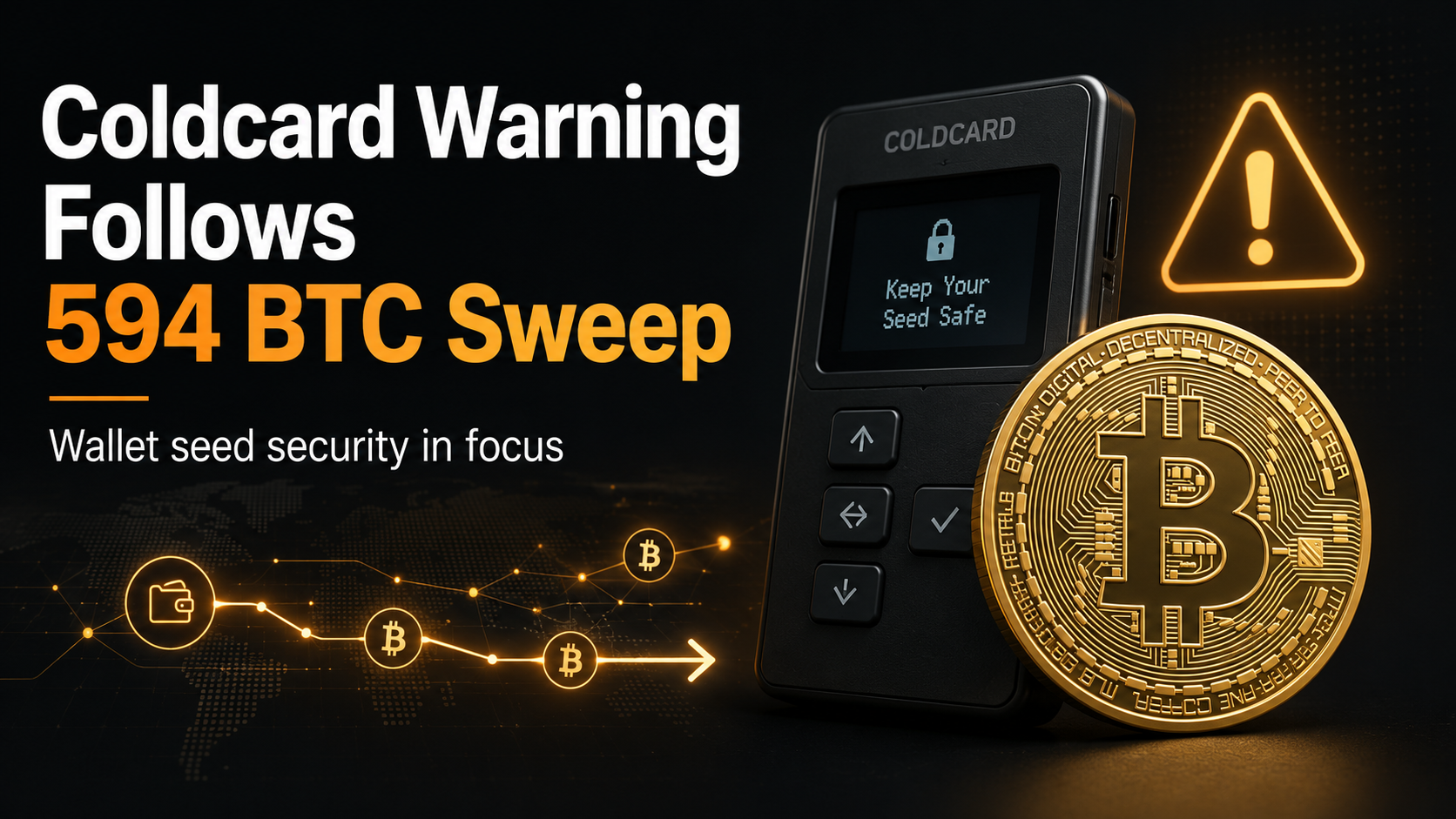
Peringatan Keamanan Coldcard Mk3: Apa Arti Rumor Pencurian Bitcoin Senilai $38 Juta bagi Pemegang BTC

Coinkite dilaporkan mengeluarkan peringatan keamanan Coldcard Mk3 setelah adanya dugaan keterkaitan dengan pencurian Bitcoin senilai $38 juta. Berikut adalah hal yang harus diperiksa oleh pemegang BTC sebelum menandatangani transaksi.
2026/07/31
Peringatan Coldcard Mk3 Mengikuti Penyapuan Bitcoin Senilai $38 Juta, Namun Penyebabnya Masih Belum Dikonfirmasi

Peringatan Coldcard Mk3 Mengikuti Penyapuan Bitcoin Senilai $38 Juta, Namun Penyebabnya Masih Belum Dikonfirmasi

Pembuat dompet perangkat keras Bitcoin, Coinkite, telah memperingatkan pengguna tentang masalah pembangkitan seed yang memengaruhi perangkat Coldcard, termasuk setiap versi firmware Mk3 dari 4.0.1 ke atas. Peringatan ini muncul saat para peneliti keamanan menyelidiki penyapuan terkoordinasi sebesar 594,48 BTC, senilai sekitar $38 juta. Namun, tidak ada bukti teknis publik yang mengonfirmasi bahwa masalah Coldcard menyebabkan transfer tersebut.
2026/07/31
Gelombang Serangan Keempat yang Diduga dari Coldcard: Mengapa 462 Alamat Masih Dibersihkan?

Gelombang Serangan Keempat yang Diduga dari Coldcard: Mengapa 462 Alamat Masih Dibersihkan?

Kepala Riset Galaxy, Alex Thorn, telah mengidentifikasi apa yang tampaknya merupakan gelombang keempat pencurian Bitcoin yang terorganisir, melibatkan seed yang dihasilkan oleh firmware Coldcard yang terdampak. Selama periode sekitar 2,5 jam antara blok 960.778 dan 960.792, para peneliti mengamati 218 transaksi yang melibatkan 462 alamat korban yang diduga, 216 tujuan baru, dan 388,92748828 BTC. Transaksi serupa dilaporkan tetap berada di mempool, sementara transaksi yang dikonfirmasi memiliki fitur replace-by-fee (RBF) yang diaktifkan.
2026/08/03
Lihat Selengkapnya