


Blockchain 101: The Tech Behind Solana Coin
Blockchain technology is a distributed ledger system that enables secure, transparent, and immutable record-keeping across a network of computers. At its core, blockchain consists of blocks of data linked chronologically in a chain, with each block containing transaction records that are verified through cryptographic methods rather than by a central authority.
The relationship between blockchain and SOL token is fundamental, as SOL crypto operates on a public blockchain known as Solana. This underlying technology provides Solana Token with robust security features, decentralization advantages, and transparency capabilities that distinguish it from traditional financial systems. Unlike conventional databases managed by a single entity, Solana's blockchain distributes data across thousands of nodes worldwide, making it resistant to censorship, fraud, and single points of failure.
Inside SOL Coin: Core Components That Power the Network
The distributed ledger technology (DLT) that powers SOL coin functions as a synchronized database replicated across multiple locations. Unlike traditional systems where a central administrator maintains records, Solana's DLT ensures that every network participant has access to an identical copy of the ledger, creating unprecedented transparency and accountability.
SOL crypto utilizes a unique combination of Proof of History (PoH) and Proof of Stake (PoS) consensus mechanisms to validate transactions and secure the network. PoH timestamps transactions, establishing a verifiable order of events, while PoS selects validators based on the amount of Solana Token staked. This process allows network participants to collaborate to verify transactions, with successful validators receiving transaction fees and staking rewards as incentives. This mechanism ensures network security and integrity while preventing double-spending and fraudulent transactions.
Smart contracts within the Solana ecosystem are self-executing agreements with the terms directly written in code. These contracts automatically execute when predetermined conditions are met, enabling trustless interactions without intermediaries. In Solana Crypto's network, smart contracts facilitate automated transactions, decentralized applications (dApps), and programmable token functionalities that enhance the versatility and utility of the ecosystem.
The structure of Solana's blockchain consists of interconnected blocks, each containing a cryptographic hash of the previous block, a timestamp, and transaction data. This design creates an immutable chain where altering any information would require consensus from the majority of the network, making Solana Coin's blockchain highly resistant to tampering and manipulation.
Myths vs Reality: Common SOL Blockchain Misconceptions
One common misconception about SOL's blockchain is that it is completely anonymous. In reality, Solana offers pseudonymity, where transactions are publicly visible but not directly linked to real-world identities. This distinction is important for users concerned about privacy, as transaction patterns can potentially be analyzed to identify users.
Regarding technical limitations, many newcomers believe that Solana Crypto's blockchain can process unlimited transactions instantly. The truth is that Solana currently handles an average of 2,700 transactions per second, which is significantly higher than many other blockchains but still subject to network capacity and hardware constraints. The development team continues to optimize throughput and scalability through ongoing protocol upgrades.
Energy consumption is another widely misunderstood aspect of Solana Token's blockchain. Unlike energy-intensive blockchains, Solana employs a highly efficient consensus mechanism (PoH combined with PoS) that requires significantly less energy. This results in a carbon footprint much smaller than traditional banking systems or older cryptocurrencies.
Security concerns often stem from misconceptions rather than actual vulnerabilities. While critics claim SOL crypto's blockchain is susceptible to hacking, the network has maintained robust security with no successful attacks on its core protocol. The majority of security incidents involving SOL have occurred at user wallets or third-party platforms, not within the blockchain itself.
Getting Started with SOL's Blockchain (Easy Steps)
Interacting with SOL coin's blockchain begins with setting up a compatible wallet. Users can choose from official desktop wallets, mobile applications, hardware wallets, or web-based interfaces depending on their security needs and convenience preferences. Once set up, users can send, receive, and store SOL tokens while directly connecting to the blockchain network.
For those looking to explore Solana's blockchain more deeply, recommended tools include blockchain explorers like Solscan for tracking transactions, development frameworks like Anchor for building applications, and test networks like Devnet for experimenting without using real tokens. These resources provide invaluable insights into the inner workings of the blockchain and allow for hands-on learning without financial risk.
New users should follow essential best practices, including backing up wallet recovery phrases, using strong, unique passwords, enabling two-factor authentication when available, and verifying all transaction details before confirming. Additionally, starting with small amounts and gradually increasing engagement as comfort grows can help mitigate potential losses while learning.
For comprehensive educational resources, market insights, and detailed guides on SOL crypto's blockchain, visit MEXC's Knowledge Base. MEXC offers beginner-friendly tutorials, advanced technical analyses, and regular updates on Solana Coin's development.
Key Takeaways: What Makes Solana's Tech Special
SOL's blockchain combines distributed ledger technology with advanced cryptography to create a secure and transparent system for digital transactions. This architecture enables Solana Coin to offer unique advantages over traditional financial systems, including high throughput, low fees, and robust security.
Deskripsi: Crypto Pulse didukung oleh AI dan sumber publik untuk menghadirkan tren token terpopuler secara instan kepada Anda. Untuk mendapatkan wawasan ahli dan analisis mendalam, kunjungi MEXC Learn.
Artikel-artikel yang dibagikan di halaman ini bersumber dari platform publik dan disediakan hanya sebagai referensi. Artikel tersebut tidak mewakili posisi atau pandangan MEXC. Seluruh hak merupakan milik MEXC. Jika Anda meyakini ada konten yang melanggar hak pihak ketiga, silakan hubungi [email protected] untuk penghapusan segera. MEXC tidak menjamin keakuratan, kelengkapan, atau keaktualan konten apa pun dan tidak bertanggung jawab terhadap segala tindakan yang dilakukan berdasarkan informasi yang diberikan. Konten tersebut bukan merupakan saran keuangan, hukum, atau profesional lainnya, serta tidak boleh ditafsirkan sebagai rekomendasi atau dukungan oleh MEXC. Untuk mendapatkan wawasan ahli dan analisis mendalam, kunjungi MEXC Learn.
Pelajari Solana Selengkapnya
Lihat Selengkapnya
Akankah SOL Mencapai $250 atau Turun ke $59? Prediksi Harga Solana (SOL) Juni 2026
Prediksi Harga BTC Mei 2026: Bisakah BTC Bertahan di $81.000 dan Menuju $100.000?
Berapa Lama Satu Epoch Solana? Duration, Slots, dan Hadiah Staking Dijelaskan
Info Solana Terkini
Lihat Selengkapnya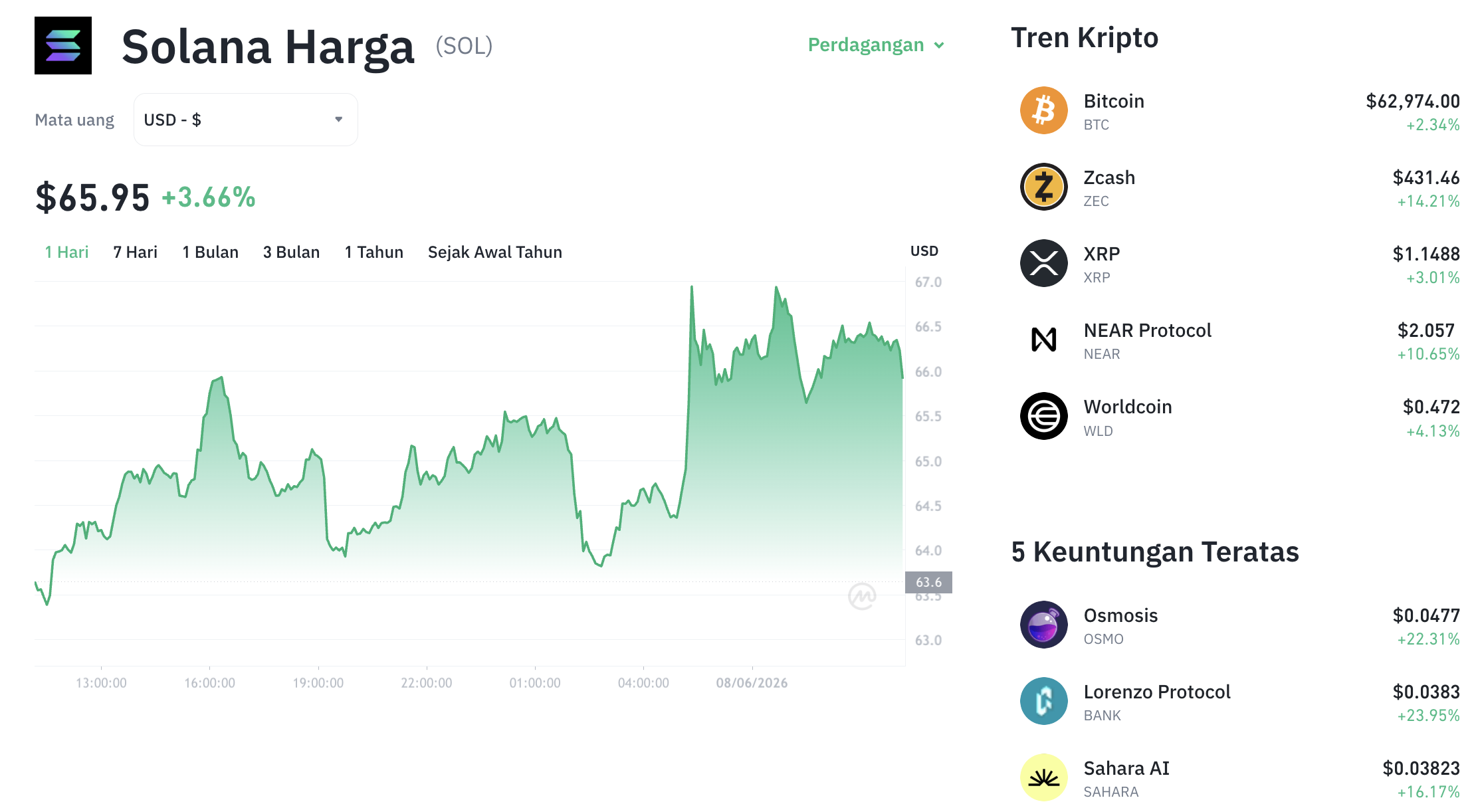
Harga Solana Naik ke US$66, Reli 4% Buka Harapan Baru

Solana Crash Post-Mortem: 3 Metrik On-Chain Ungkap Kerusakan
Harga Solana Naik 2,6% ke US$67, Sinyal Rebound
POPULER
Mata uang kripto yang sedang tren saat ini dan menarik perhatian pasar yang signifikan
Harga Kripto
Mata uang kripto dengan volume trading tertinggi
Baru Ditambahkan
Mata uang kripto yang baru saja masuk listing dan tersedia untuk trading