

LiveArt (ART) vs Other Blockchains: Key Differences Explained

Blockchain Basics: Setting the Stage
Blockchain technology represents one of the most significant technological innovations of the 21st century. At its core, blockchain is a distributed digital ledger that records transactions across multiple computers in a way that ensures the record cannot be altered retroactively. First conceptualized by Satoshi Nakamoto in 2008, blockchain has evolved far beyond its initial application as the foundation for cryptocurrencies.
The power of blockchain stems from its essential characteristics. Decentralization eliminates the need for central authorities, as validation is performed across a network of nodes. Immutability ensures that once data is recorded, it cannot be altered without network consensus. Transparency allows all participants to view the transaction history, fostering trust through cryptographic verification.
Today's blockchain landscape includes public blockchains like Ethereum, private blockchains for enterprise use, and consortium blockchains that balance elements of both to serve industry-wide collaborations.
What Makes LiveArt (ART) Different from Bitcoin/Ethereum?
LiveArt (ART) emerged as a groundbreaking innovation in the blockchain space in 2025 with the vision to solve the limitations of traditional blockchain networks in the context of real-world asset (RWA) tokenization. Developed by a team focused on bridging cultural assets and decentralized finance, LiveArt leverages an AI-powered RWAfi protocol to deliver a high-throughput, scalable solution for tokenizing investment-grade art, collectibles, and luxury goods.
What sets LiveArt blockchain apart is its distinctive architectural approach. Unlike traditional blockchains that process transactions sequentially, LiveArt employs AI-driven asset verification and programmable financial instruments to achieve higher transaction throughput and seamless integration of real-world assets. Additionally, it introduces a novel security mechanism that enables on-chain trading of blue-chip assets with enhanced transparency and compliance.
The LiveArt ecosystem has grown to include applications, services, and tools for tokenizing, trading, and staking cultural assets, with particularly strong adoption in art, luxury collectibles, and alternative investment sectors.
Speed, Fees, and Features: LiveArt (ART) Performance Analysis
The fundamental divergence between traditional blockchain and LiveArt ART begins with their consensus mechanisms. While many blockchains rely on Proof of Work or Proof of Stake, LiveArt implements an AI-powered protocol that offers faster finality and reduced energy consumption by optimizing asset verification and transaction settlement.
Scalability represents another critical difference. Traditional blockchains often struggle with throughput constraints, creating bottlenecks during high activity. LiveArt addresses this through cross-chain deployment and programmable asset layers, enabling significantly higher throughput and efficient asset management.
The network architectures further highlight their differences. Traditional blockchains typically use a single-layer structure. In contrast, LiveArt employs a multi-layered approach where AI modules, DeFi liquidity pools, and RWA oracles handle different aspects of network operation, influencing its community-driven governance and ecosystem fund allocation.
Use Cases: When to Choose LiveArt (ART) Over Others
Performance disparities become evident in key metrics. While networks like Bitcoin or Ethereum process a limited number of transactions per second, LiveArt blockchain achieves significantly higher throughput and faster confirmation times due to its AI-optimized protocol. Energy efficiency also varies dramatically, with LiveArt ART consuming less energy per transaction by minimizing redundant computations and leveraging off-chain data feeds.
These advantages translate into distinct applications. Traditional blockchains excel in use cases requiring maximum security and censorship resistance, while LiveArt succeeds in the tokenization of art, luxury goods, and collectibles where high throughput and low fees are paramount. For instance, LiveArt has enabled the on-chain trading of investment-grade art and rare collectibles, making these assets accessible to a global audience.
From a cost perspective, while traditional blockchain transactions can incur high fees during congestion, LiveArt maintains consistently lower fees, making it suitable for micropayments, fractional ownership, and high-frequency trading of real-world assets.
Future Outlook: LiveArt (ART)'s Competitive Edge
The developer experience differs markedly between platforms. Established blockchains offer mature development tools, while LiveArt provides specialized SDKs and APIs that enable rapid integration of real-world asset data and AI-driven asset management.
Community engagement also reveals important differences. Traditional blockchain communities have established governance processes, while the LiveArt community demonstrates rapid growth and a technical focus, with active development and ecosystem expansion metrics.
Looking forward, traditional blockchains focus on scalability and interoperability improvements, while LiveArt has outlined an ambitious roadmap including expanded asset classes, enhanced AI modules, and global regulatory compliance features scheduled for rollout through 2026.
Trade Multiple Assets Including LiveArt (ART) on MEXC
The differences between traditional blockchain and LiveArt (ART) highlight the evolution within the distributed ledger space. While blockchain introduced trustless, decentralized record-keeping, LiveArt represents the next generation that prioritizes scalability, real-world asset integration, and user experience without sacrificing core security benefits.
Now that you understand the technological foundation of LiveArt (ART), ready to put this knowledge into action? Our 'LiveArt (ART) Trading Complete Guide' provides everything you need to start learning confidently – from basic setup to advanced strategies tailored for LiveArt's unique market. Discover how to leverage these technological advantages for potentially profitable opportunities today.
Artikel-artikel yang dibagikan di halaman ini bersumber dari platform publik dan disediakan hanya sebagai referensi. Artikel tersebut tidak mewakili posisi atau pandangan MEXC. Seluruh hak merupakan milik MEXC. Jika Anda meyakini ada konten yang melanggar hak pihak ketiga, silakan hubungi [email protected] untuk penghapusan segera. MEXC tidak menjamin keakuratan, kelengkapan, atau keaktualan konten apa pun dan tidak bertanggung jawab terhadap segala tindakan yang dilakukan berdasarkan informasi yang diberikan. Konten tersebut bukan merupakan saran keuangan, hukum, atau profesional lainnya, serta tidak boleh ditafsirkan sebagai rekomendasi atau dukungan oleh MEXC. Untuk mendapatkan wawasan ahli dan analisis mendalam, kunjungi MEXC Learn.
Info Polytrade Terkini
Lihat Selengkapnya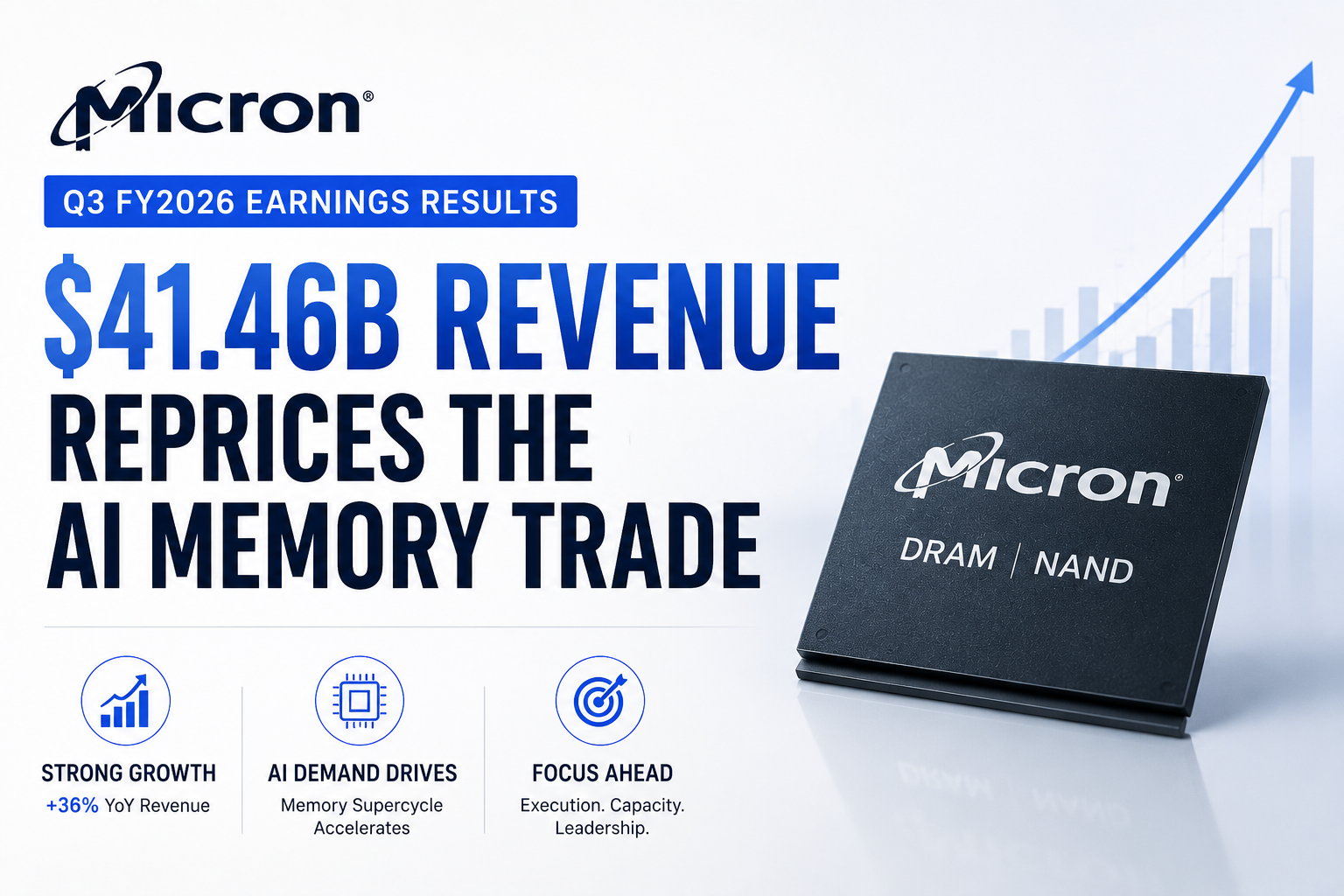
Hasil Pendapatan Micron Q3 2026: Pendapatan $41,46 Miliar Menilai Kembali Perdagangan Memori AI
Rapat Tahunan NVIDIA 2026: Tesis "Pabrik AI" Jensen Huang Menghadapi Ujian Pasar Berikutnya

Dari Perdagangan Kelangkaan ke Disiplin Valuasi: Penurunan SpaceX Menguji Ambisi IPO OpenAI


Anda Mungkin Juga Menyukai
POPULER
Mata uang kripto yang sedang tren saat ini dan menarik perhatian pasar yang signifikan
Harga Kripto
Mata uang kripto dengan volume trading tertinggi
Baru Ditambahkan
Mata uang kripto yang baru saja masuk listing dan tersedia untuk trading