Snowflake Inc. is often described as a “data warehouse company,” but that label is now too small for what the platform has become. Snowflake sells a modern, cloud-native enterprise data layer where stSnowflake Inc. is often described as a “data warehouse company,” but that label is now too small for what the platform has become. Snowflake sells a modern, cloud-native enterprise data layer where st

Snowflake (SNOW) Stocks: AI Data Cloud Leader & Consumption Economics

Snowflake Inc. is often described as a “data warehouse company,” but that label is now too small for what the platform has become. Snowflake sells a modern, cloud-native enterprise data layer where storage, compute, governance, sharing, and increasingly AI workflows converge. Crucially, it charges customers not for what they own, but for what they use. That distinction shapes everything: revenue predictability, customer retention, product strategy, and the way investors interpret every earnings call.
This deep dive explores Snowflake’s evolution, its unique consumption-based business model, financial health, competitive risks, and the emerging tokenized exposure via instruments like SNOWON.

Snowflake’s Origin, Evolution, and Market Role in the AI Data Cloud

Snowflake rose during a structural shift in enterprise IT. Corporations stopped wanting to manage database infrastructure and started demanding outcomes—elastic scale, near-infinite concurrency, and centralized governance across multiple cloud providers (AWS, Azure, GCP). Snowflake’s original thesis was simple and disruptive: separate compute from storage. This allowed organizations to scale their data footprint cheaply (storage) while spinning up massive processing power only when needed (compute).
Under CEO Sridhar Ramaswamy (appointed in 2024), Snowflake has pivoted hard into an “AI Data Cloud” narrative. The strategy is to position the platform not just as a repository to query historical data, but as the engine to build data products, share live datasets securely, and run Generative AI (GenAI) workloads directly where trusted enterprise data resides, minimizing data movement and security risks.

SNOW Stock: Listing, Ticker, and the Cloud-Software Return Profile

Snowflake trades on the New York Stock Exchange under the ticker SNOW.
As a consumption-based cloud company, SNOW behaves differently from subscription-only SaaS (Software as a Service) stocks. In a traditional SaaS model, revenue is fixed per seat; in Snowflake’s model, revenue is variable based on activity. When customers optimize their cloud spend, Snowflake’s growth can decelerate even if retention remains high. Conversely, when data workloads surge—driven by new AI pilots or end-of-quarter analytics—revenue can re-accelerate rapidly. This gives Snowflake a "high beta" return profile that is tethered to macro cloud budgets and the pace of digital transformation.

How Snowflake Makes Money: A Consumption Engine Built on Data Gravity

Snowflake’s monetization model is often misunderstood. It is a product-revenue engine driven by "credits." Customers prepay for capacity or pay on-demand to run queries, load data, and execute Python or SQL code.
The economic moat, however, is Data Gravity. Once an organization centralizes its most sensitive customer data, financial records, and governance policies into Snowflake, the friction of leaving is incredibly high. This creates a powerful lock-in effect, not through legal contracts, but through operational utility.
Investors track future demand through Remaining Performance Obligations (RPO). In its fiscal 2025 reporting, Snowflake highlighted an RPO of $6.9 billion, representing 33% year-over-year growth. This metric is vital because it represents future revenue locked into contracts that has not yet been consumed, providing a buffer of visibility in a usage-based model.

Snowflake’s AI Push: Cortex, Iceberg, and the “Data + AI” Convergence

Snowflake’s current product roadmap is focused on compressing the distance between governed data and AI execution. Historically, data engineers had to export data out of Snowflake to train models—a security nightmare.
  • Cortex AI: Snowflake’s managed service that allows users to access industry-leading Large Language Models (LLMs) and vector search capabilities directly within the Snowflake perimeter.
  • Apache Iceberg: Snowflake has aggressively embraced Iceberg, an open table format. This allows customers to store data in open formats while still using Snowflake’s engine to query it. While this theoretically lowers switching costs, it increases adoption by removing the fear of vendor lock-in.
The strategic bet is clear: If Snowflake becomes the default governed layer for enterprise AI, every question asked to a corporate chatbot becomes a billable query.

Financial Performance: The Metrics Wall Street Watches First

Snowflake is analyzed through a specific set of financial lenses:
  1. Product Revenue Growth: For Fiscal 2025, Snowflake reported strong momentum, guiding for product revenue to reach approximately $3.4 billion.
  2. Net Revenue Retention (NRR): This metric measures how much existing customers spend compared to the previous year. While this number has normalized from its stratospheric highs of >150% down to the ~127% range, it still indicates that once a customer lands on Snowflake, their usage tends to expand significantly over time.
  3. Free Cash Flow (FCF): Unlike many high-growth tech stocks, Snowflake generates significant cash, focusing on "Non-GAAP Operating Margin" discipline while continuing to invest heavily in R&D.
Note: Snowflake’s fiscal year ends on January 31, meaning "Fiscal 2025" covers the period ending January 31, 2025.

Who Owns SNOW? Ownership Structure and Why It Matters

Snowflake’s shareholder base is dominated by institutional heavyweights. Upon its IPO, it famously attracted investment from Berkshire Hathaway—a rarity for a high-growth tech stock—alongside Salesforce Ventures. Today, top holders include Vanguard, BlackRock, and Iconiq Capital.
This heavy institutional presence means SNOW stock is often treated as a proxy for the entire "Data Infrastructure" sector. Capital flows into SNOW are frequently correlated with broader sentiment regarding enterprise software spending and interest rates, rather than just company-specific news.

Competitive Landscape: Snowflake vs. Databricks and the Hyperscalers

Snowflake operates in a "frenemy" ecosystem:
  • Databricks: The fiercest rival. Historically, Databricks won on "Data Engineering/AI" while Snowflake won on "Data Warehousing/BI." Today, they are converging. Databricks is adding warehousing (SQL) capabilities, while Snowflake is adding AI/Python capabilities (Snowpark).
  • The Hyperscalers (AWS, Azure, Google Cloud): These are Snowflake's underlying infrastructure providers and its competitors (via Redshift, Synapse, and BigQuery). Snowflake’s edge here is "Cloud Neutrality." Large enterprises often prefer Snowflake because it allows them to operate across AWS and Azure simultaneously without being locked into one cloud provider's proprietary tools.

Growth Drivers: Why Snowflake Can Still Compound

Snowflake’s long-term growth thesis relies on three pillars:
  1. The AI Application Layer: As enterprises move from AI "science projects" to production applications, they need a secure data foundation. Snowflake is positioning itself as the "iPhone App Store" for enterprise data apps.
  2. Data Sharing: Snowflake allows companies to share live data with partners without copying files (e.g., a retailer sharing inventory data with a supplier). This creates a network effect: the more companies use Snowflake, the more valuable it becomes to join the network.
  3. International Expansion: While dominant in North America, Snowflake has significant runway in EMEA and APAC markets as cloud adoption in those regions catches up.

Major Risks: Where SNOW Can Disappoint Investors

  • Consumption Volatility: In a recession, IT departments can "turn down the dial" on data retention and query frequency, impacting Snowflake’s revenue immediately.
  • valuation Compression: SNOW typically trades at a high revenue multiple. Any sign of slowing growth can lead to sharp multiple compression.
  • Commoditization: If open table formats like Iceberg make the storage layer completely commoditized, Snowflake must prove its compute engine is superior to cheaper alternatives.

Tokenized Snowflake Exposure: SNOWON on MEXC

Beyond traditional equity ownership, tokenized instruments have appeared that provide crypto-native exposure to public-company narratives. On MEXC, SNOWON is presented as a token associated with Snowflake, tradable via the SNOWON/USDT pair.
For real-time market data and historical charts, traders can reference the SNOWON Price page.
Important Note: Holding SNOWON is not the same as holding SNOW shares on the NYSE. Tokenized assets may differ in liquidity, trading hours, custody structure, and regulatory protections compared to traditional securities.

Key Metrics to Track for Snowflake Investors

To analyze Snowflake like a professional, keep a "dashboard" of these metrics:
  • Product Revenue: The core measure of consumption.
  • RPO (Remaining Performance Obligations): The backlog of future revenue.
  • NRR (Net Revenue Retention): Anything above 120% is considered elite for a company of this scale.
  • Snowpark Consumption: A proxy for how well Snowflake is winning the AI/Developer workload battle against Databricks.
  • Customer Count >$1M: The number of customers spending over $1 million annually proves enterprise adoption.

FAQ

Is Snowflake publicly traded?
Yes. Snowflake trades on the New York Stock Exchange under the ticker SNOW.
Does Snowflake pay a dividend?
No. Snowflake is a growth-oriented company and reinvests its cash flow into R&D and market expansion rather than paying dividends to shareholders.
What is SNOWON?
SNOWON is a tokenized instrument available for trading on MEXC, designed to provide exposure to the Snowflake asset narrative within the cryptocurrency market structure.
Peluang Pasar
Logo Gensyn
Harga Gensyn(AI)
--
----
USD
Grafik Harga Live Gensyn (AI)

Artikel-artikel yang dibagikan di halaman ini bersumber dari platform publik dan disediakan hanya sebagai referensi. Artikel tersebut tidak mewakili posisi atau pandangan MEXC. Seluruh hak merupakan milik MEXC. Jika Anda meyakini ada konten yang melanggar hak pihak ketiga, silakan hubungi [email protected] untuk penghapusan segera. MEXC tidak menjamin keakuratan, kelengkapan, atau keaktualan konten apa pun dan tidak bertanggung jawab terhadap segala tindakan yang dilakukan berdasarkan informasi yang diberikan. Konten tersebut bukan merupakan saran keuangan, hukum, atau profesional lainnya, serta tidak boleh ditafsirkan sebagai rekomendasi atau dukungan oleh MEXC. Untuk mendapatkan wawasan ahli dan analisis mendalam, kunjungi MEXC Learn.

Info Gensyn Terkini

Lihat Selengkapnya
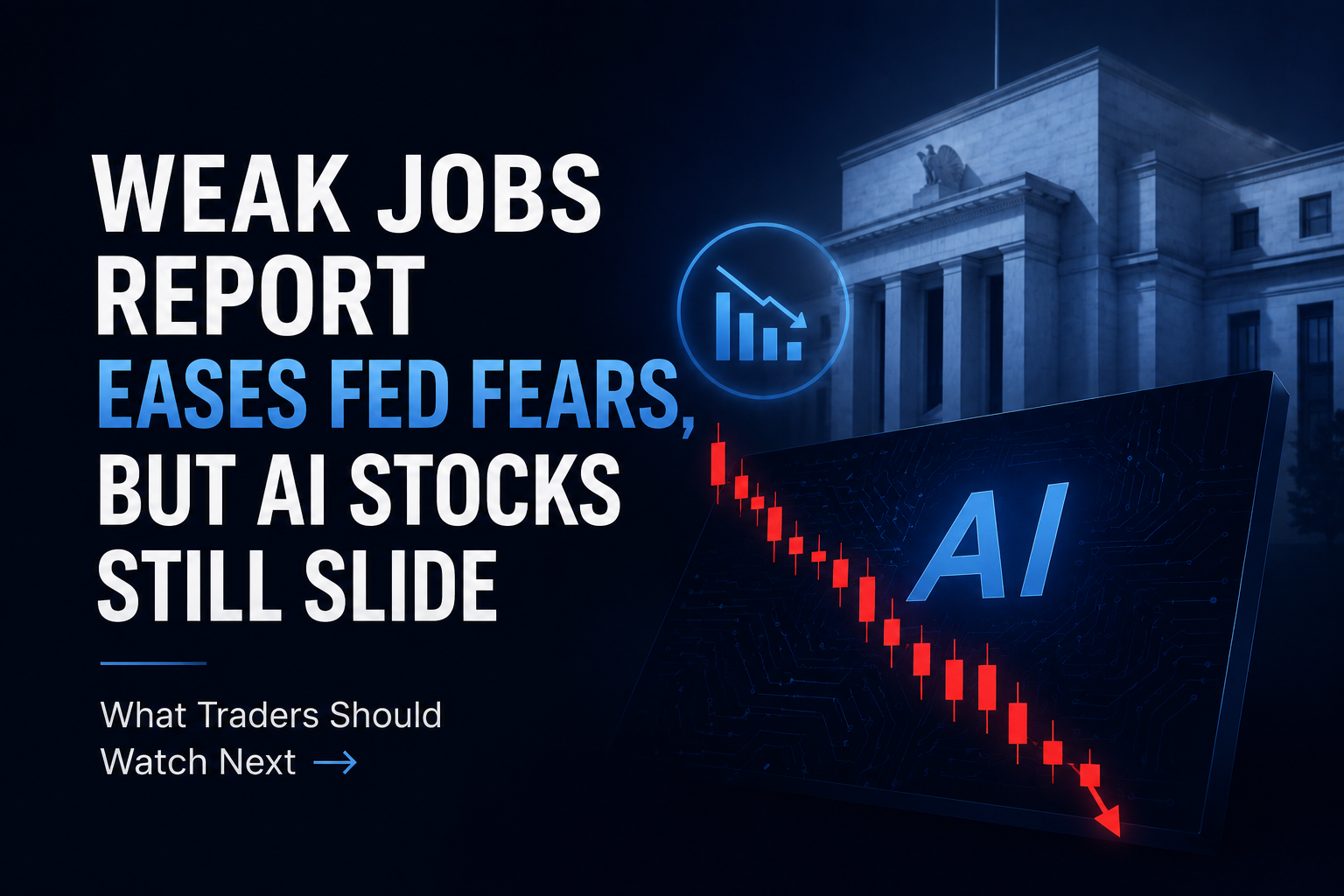
Laporan Pekerjaan yang Lemah Meredakan Kekhawatiran Fed, Tetapi Saham AI Tetap Turun: Apa yang Harus Diperhatikan Trader Selanjutnya
Laporan Pekerjaan yang Lemah Meredakan Kekhawatiran Fed, Tetapi Saham AI Tetap Turun: Apa yang Harus Diperhatikan Trader Selanjutnya

Laporan pekerjaan AS bulan Juni mengisyaratkan perlambatan ekonomi yang jelas, meleset dari ekspektasi dan menurunkan kekhawatiran kenaikan suku bunga Federal Reserve. Meskipun imbal hasil Treasury lebih rendah, saham AI dan teknologi merosot, membuktikan bahwa pelonggaran suku bunga makro tidak lagi menjadi katalisator yang dijamin untuk teknologi dengan valuasi tinggi. Bitcoin dan emas berada pada posisi untuk mendapatkan keuntungan dari dolar AS yang lebih lemah, tetapi memerlukan konfirmasi untuk mempertahankan reli. Trader harus mengalihkan fokus mereka dari kebijakan Fed ke kualitas pendapatan Kuartal 2 untuk membenarkan premi pasar saat ini.
2026/07/03
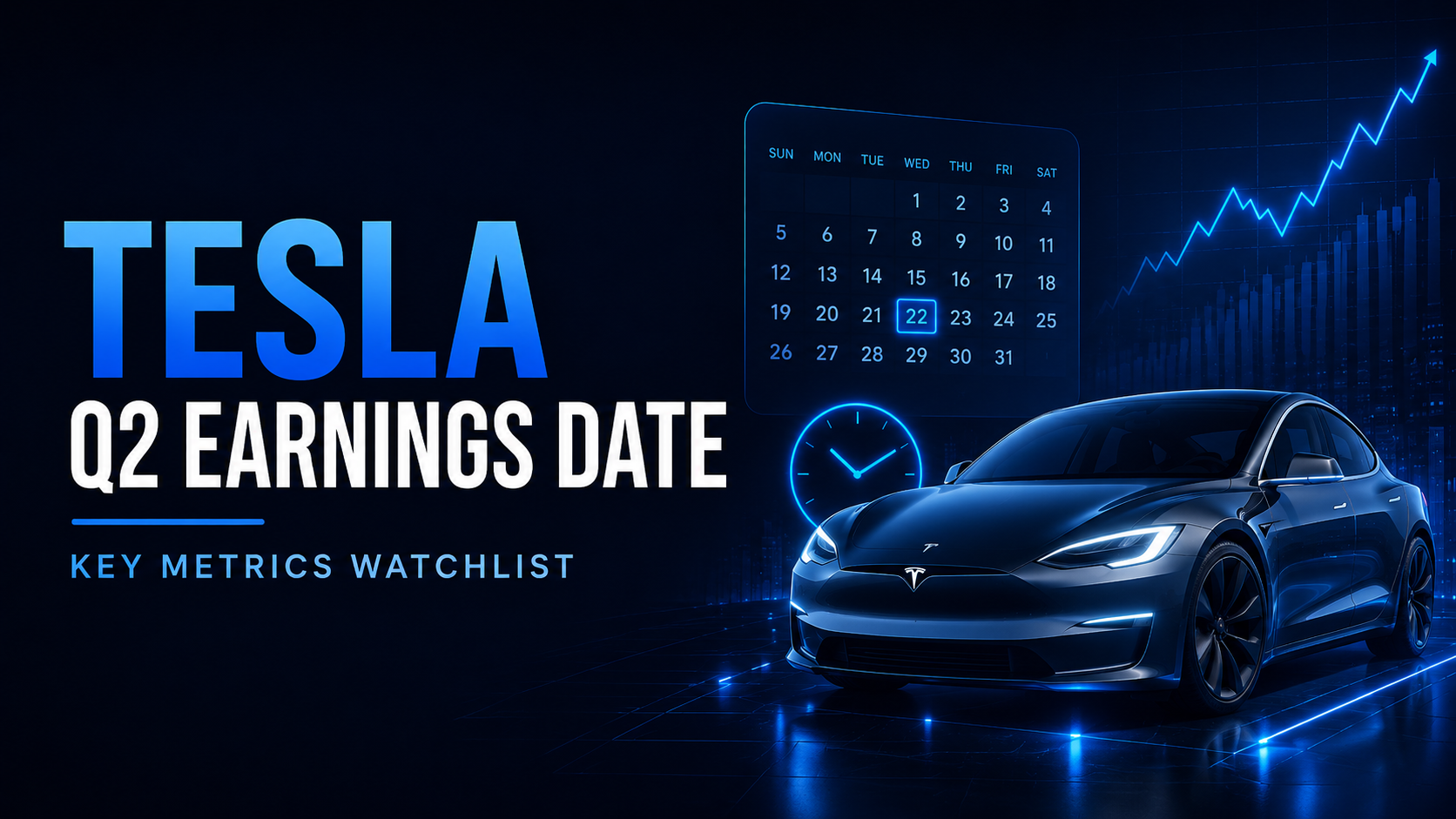
Tanggal Laporan Keuangan Tesla Q2 2026: Waktu Rilis, Webcast, dan Metrik Utama
Tanggal Laporan Keuangan Tesla Q2 2026: Waktu Rilis, Webcast, dan Metrik Utama

Laporan pendapatan Tesla Q2 2026 dijadwalkan pada hari Rabu, 22 Juli 2026, setelah penutupan pasar, dengan manajemen yang dijadwalkan menjadi tuan rumah webcast Tanya Jawab langsung pada pukul 16:30 Waktu Tengah (CT) / 17:30 Waktu Timur (ET). Pembaruan dan webcast Q2 akan tersedia melalui situs web Hubungan Investor Tesla, dengan tayangan ulang yang diarsipkan diharapkan setelah panggilan tersebut. Ini bukan sekadar tanggal laporan keuangan Tesla biasa. Tesla telah melaporkan kuartal pengiriman yang lebih kuat dari perkiraan: pada Q2 2026, perusahaan memproduksi 451.758 kendaraan, mengirimkan 480.126 kendaraan, dan menggunakan 13,5 GWh produk penyimpanan energi. Bagi para trader, pertanyaan kuncinya bukanlah apakah Tesla mengirimkan lebih banyak kendaraan. Bagian itu sudah diketahui. Pertanyaan sebenarnya adalah apakah pengiriman tersebut cukup menguntungkan, apakah pertumbuhan penyimpanan energi dapat mendukung kisah Tesla yang lebih luas, dan apakah manajemen dapat menunjukkan bahwa investasi AI, otonomi, dan robotaxi bergerak dari sekadar narasi menjadi kemajuan bisnis yang terukur.
2026/07/06
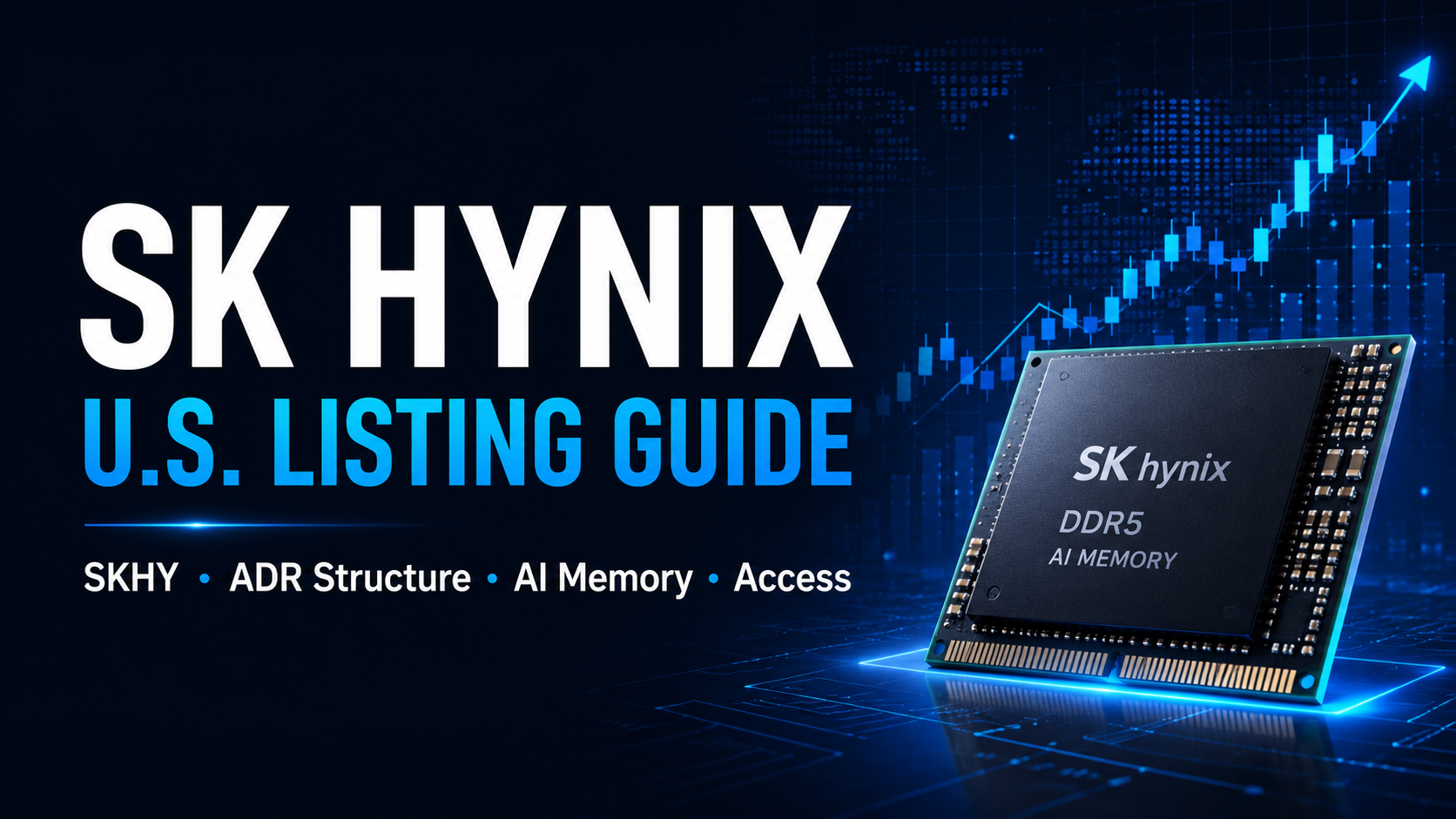
Panduan Pencatatan Saham SK Hynix di AS: Tanggal SKHY, Struktur ADR, Eksposur Memori AI, dan Akses MEXC


Panduan Pencatatan Saham SK Hynix di AS: Tanggal SKHY, Struktur ADR, Eksposur Memori AI, dan Akses MEXC

SK Hynix selangkah lebih dekat dengan debutnya di pasar AS, memberikan investor global cara baru untuk mengakses salah satu perusahaan paling penting dalam rantai pasokan memori AI. Produsen semikonduktor Korea Selatan ini telah meluncurkan penjualan saham AS dalam skala besar melalui American Depositary Receipts (ADR) di Nasdaq dengan perkiraan ticker SKHY. Menurut Reuters, SK Hynix berupaya mengumpulkan sekitar 43 triliun won, atau sekitar $28,07 miliar, melalui penawaran ADR ini. Perusahaan berencana untuk menerbitkan 17,79 juta saham baru, dengan 10 ADR mewakili satu saham biasa. Penetapan harga akhir diperkirakan pada 9 Juli, menjelang antisipasi debut perdagangan Nasdaq pada 10 Juli. Pencatatan ini penting karena SK Hynix bukan sekadar perusahaan asing lain yang mencari akses pasar AS. Ini adalah salah satu pemasok memori bandwidth tinggi (HBM) terkemuka di dunia—komponen penting yang menggerakkan akselerator AI dan infrastruktur pusat data modern. Pencatatan saham di AS bertujuan untuk memperluas basis investor SK Hynix, meningkatkan akses perdagangan bagi institusi AS, dan menguji apakah pasar bersedia menetapkan premi likuiditas yang lebih tinggi kepada pemimpin memori AI tersebut. Pada saat yang sama, investor tidak boleh memperlakukan pencatatan ini sebagai acara akses AI yang bebas risiko. Penawaran ini melibatkan saham yang baru diterbitkan, tiba setelah reli saham memori yang didorong AI besar-besaran, dan datang pada titik ketika pasar semakin sangat fokus pada belanja modal (capex), ekspansi kapasitas, dan risiko pembalikan siklus memori di masa depan.
2026/07/08
Lihat Selengkapnya