A Great Company in a Bad Industry: Why Sector Trends Matter to Stock Investors
A company does not operate in isolation. Its revenue, costs, profit margins, competitive position, and stock valuation are all influenced by the industry around it.
This is why a well-managed company can see its shares decline even when its own operations remain stable. If industry demand is weakening, costs are rising, or investors are moving capital into other sectors, the company may struggle against forces it cannot fully control.
The opposite can happen too. An average company may experience rapid share-price gains because it belongs to an industry receiving strong demand, favorable policy, or enthusiastic capital flows. Company fundamentals still matter, but investors must also understand whether the surrounding industry is helping or hurting the business.
Industry Economics Shape Revenue, Margins, and Valuation
Every industry has a different economic structure. Some industries can grow rapidly while maintaining high margins. Others require heavy investment, compete mainly through price, or depend on economic conditions outside management’s control.
Different business models produce different economics
A software platform may be able to serve additional customers without building a new facility for every user. Once the platform has been developed, revenue can grow faster than many operating costs.
A manufacturer may need to invest in factories, equipment, inventory, and distribution before it can increase production. Even when sales rise, the company may need to reinvest much of its cash to support that growth.
The same difference appears in profit margins. A supermarket can generate enormous revenue but keep only a small percentage as profit because competition is intense and customers are sensitive to price. A specialized technology provider may earn less total revenue but retain more of each sale because its product is difficult to replace.
Capital requirements matter as well. Two companies can report identical profits, but the company that needs less capital to maintain and expand its business may generate more free cash flow for shareholders.
Industry structure influences valuation
Investors commonly pay higher valuation multiples for companies operating in industries with expanding demand, strong margins, and long growth runways. Lower multiples are often applied to capital-intensive, highly cyclical, or structurally declining industries.
A stock’s long-term value remains connected to what the underlying business can earn and return to shareholders. MEXC’s explanation of why stocks have value shows how earnings, cash flow, competitive advantages, and expectations support that value. Industry conditions help determine how favorable the environment for producing those earnings will be.
Investors should therefore compare a company with relevant peers rather than with the entire market. A margin that appears weak for a software business may be exceptional for a retailer. A valuation that looks low for a technology company may be expensive for a commodity producer earning unusually high profits near the top of its cycle.
Structural Growth and Cyclical Growth Require Different Analysis
Not every growing industry is experiencing the same type of expansion. Investors need to separate structural change from temporary cyclical improvement.
Structural trends can reshape demand for years
Structural growth comes from lasting changes in technology, demographics, infrastructure, regulation, or consumer behavior. Cloud computing, digital payments, automation, and increased demand for data infrastructure are examples of trends that can influence investment and spending over many years.
A structural trend can create new markets and new supply chains. Growth in data centers, for example, may affect semiconductor companies, memory producers, networking providers, cooling-system manufacturers, construction businesses, and electricity suppliers.
The most visible company is not always the most profitable beneficiary. Infrastructure and component providers may begin generating revenue before the companies delivering the final consumer product. Investors therefore need to trace how spending moves through the supply chain.
Cyclical growth can disappear when conditions reverse
Cyclical growth is more temporary. It may result from changes in interest rates, commodity prices, inventory levels, consumer confidence, or government spending.
An industry can report excellent results during a favorable cycle and then experience a sharp decline when those conditions reverse. A manufacturer may receive a sudden increase in orders because customers are rebuilding depleted inventories, not because long-term demand has permanently changed.
Revenue rises in both situations, but the valuation implications are different. Investors may pay a premium for growth they believe can continue for a decade. They are usually more cautious about earnings that could peak within a year or two.
To distinguish between the two, investors should ask what is creating the demand, whether customers are making repeat purchases, how much new capacity competitors are building, and what event could cause the trend to reverse.
They should also examine whether the theme has produced real revenue. A company may mention artificial intelligence, clean energy, digital assets, or another popular trend without earning meaningful income from it. MEXC’s guide to analyzing stock market themes and business models emphasizes that an industry narrative becomes economically meaningful only when it creates paying customers, sustainable margins, and eventually free cash flow.
Industry Growth Does Not Mean Every Company Will Win
Strong industry demand creates an opportunity, but competition, costs, and regulation determine which companies keep the resulting profits.
Competition can remove the benefits of growth
A growing industry attracts new participants. Existing companies expand capacity, while new entrants attempt to capture the opportunity. If supply begins increasing faster than demand, prices can fall and profit margins can shrink.
This is especially important in industries where products are difficult to differentiate. Customers may choose primarily on price, allowing competition to eliminate much of the economic benefit from higher demand.
The strongest companies are generally those able to protect their margins through technology, scale, intellectual property, distribution, customer relationships, brand strength, or high switching costs.
Investors should look for measurable evidence of these advantages. Rising market share, stable or expanding margins, strong customer retention, and higher returns on invested capital suggest that the company is capturing value from the industry trend.
Revenue growth accompanied by falling margins tells a less attractive story. The company may be using discounts or excessive spending to gain customers, creating growth that is difficult to sustain profitably.
Costs and regulation create relative winners and losers
Industry trends affect expenses as well as revenue. Rising commodity prices may benefit producers while hurting manufacturers that consume those materials. Higher energy costs may support energy suppliers but weaken transportation and industrial businesses.
The ability to pass higher costs to customers is therefore crucial. A company with strong pricing power may preserve its margins, while weaker competitors must absorb the additional expense.
Regulation can reshape the competitive landscape in similar ways. New rules may raise costs for every company, but larger businesses may have the legal, technical, and financial resources to comply. Smaller competitors may withdraw, allowing the strongest participants to gain market share.
Policy support can also create demand through tax incentives, infrastructure programs, or new approval frameworks. However, a business model that depends heavily on subsidies or favorable regulation may face significant risk if policy changes.
The lesson is that industry growth should never be treated as a guarantee. Investors still need to identify which companies possess the financial strength and competitive advantages required to capture that growth.
Sector Rotation Can Move Stocks Before Business Results Change
Stock prices reflect expectations about the future, so investors often move capital before company earnings clearly improve or deteriorate.
Sector rotation occurs when money shifts from one area of the market to another. Investors may reduce exposure to growth-oriented businesses when they expect higher interest rates, then move toward companies generating stronger current cash flow. When economic growth is expected to accelerate, capital may rotate into more cyclical industries.
Defensive sectors such as healthcare, utilities, and consumer staples may attract capital when investors expect weaker conditions because demand for essential products tends to remain more stable. Technology, industrial, and consumer discretionary stocks may receive more attention when investors become optimistic about economic expansion.
MEXC’s guide to understanding U.S. stock sector rotation explains how economic expectations, relative strength, market breadth, and risk appetite can shift leadership between industries.
These flows can move an individual stock even when the company has released no new information. A business may report stable performance while its shares fall because investors are reducing exposure to the entire sector. Another stock may rise because its industry has become more attractive, not because its own outlook has suddenly changed.
Separate company strength from sector momentum
If one company rises while most of its competitors remain weak, the move may reflect a company-specific advantage, earnings result, or corporate event. If most companies in the group rise together, broader industry expectations and capital flows are probably contributing.
Investors can evaluate the difference by asking:
- Is demand improving across the entire industry or only for one company?
- Are most companies reporting stronger orders and margins?
- Is sector performance broad, or is it driven by a few large stocks?
- Has the company gained market share, or is it simply rising with its peers?
- Does the current valuation already assume that favorable conditions will continue?
MEXC’s view is that sector analysis should answer three questions: Is the industry trend supported by real demand? Which part of the supply chain captures the most value? Which company can convert that opportunity into durable cash flow?
A favorable sector answers only the first question. The strongest investment candidate may still be the company with the best margins, balance sheet, competitive advantages, and valuation discipline.
FAQ
Can a good company’s stock fall because its industry is weak?
Yes. Falling industry demand, higher costs, lower sector valuations, or capital moving elsewhere can pressure a stock even when the company remains operationally sound.
Does a growing industry make every company a good investment?
No. Competition, debt, weak margins, poor management, and an excessive valuation can prevent a company from benefiting from industry growth.
What is the difference between a structural trend and a cyclical trend?
A structural trend reflects a lasting economic, technological, or behavioral change. A cyclical trend is tied more closely to temporary changes in economic growth, interest rates, inventory, or commodity prices.
Why do stocks in the same sector often move together?
They may share customers, costs, regulation, economic sensitivity, and investor capital flows. Information about a major company can also change expectations for its competitors and suppliers.
How can investors determine whether an industry trend is real?
They can look for measurable customer demand, repeat revenue, sustainable margins, capital investment, supply-chain activity, and evidence that companies are converting the trend into free cash flow.
Artikel Populer
Lihat Selengkapnya
Apakah Volume Sama dengan Likuiditas? Penjelasan Kedalaman Order Book, dari Rentang 0,01% hingga 0,10%
Setiap exchange senang membicarakan volume. Angkanya besar dan terlihat seperti bukti likuiditas. Padahal tidak. Volume menunjukkan apa yang sudah diperdagangkan. Kedalaman order book menunjukkan apa

Apakah Biaya 0 Berarti Gratis? Cara Menghitung Total Biaya Trading Futures Saham
Label “0 biaya” menjawab satu pertanyaan sekaligus memunculkan pertanyaan lain: jika bursa tidak mengenakan biaya apa pun, berapa sebenarnya biaya order tersebut bagi Anda? Jawaban singkatnya adalah “

Bisakah Anda Membuka Posisi Besar dengan Leverage 100x? Penjelasan Tingkatan Leverage dan Limit Posisi Futures Saham
Bursa memajang angka leverage yang besar di banner mereka. Yang tidak disampaikan banner tersebut adalah seberapa besar posisi yang benar-benar dapat Anda pegang pada angka itu. Di Futures saham MEXC,

Berita yang Sedang Tren
Lihat Selengkapnya
Panduan Pencatatan Saham SK Hynix di AS: Tanggal SKHY, Struktur ADR, Eksposur Memori AI, dan Akses MEXC
SK Hynix selangkah lebih dekat dengan debutnya di pasar AS, memberikan investor global cara baru untuk mengakses salah satu perusahaan paling penting dalam rantai pasokan memori AI. Produsen semikondu

Ulasan Pendapatan Tesla Q1 2026: Pengiriman Pulih, Namun Kualitas Margin Tetap Menjadi Ujian Sebenarnya
Tesla melaporkan hasil keuangan Q1 2026 pada 22 April 2026, setelah penutupan pasar AS. Perusahaan mengirimkan 358.023 kendaraan pada kuartal tersebut, menghasilkan total pendapatan sebesar $22,4 mili
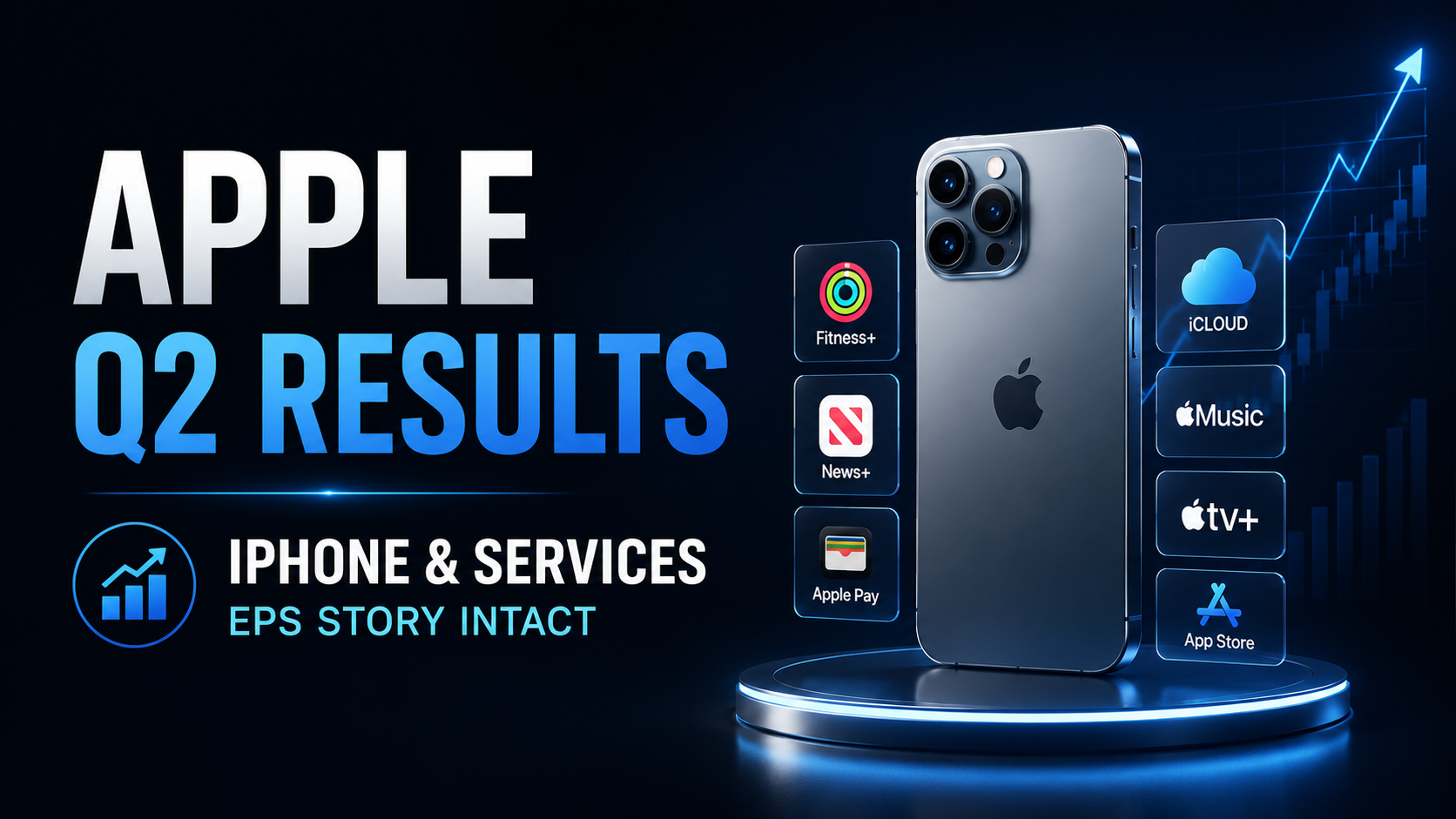
Tinjauan Pendapatan Apple Q2 FY2026: Pendapatan iPhone dan Pertumbuhan Layanan Menjaga Kisah EPS Tetap Utuh
Apple melaporkan hasil kuartal kedua tahun fiskal 2026 pada 30 April 2026, untuk kuartal yang berakhir pada 28 Maret 2026. Pendapatan mencapai $111,2 miliar, naik 17% secara year-on-year, sementara EP

Artikel Terkait
Lihat Selengkapnya
Perkiraan USDJPY Setelah Lonjakan Yen 30 Juli 2026: Mengapa Dolar Turun dan Apa Selanjutnya
USDJPY mengalami pembalikan yang sangat tajam dan tidak biasa pada malam 30 Juli 2026, waktu Hong Kong. Dolar AS turun hingga 3% terhadap yen Jepang, sempat mendorong USDJPY turun ke sekitar 158,34 se
Arus Aset Cerdas Kripto ke MEXC: Apa yang Diungkapkan Arus Masuk Bersih 24 Jam dan 7 Hari
RingkasanDi pasar mata uang kripto, modal sering bergerak menuju platform yang menawarkan likuiditas kompetitif, cakupan aset yang luas, infrastruktur perdagangan yang efisien, dan informasi cadangan

Saham AI, Pusat Data, dan Kripto: Mengapa Perdagangan AI Menjadi Siklus Pengeluaran Modal
AI tidak lagi sekadar tema perangkat lunak atau narasi token jangka pendek. Ini berkembang menjadi siklus pengeluaran modal (CapEx) lintas aset yang menghubungkan saham teknologi mega-cap AS, semikond