The post Top 12 DEXs in December 2025 appeared on BitcoinEthereumNews.com. The crypto market has always been built on the idea of autonomy, i.e., the belief that users should have full control over their own assets. It’s an ethos that runs through every layer of the ecosystem. Yet, despite all the innovation blockchain promised, many early trading platforms ended up mirroring the very systems crypto was meant to challenge: centralized exchanges. Centralized exchanges (CEXs) operate much like traditional financial institutions, where they act as intermediaries, hold user funds, and often decide who gets access. They’re fast, user-friendly, and liquid, but that convenience comes at a cost: limited transparency, custodial risk, and reliance on a central authority. Decentralized exchanges (DEXs), on the other hand, flip that model on its head. Powered by smart contracts and blockchain protocols, they enable direct peer-to-peer trading without intermediaries. Users stay in full control of their assets, enjoy greater transparency, and avoid the single points of failure that centralized systems struggle with. As the ecosystem matures, DEXs have come a long way from their early, clunky beginnings. Today, they rival centralized platforms in both performance and usability, offering advanced features, deeper liquidity, and community-driven innovation built on trustless infrastructure. Here is a list of the top 12 decentralized exchanges to look out for in December 2025: 1. dYdX dYdX has carved a strong position in the decentralized trading space by focusing on derivatives, a segment that has long been dominated by centralized platforms. It allows users to trade perpetual contracts, use margin, and access advanced order types, all while keeping full control of their assets. Built around a professional-grade order book system, dYdX delivers fast execution, low fees, and minimal slippage. The platform offers up to 20x leverage and deep liquidity across major markets, making it a go-to choice for experienced traders who want the functionality of… The post Top 12 DEXs in December 2025 appeared on BitcoinEthereumNews.com. The crypto market has always been built on the idea of autonomy, i.e., the belief that users should have full control over their own assets. It’s an ethos that runs through every layer of the ecosystem. Yet, despite all the innovation blockchain promised, many early trading platforms ended up mirroring the very systems crypto was meant to challenge: centralized exchanges. Centralized exchanges (CEXs) operate much like traditional financial institutions, where they act as intermediaries, hold user funds, and often decide who gets access. They’re fast, user-friendly, and liquid, but that convenience comes at a cost: limited transparency, custodial risk, and reliance on a central authority. Decentralized exchanges (DEXs), on the other hand, flip that model on its head. Powered by smart contracts and blockchain protocols, they enable direct peer-to-peer trading without intermediaries. Users stay in full control of their assets, enjoy greater transparency, and avoid the single points of failure that centralized systems struggle with. As the ecosystem matures, DEXs have come a long way from their early, clunky beginnings. Today, they rival centralized platforms in both performance and usability, offering advanced features, deeper liquidity, and community-driven innovation built on trustless infrastructure. Here is a list of the top 12 decentralized exchanges to look out for in December 2025: 1. dYdX dYdX has carved a strong position in the decentralized trading space by focusing on derivatives, a segment that has long been dominated by centralized platforms. It allows users to trade perpetual contracts, use margin, and access advanced order types, all while keeping full control of their assets. Built around a professional-grade order book system, dYdX delivers fast execution, low fees, and minimal slippage. The platform offers up to 20x leverage and deep liquidity across major markets, making it a go-to choice for experienced traders who want the functionality of…

Top 12 DEXs in December 2025

2025/12/10 22:44

The crypto market has always been built on the idea of autonomy, i.e., the belief that users should have full control over their own assets. It’s an ethos that runs through every layer of the ecosystem. Yet, despite all the innovation blockchain promised, many early trading platforms ended up mirroring the very systems crypto was meant to challenge: centralized exchanges.

Centralized exchanges (CEXs) operate much like traditional financial institutions, where they act as intermediaries, hold user funds, and often decide who gets access. They’re fast, user-friendly, and liquid, but that convenience comes at a cost: limited transparency, custodial risk, and reliance on a central authority.

Decentralized exchanges (DEXs), on the other hand, flip that model on its head. Powered by smart contracts and blockchain protocols, they enable direct peer-to-peer trading without intermediaries. Users stay in full control of their assets, enjoy greater transparency, and avoid the single points of failure that centralized systems struggle with.

As the ecosystem matures, DEXs have come a long way from their early, clunky beginnings. Today, they rival centralized platforms in both performance and usability, offering advanced features, deeper liquidity, and community-driven innovation built on trustless infrastructure. Here is a list of the top 12 decentralized exchanges to look out for in December 2025:

1. dYdX

dYdX has carved a strong position in the decentralized trading space by focusing on derivatives, a segment that has long been dominated by centralized platforms. It allows users to trade perpetual contracts, use margin, and access advanced order types, all while keeping full control of their assets.

Built around a professional-grade order book system, dYdX delivers fast execution, low fees, and minimal slippage. The platform offers up to 20x leverage and deep liquidity across major markets, making it a go-to choice for experienced traders who want the functionality of a traditional exchange without giving up decentralization.

2. Balancer

Balancer takes a slightly different approach to decentralized trading. Instead of focusing purely on token swaps, it acts as an automated portfolio manager, allowing users to create or join liquidity pools with multiple tokens and custom weight distributions. These pools automatically rebalance, helping users maintain their target allocations without needing to constantly adjust their holdings.

This makes Balancer especially appealing for those managing diverse portfolios within DeFi. Traders can gain exposure to several tokens through a single position, while liquidity providers earn fees as others interact with their pools. The protocol also supports batch swaps, enabling multiple token trades in one transaction. Though its flexibility comes with a learning curve, Balancer is a knockout platform for users who want more control over how they structure and manage their assets.

3. Uniswap

Uniswap is often the first decentralized exchange many users come across, and it’s easy to see why. As the largest DEX by trading volume, it offers access to a vast range of Ethereum-based tokens through a clean, permissionless interface. Traders can swap any ERC-20 token quickly and without intermediaries, while the platform’s deep liquidity ensures smooth execution for both small and large trades.

Over time, Uniswap has expanded beyond Ethereum to networks like Polygon and Binance Smart Chain, bringing its familiar experience to more ecosystems. Integrations like MoonPay even make it possible to buy crypto directly with a credit or debit card, though such options can come with higher fees. There’s still a bit of a learning curve for first-time users, especially around wallets and gas settings, but once set up, Uniswap remains one of the most reliable and trusted names in decentralized trading.

4. SushiSwap

Originally launched as a fork of Uniswap, SushiSwap has since grown into a fully developed ecosystem with its own identity and community-driven ethos. It retains the core swap functionality of major DEXs while distinguishing itself through yield farming and its multi-chain expansion.

Liquidity providers play a central role in SushiSwap’s design, earning trading fees along with rewards in additional tokens. The platform now spans multiple blockchains, offering farming opportunities across networks without limiting users to a single ecosystem. While its 0.3% swap fee can be slightly higher than competitors, SushiSwap balances that with strong community governance through its $SUSHI token and higher yield potential for participants.

5. StackSwap

StackSwap represents the next evolution of DeFi on Bitcoin. Built on the Stacks blockchain, it brings decentralized trading, yield farming, and token launches to an ecosystem traditionally outside the DeFi landscape, all while leveraging Bitcoin’s security layer.

Unlike Ethereum-based DEXs, StackSwap doesn’t facilitate direct BTC trading. Instead, it operates within a smart contract-enabled layer secured by Bitcoin, enabling users to engage with DeFi tools and assets tied to Bitcoin’s base network. With its focus on low fees and AI-powered performance optimizations, StackSwap provides an early but promising look at decentralized trading built around Bitcoin’s principles.

6. Poocoin

Poocoin is one of the more recognizable decentralized analytics platforms on the Binance Smart Chain, combining real-time token tracking with a built-in trading interface. Its all-in-one design lets users chart BEP-20 tokens, monitor performance, and execute swaps without ever leaving the dashboard, a level of convenience that’s made it a go-to tool for BSC traders.

In addition to its charting and swap functions, Poocoin supports wallet integrations, such as MetaMask and Trust Wallet, making it easy to manage and trade assets directly from your account. The platform’s modular structure also appeals to developers and businesses looking to build their own DeFi analytics or trading tools, offering flexibility in branding and monetization models.

7. Vertex

Vertex is a cross-margined DEX built on Arbitrum that brings multi-chain trading to the forefront of decentralized finance. Users can trade a wide range of assets without relying on intermediaries, all within an order book system designed for efficiency and speed. Its infrastructure makes advanced trading accessible to both casual users and professionals.

The platform supports bridges across eight chains, allowing seamless cross-chain transactions. Traders also benefit from institutional-grade tools, including advanced risk management features and near-instant order execution. By combining high-speed performance with robust trading capabilities, Vertex stands out as a platform that caters to a broad spectrum of DeFi participants, from retail enthusiasts to experienced professionals.

8. Camelot

Camelot is a decentralized exchange built on the Arbitrum network, focusing on liquidity and supporting emerging crypto projects. Its platform offers a launchpad that helps new projects raise funds while providing unique incentives for long-term investors, making it a hub for innovation within the Arbitrum ecosystem.

The platform rewards liquidity providers through dual incentive structures, encouraging active participation and deeper pools. Designed for scalability, Camelot can handle high transaction volumes and traffic, ensuring smooth trading experiences. By combining DeFi innovation with robust technology, it has positioned itself as a strong option for users looking to engage with both new projects and established tokens on Arbitrum.

9. DeFiLlama Swap

DeFiLlama Swap isn’t a decentralized exchange in the traditional sense. Instead, the platform is built as an aggregator that helps users find the best trading routes across multiple DEXs. By scanning platforms like 1inch and others, it sources optimal prices and executes swaps through the most efficient paths, all without adding extra fees.

Supporting multiple blockchains, the platform prioritizes functionality over flash. Its minimal interface hides a powerful routing system that reduces slippage, cuts costs, and ensures traders get maximum value from every swap. For anyone active in DeFi, DeFiLlama Swap has become a practical and time-saving tool in the trading toolkit.

10. Osmosis

Built on the Cosmos network, Osmosis focuses on a challenge many DEXs still face: seamless cross-chain swaps. Rather than restricting users to one blockchain, it enables the exchange of assets across chains in a way that feels fluid and intuitive.

Its design emphasizes simplicity, with a clean interface and quick transactions even when bridging tokens from different ecosystems. Cosmos-native assets benefit from deep liquidity, and low fees come courtesy of Cosmos’ efficient architecture. While Osmosis remains primarily focused within the Cosmos ecosystem, it continues to lead in user experience for cross-chain trading, offering one of the smoothest and most accessible multi-chain DEX platforms today.

11. IDEX

IDEX occupies a unique space between centralized and decentralized exchanges. It uses a hybrid model that combines centralized speed with decentralized custody. Trades are matched off-chain for efficiency, but assets remain in users’ wallets until settlement. This approach allows for faster execution without sacrificing asset ownership.

By reducing common issues like transaction delays and on-chain failures, IDEX offers a smoother trading experience than many purely decentralized platforms. Still, the model comes with trade-offs: some users may question how decentralized it truly is, given its off-chain elements, and its token support remains limited to Ethereum and EVM-compatible assets. For traders who value faster transactions and fewer technical hurdles while maintaining custody of their funds, IDEX strikes a pragmatic balance.

12. KyberSwap

KyberSwap is a multi-chain DEX aggregator that makes trading simpler and more efficient. By continuously optimizing liquidity, the platform reduces slippage and ensures that swaps are executed smoothly, even when markets are busy. Traders benefit from a system that adapts to changing conditions, giving them confidence that their orders will get the most value.

Liquidity providers also see the advantage, thanks to elastic pools that make capital use more efficient and dynamic fees that adjust automatically based on market activity. Supporting over a dozen blockchains, including Ethereum, Avalanche, and BNB Chain, KyberSwap balances flexibility with performance, making it a practical choice for anyone looking to trade or contribute liquidity across multiple ecosystems.

Final thoughts

The decentralized exchanges have expanded past simple token swaps. From cross-chain interoperability to Bitcoin-powered DeFi, today’s platforms offer a diverse set of tools tailored to different kinds of traders. 

That said, no single platform suits everyone. Before committing to any exchange, it’s worth taking the time to explore how a platform aligns with your needs, technical comfort, and risk tolerance.


Disclaimer. Readers are encouraged to do their own research. Ambcrypto is not liable for any outcomes related to the use of information, products, or services mentioned. This content may include affiliate or partner links.

Next: Crypto market today: $311M Bitcoin short squeeze, FOMC’s rate-cut odds & more…

Source: https://ambcrypto.com/top-12-dexs-in-december-2025/

Sorumluluk Reddi: Bu sitede yeniden yayınlanan makaleler, halka açık platformlardan alınmıştır ve yalnızca bilgilendirme amaçlıdır. MEXC'nin görüşlerini yansıtmayabilir. Tüm hakları telif sahiplerine aittir. Herhangi bir içeriğin üçüncü taraf haklarını ihlal ettiğini düşünüyorsanız, kaldırılması için lütfen [email protected] ile iletişime geçin. MEXC, içeriğin doğruluğu, eksiksizliği veya güncelliği konusunda hiçbir garanti vermez ve sağlanan bilgilere dayalı olarak alınan herhangi bir eylemden sorumlu değildir. İçerik, finansal, yasal veya diğer profesyonel tavsiye niteliğinde değildir ve MEXC tarafından bir tavsiye veya onay olarak değerlendirilmemelidir.

Ayrıca Şunları da Beğenebilirsiniz

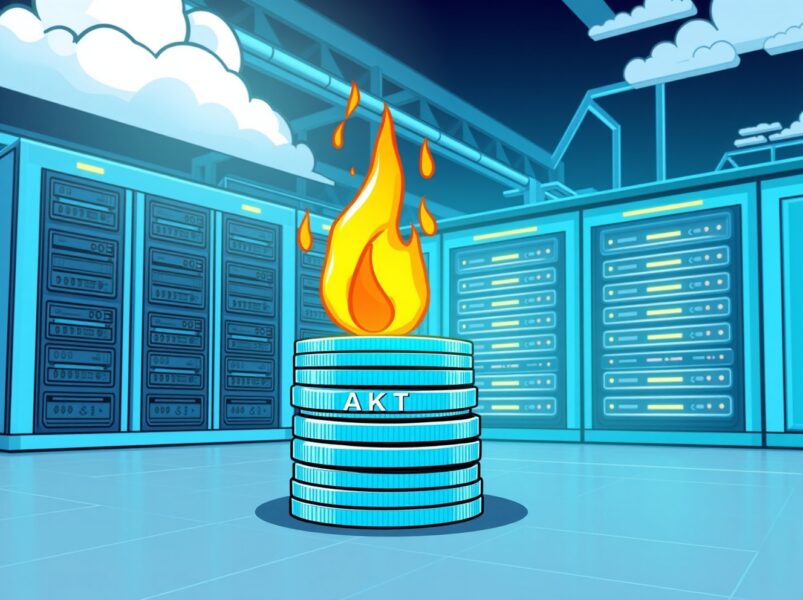
Akash Network’s Strategic Move: A Crucial Burn for AKT’s Future

Akash Network’s Strategic Move: A Crucial Burn for AKT’s Future

BitcoinWorld Akash Network’s Strategic Move: A Crucial Burn for AKT’s Future In the dynamic world of decentralized computing, exciting developments are constantly shaping the future. Today, all eyes are on Akash Network, the innovative supercloud project, as it proposes a significant change to its tokenomics. This move aims to strengthen the value of its native token, AKT, and further solidify its position in the competitive blockchain space. The community is buzzing about a newly submitted governance proposal that could introduce a game-changing Burn Mint Equilibrium (BME) model. What is the Burn Mint Equilibrium (BME) for Akash Network? The core of this proposal revolves around a concept called Burn Mint Equilibrium, or BME. Essentially, this model is designed to create a balance in the token’s circulating supply by systematically removing a portion of tokens from existence. For Akash Network, this means burning an amount of AKT that is equivalent to the U.S. dollar value of fees paid by network users. Fee Conversion: When users pay for cloud services on the Akash Network, these fees are typically collected in various cryptocurrencies or stablecoins. AKT Equivalence: The proposal suggests converting the U.S. dollar value of these collected fees into an equivalent amount of AKT. Token Burn: This calculated amount of AKT would then be permanently removed from circulation, or ‘burned’. This mechanism creates a direct link between network utility and token supply reduction. As more users utilize the decentralized supercloud, more AKT will be burned, potentially impacting the token’s scarcity and value. Why is This Proposal Crucial for AKT Holders? For anyone holding AKT, or considering investing in the Akash Network ecosystem, this proposal carries significant weight. Token burning mechanisms are often viewed as a positive development because they can lead to increased scarcity. When supply decreases while demand remains constant or grows, the price per unit tends to increase. Here are some key benefits: Increased Scarcity: Burning tokens reduces the total circulating supply of AKT. This makes each remaining token potentially more valuable over time. Demand-Supply Dynamics: The BME model directly ties the burning of AKT to network usage. Higher adoption of the Akash Network supercloud translates into more fees, and thus more AKT burned. Long-Term Value Proposition: By creating a deflationary pressure, the proposal aims to enhance AKT’s long-term value, making it a more attractive asset for investors and long-term holders. This strategic move demonstrates a commitment from the Akash Network community to optimize its tokenomics for sustainable growth and value appreciation. How Does BME Impact the Decentralized Supercloud Mission? Beyond token value, the BME proposal aligns perfectly with the broader mission of the Akash Network. As a decentralized supercloud, Akash provides a marketplace for cloud computing resources, allowing users to deploy applications faster, more efficiently, and at a lower cost than traditional providers. The BME model reinforces this utility. Consider these impacts: Network Health: A stronger AKT token can incentivize more validators and providers to secure and contribute resources to the network, improving its overall health and resilience. Ecosystem Growth: Enhanced token value can attract more developers and projects to build on the Akash Network, fostering a vibrant and diverse ecosystem. User Incentive: While users pay fees, the potential appreciation of AKT could indirectly benefit those who hold the token, creating a circular economy within the supercloud. This proposal is not just about burning tokens; it’s about building a more robust, self-sustaining, and economically sound decentralized cloud infrastructure for the future. What Are the Next Steps for the Akash Network Community? As a governance proposal, the BME model will now undergo a period of community discussion and voting. This is a crucial phase where AKT holders and network participants can voice their opinions, debate the merits, and ultimately decide on the future direction of the project. Transparency and community engagement are hallmarks of decentralized projects like Akash Network. Challenges and Considerations: Implementation Complexity: Ensuring the burning mechanism is technically sound and transparent will be vital. Community Consensus: Achieving broad agreement within the diverse Akash Network community is key for successful adoption. The outcome of this vote will significantly shape the tokenomics and economic model of the Akash Network, influencing its trajectory in the rapidly evolving decentralized cloud landscape. The proposal to introduce a Burn Mint Equilibrium model represents a bold and strategic step for Akash Network. By directly linking network usage to token scarcity, the project aims to create a more resilient and valuable AKT token, ultimately strengthening its position as a leading decentralized supercloud provider. This move underscores the project’s commitment to innovative tokenomics and sustainable growth, promising an exciting future for both users and investors in the Akash Network ecosystem. It’s a clear signal that Akash is actively working to enhance its value proposition and maintain its competitive edge in the decentralized future. Frequently Asked Questions (FAQs) 1. What is the main goal of the Burn Mint Equilibrium (BME) proposal for Akash Network? The primary goal is to adjust the circulating supply of AKT tokens by burning a portion of network fees, thereby creating deflationary pressure and potentially enhancing the token’s long-term value and scarcity. 2. How will the amount of AKT to be burned be determined? The proposal suggests burning an amount of AKT equivalent to the U.S. dollar value of fees paid by users on the Akash Network for cloud services. 3. What are the potential benefits for AKT token holders? Token holders could benefit from increased scarcity of AKT, which may lead to higher demand and appreciation in value over time, especially as network usage grows. 4. How does this proposal relate to the overall mission of Akash Network? The BME model reinforces the Akash Network‘s mission by creating a stronger, more economically robust ecosystem. A healthier token incentivizes network participants, fostering growth and stability for the decentralized supercloud. 5. What is the next step for this governance proposal? The proposal will undergo a period of community discussion and voting by AKT token holders. The community’s decision will determine if the BME model is implemented on the Akash Network. If you found this article insightful, consider sharing it with your network! Your support helps us bring more valuable insights into the world of decentralized technology. Stay informed and help spread the word about the exciting developments happening within Akash Network. To learn more about the latest crypto market trends, explore our article on key developments shaping decentralized cloud solutions price action. This post Akash Network’s Strategic Move: A Crucial Burn for AKT’s Future first appeared on BitcoinWorld.
Paylaş
Coinstats2025/09/22 21:35