Dogecoin (DOGE)has evolved from a meme-era experiment into one of the most widely recognized digital assets. As attention grew, exchanges expanded the ways users can access DOGE markets. Today, mostDogecoin (DOGE)has evolved from a meme-era experiment into one of the most widely recognized digital assets. As attention grew, exchanges expanded the ways users can access DOGE markets. Today, most
Belajar/Cryptocurrency Knowledge/Hot Concepts/Dogecoin (DOGE) Spot vs. Futures Trading: Which Suits Your Risk Profile?

Dogecoin (DOGE) Spot vs. Futures Trading: Which Suits Your Risk Profile?

Pemula
Sep 21, 2026MEXC
8 menit
Dogecoin (DOGE)has evolved from a meme-era experiment into one of the most widely recognized digital assets. As attention grew, exchanges expanded the ways users can access DOGE markets. Today, most DOGE trading activity occurs through two product types:spot tradingandperpetual futures.

This article doesnotrecommend a "better" option. Instead, it defines "risk profile" concretely:how much product complexity you can accurately understand and tolerate. Spot and futures may display similar charts and prices, but their underlying rules—and therefore their failure modes—differ significantly.


Key Takeaways

  • Risk profileis not merely "aggressive vs. conservative." In crypto, it often depends on whether you understand the rules that can alter outcomes, especially during volatility.
  • Spot tradinginvolves direct asset exchange. After a spot purchase, you typically hold DOGE in your exchange wallet balance.
  • Perpetual futuresare derivatives: you hold a contract that tracks DOGE price exposure, and the product includesmargin and liquidation mechanics.
  • Futures interfaces display additional contract fields (e.g.,funding-related informationand multiple price references), which is why they can behave differently from spot in fast-moving markets.
  • A useful self-test: if you cannot clearly explain a feature (e.g., "liquidation" or "funding"), you face a higher risk of misunderstanding the product—not just the market.

1. What "Risk Profile" Means Here (Not a Personality Test)


People often discuss risk as if it were purely emotional: "I'm conservative" or "I'm aggressive." In practice, product risk in crypto also depends on how the product is structured.

A practical definition for this article:
Your risk profile = (volatility tolerance) + (ability to manage product rules under stress).

The second component matters because DOGE can move rapidly. When markets move fast, outcomes are shaped not only by price direction but also by liquidity, execution conditions, and product-specific mechanics. Instead of asking "Which one is better?" consider a more grounded question:

"Which set of rules do I understand well enough to avoid obvious mistakes?"

2. Spot Trading Checklist 


Spot trading is typically the simplest way to gain DOGE price exposure because it closely resembles direct exchange: you trade one asset for another, and after execution, you generally hold DOGE.

However, "simple" does not mean "risk-free." Spot trading has its own sources of risk, primarily related to price movements and execution conditions. Below is aspot checklist. If you can't explain these points successfully, please feel free to pause to learn the mechanics before taking action.

2.1 Can you explain what you actually "own" after a spot trade?


In standard spot trading (without margin borrowing), once a buy order is filled, you typically hold DOGE in your exchange wallet balance. Ownership here refers to holding the asset balance rather than a derivatives contract.

2.2 Do you understand the difference between a market order and a limit order?


This is a core execution concept. Market and limit orders can behave differently when markets move quickly and order book depth changes.


2.3 Can you describe "execution risk" in one sentence?


Execution risk is not about "being right" on direction. It concerns whether your order fills at the expected price, especially during volatility. Even in spot markets, rapid moves and thin depth can create discrepancies between your intention and the actual outcome.
If you evaluate a spot trade solely as "buy vs. sell," you may be overlooking the mechanics layer.

2.4 Do you recognize that spot exposure is directional by default?


Spot holdings are directly affected by price movements: if DOGE price rises, the value of your holdings rises; if price falls, the value falls. Spot products do not inherently provide inverse exposure unless a separate structure is used. This is not a judgment about spot—simply a reminder that "I own DOGE" represents a specific exposure type.

2.5 Can you separate market volatility from operational decisions?


Many avoidable mistakes stem from reacting to volatility with rushed decisions. Spot users remain exposed to attention-driven bursts (common in meme assets), and the product's simplicity can sometimes foster overconfidence.


3. Perpetual Futures Checklist 


Perpetual futures represent a different product class. You are not buying DOGE directly; you are gaining exposure through a contract that tracks DOGE price movement. As a derivative, the product introduces contract-specific rules that do not exist in standard spot trading. Below is afutures checklist. If several items are unfamiliar, that signals meaningful risk: your exposure includes not only market risk but also product misunderstanding risk.

3.1 Can you explain what you hold in futures (a contract, not DOGE)?


In futures, you generally hold a derivatives position (contract exposure), not the underlying asset. This changes how the product behaves and which additional mechanics apply.

3.2 Do you understand what leverage means at the conceptual level?


Leverage is commonly described as exposure amplification relative to committed collateral/margin. It can accelerate the speed and magnitude of outcomes in both directions.


3.3 Can you define margin and explain why it matters?


Margin is the collateral required to maintain a derivatives position. Futures products typically use margin-based rules to determine whether a position can remain open. This is why futures outcomes can include forced closures that spot holdings do not experience.

3.4 Do you understand liquidation as a product mechanism (not a market opinion)?


Liquidation is not a prediction. It is a rule-based mechanism: if margin becomes insufficient under the product's requirements, a position may be forcibly closed.
This is one of the most critical differences between spot and futures, as it means a position can end due to product rules—not solely because you "changed your mind."


Many perpetual futures contracts display funding-related fields (rate and timing). The purpose is commonly described as aligning contract pricing with broader market pricing. The key point: funding is acontract mechanic, not a "chart indicator."

For platform-specific terminology references:

3.6 Do you understand that futures screens may show multiple reference prices?


Perpetual futures interfaces commonly display multiple prices or price references (e.g., last price vs. index/reference price vs. fair/mark price, depending on platform). These references exist because derivatives employ additional pricing and risk controls that spot trading typically does not require. If you treat "price" as a single number in futures without understanding the references, you may misinterpret what the interface is displaying.

3.7 Can you separate "directional exposure" from "outcome certainty"?


Futures contracts can be structured to provide exposure in different directions (often described as long vs. short). This tells the direction of exposure, not a guaranteed outcome.

3.8 Do you recognize how volatility and liquidity interact with margin rules?


DOGE can experience sharp moves and liquidity shifts. In futures markets, volatility and liquidity conditions can interact with margin mechanics, producing outcomes that appear "sudden" to users who expect futures to behave like accelerated spot trading.
This is not a claim about what will happen—it is a statement about how the product is structured.

4. The Most Common "Product Confusions": Why People Misjudge Risk


If spot and futures both involve "DOGE," why do users often experience them so differently? Usually, because they conflate product layers.

Confusion #1: "It's the same DOGE chart, so it's essentially the same risk."

Charts may look similar, but the product rules differ. Futures introduce margin-based mechanisms and contract fields that can alter outcomes under stress.

Confusion #2: "In futures, price is just price."

In futures interfaces, multiple price references may exist (index/reference/fair concepts). These references are part of derivatives risk logic, not "extra trading indicators."

Confusion #3: "If I understand DOGE, I automatically understand the product."

Knowing DOGE's origin, meme culture, or network basics does not automatically mean you understand derivatives mechanics. Product comprehension is a separate skill.

Confusion #4: "Risk is only about direction."

A significant portion of real-world losses (in any market) stems from mechanics misunderstanding: execution differences, liquidity gaps, and derivative rules. This is why the checklists above matter more than personality labels.

5. A Simple Decision Filter (Non-Prescriptive)


For a practical takeaway without turning this into a tutorial, use this filter:

  • If you are evaluatingspot, your core mechanics are:ownership, order types, and execution conditions.
  • If you are evaluatingperpetual futures, your core mechanics also include:margin, liquidation, funding-related information, and multiple price references.

This article does not prescribe what to choose. It clarifies what you need to understand to avoid confusing "market risk" with "product misunderstanding risk."


Conclusion


"Spot vs. futures" is not a debate about which is superior—it is a decision about which rules you are willing and able to operate under.

Spot trading is structurally closer to direct asset exchange and typically results in DOGE holdings after execution. Perpetual futures are derivatives that add a layer of contract mechanics, including margin and liquidation behavior, plus additional interface fields such as funding-related information and multiple price references.

For meme-driven assets like DOGE, volatility and attention shifts can be intense. The most reliable way to reduce mistakes is to separatemarket uncertaintyfromproduct mechanicsand ensure you understand the product rules before engaging with either market.

Regional notice:Market access and features are subject to regional availability and are not available in certain jurisdictions, including the United States.

FAQ


Is spot trading the same as owning DOGE directly?In standard spot trading, after an order fills, you typically hold DOGE in your exchange wallet balance. This differs from futures, where you hold contract exposure.

Why do futures feel more complex than spot?Perpetual futures typically incorporate margin and liquidation mechanics, plus contract fields such as funding-related information and multiple price references.

Do perpetual futures always include funding-related fields?Many perpetual futures products include funding-related mechanisms to help align contract pricing with broader market pricing. The exact display and terminology may vary by platform.

Can spot and futures react differently during fast moves?Yes. Even if both reference DOGE price movement, execution conditions and derivatives mechanics (such as margin and liquidation) can lead to different outcomes during volatile periods.


Disclaimer:This article is for educational purposes only and does not constitute financial advice. Cryptocurrency markets are volatile. Availability of products and services may vary by region.
Peluang Pasar
Logo Lagrange
Harga Lagrange(LA)
$0.07365
$0.07365$0.07365
-0.90%
USD
Grafik Harga Live Lagrange (LA)

Artikel Populer

Lihat Selengkapnya
Pesaing Oura: Samsung, Apple, dan Pasar Smart Ring

Pesaing Oura: Samsung, Apple, dan Pasar Smart Ring

Menurut prospektus IPO-nya, pesaing Oura terbagi dalam tiga kelompok: pembuat jam tangan pintar seperti Apple, Google, dan Samsung; perangkat wearable kebugaran seperti Garmin, Coros, dan Whoop; serta
Apakah Oura Menguntungkan? Pendapatan, Model Bisnis, dan Valuasi

Apakah Oura Menguntungkan? Pendapatan, Model Bisnis, dan Valuasi

Ya, Oura menguntungkan berdasarkan laba bersih. Prospektus IPO-nya menunjukkan laba bersih sebesar $60,8 juta dari pendapatan $1,21 miliar dalam sembilan bulan hingga 30 Juni 2026. Kerugian $924,3 jut
Review Bitget 2026: Skor 3,8 dari 5, Copy Trading Paling Lengkap, dan Tiga Tanggal Penting Keluarnya Bitget dari Jepang

Review Bitget 2026: Skor 3,8 dari 5, Copy Trading Paling Lengkap, dan Tiga Tanggal Penting Keluarnya Bitget dari Jepang

Per 25 September 2026, Bitget meraih skor 3,8 dari 5 pada penilaian enam dimensi kami: unggul di derivatif, mendapat skor sementara 3,5 untuk keamanan setelah insiden hot wallet senilai sekitar US$351
IPO Oura 2026: Tanggal, Harga, Valuasi, dan Cara Dagang OURA

IPO Oura 2026: Tanggal, Harga, Valuasi, dan Cara Dagang OURA

Oura, perusahaan di balik Oura Ring, diperkirakan akan menetapkan harga penawaran umum perdana (IPO) di Amerika Serikat pada pekan tanggal 28 September 2026 dan mencatatkan sahamnya di Nasdaq Global S

Kabar Kripto Terpopuler

Lihat Selengkapnya

Bitwise Shuts Down Dogecoin ETF: Mengapa DOGE Jatuh?

Bitwise Shuts Down Dogecoin ETF: Mengapa DOGE Jatuh?

Takeaways kunci Bitwise Investment Advisers secara resmi menyerahkan pengajuan likuidasi pada 10 September 2026, menetapkan 14 Oktober sebagai sesi perdagangan terakhir untuk Dogecoin ETF yang terdaft

Satu Musk Tweet, IPO $1,77T - Apa Artinya untuk Crypto

Satu Musk Tweet, IPO $1,77T - Apa Artinya untuk Crypto

Tweet samar Elon Musk baru saja menjadi viral dengan 240M pengikut menonton. Apa arti IPO SpaceX untuk DOGE, token AI, dan portofolio crypto Anda? Analisis mendalam di dalam. Ikhtisar Pada tahun 2026,

DOGE Spikes 11% - Tapi Uang Cerdas Pindah 6 Hari Sebelumnya

DOGE Spikes 11% - Tapi Uang Cerdas Pindah 6 Hari Sebelumnya

Ikhtisar Dogecoin (DOGE) menggelar reli intraday yang tajam pada 29 April 2026, melonjak lebih dari 11% dan merebut kembali level psikologis $0,10 untuk diperdagangkan dalam kisaran $0,107- $0,109. Ba

Harga DOGE Hari Ini - Apakah Breakout Nyata Masih Di Depan?

Harga DOGE Hari Ini - Apakah Breakout Nyata Masih Di Depan?

Ikhtisar Dogecoin (DOGE) telah membangun momentum dalam keheningan. Selama tujuh hari terakhir, harga DOGE telah naik sekitar 4,63%, dengan keuntungan 30 hari 7,78% - penggilingan naik stabil yang tel

Berita yang Sedang Tren

Lihat Selengkapnya
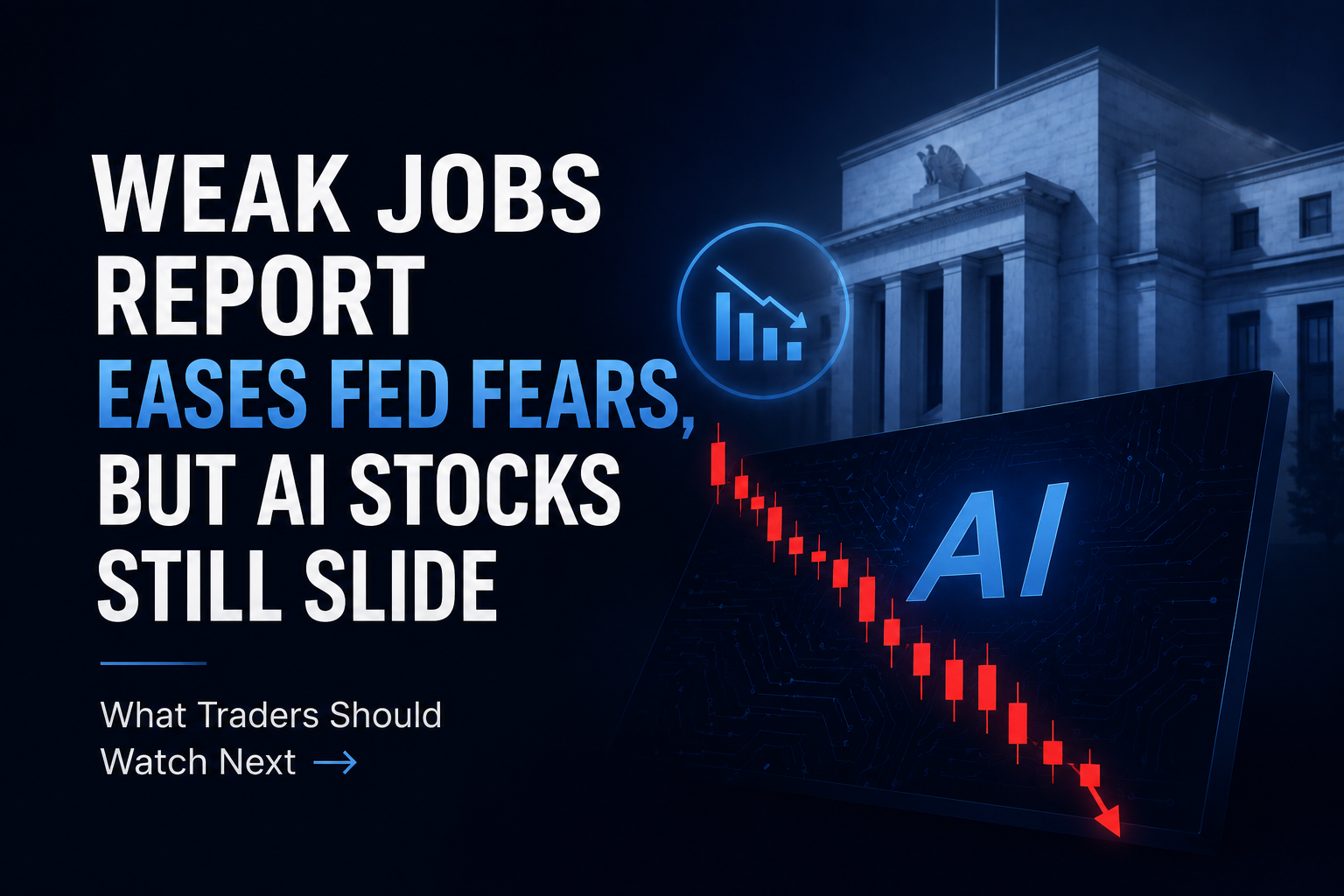
Laporan Pekerjaan yang Lemah Meredakan Kekhawatiran Fed, Tetapi Saham AI Tetap Turun: Apa yang Harus Diperhatikan Trader Selanjutnya

Laporan Pekerjaan yang Lemah Meredakan Kekhawatiran Fed, Tetapi Saham AI Tetap Turun: Apa yang Harus Diperhatikan Trader Selanjutnya

Laporan pekerjaan AS bulan Juni mengisyaratkan perlambatan ekonomi yang jelas, meleset dari ekspektasi dan menurunkan kekhawatiran kenaikan suku bunga Federal Reserve. Meskipun imbal hasil Treasury le

Indonesia Blokir Akses Polymarket setelah Diklasifikasikan sebagai Judi Online

Indonesia Blokir Akses Polymarket setelah Diklasifikasikan sebagai Judi Online

Indonesia memblokir akses ke Polymarket setelah Komdigi mengklasifikasikan kontrak prediksinya sebagai judi online dan menelusuri akun terkait.

Pendapatan DCI Indonesia Naik 33,2% pada Semester I 2026

Pendapatan DCI Indonesia Naik 33,2% pada Semester I 2026

Pendapatan DCI Indonesia naik 33,2% menjadi Rp1,77 triliun pada semester I 2026, dengan layanan kolokasi menyumbang 94,5% dari penjualan.

Pengawasan Kripto Indonesia Beralih ke OJK Setelah Penerapan Sistem CFX

Pengawasan Kripto Indonesia Beralih ke OJK Setelah Penerapan Sistem CFX

OJK mengambil alih pengawasan kripto Indonesia dari Bappebti pada Januari 2025, memperbarui kerangka perdagangan yang melibatkan sistem CFX.

Artikel Terkait

Lihat Selengkapnya
Apa itu Stablecoin? Panduan Pemula Lengkap untuk Mata Uang Kripto yang Stabil

Apa itu Stablecoin? Panduan Pemula Lengkap untuk Mata Uang Kripto yang Stabil

Apakah Anda tertarik pada stablecoin tetapi merasa dunia mata uang kripto membingungkan? Anda tidak sendirian. Mata uang digital bisa jadi rumit, terutama bagi mereka yang baru mengenal bidang ini. Pa
Apakah XRP Membakar Koin? Ya, tetapi Bukan karena Alasan yang Anda Kira

Apakah XRP Membakar Koin? Ya, tetapi Bukan karena Alasan yang Anda Kira

Jika Anda memegang XRP atau sedang mempertimbangkan untuk membelinya, Anda mungkin pernah melihat perdebatan tentang "pembakaran XRP" dan bertanya-tanya apa sebenarnya yang diributkan. Jawaban singkat
Apakah XRP Akan Naik? Jawaban Jujur yang Tidak Diberikan Siapa Pun

Apakah XRP Akan Naik? Jawaban Jujur yang Tidak Diberikan Siapa Pun

Cepat atau lambat, hampir setiap pemegang XRP mengetik pertanyaan yang sama di kolom pencarian: apakah XRP akan naik? Inilah masalah jujur dari pertanyaan itu — siapa pun yang menjawabnya dengan "ya"

Bisakah XRP Mencapai US$1.000? Perhitungannya Menjawab Tidak, Ini Alasannya

Bisakah XRP Mencapai US$1.000? Perhitungannya Menjawab Tidak, Ini Alasannya

Setiap reli pasar kripto selalu memunculkan kembali pertanyaan yang sama: bisakah XRP mencapai US$1.000? Ini adalah salah satu target harga yang paling banyak dicari di seluruh industri kripto, dan ja

Daftar di MEXC
Daftar & Dapatkan Bonus hingga 10,000 USDT
Apa DNA Wall Street Anda?
Apa DNA Wall Street Anda?Apa DNA Wall Street Anda?
6 orang. Setiap orang dapat bagian dari $30K NVDAX.

Gabung ke Komunitas MEXC

Dapatkan listing, acara, dan perkembangan terbaru secara real time langsung dari saluran Telegram resmi kami.

25 rb+ anggota