


Understanding Short-Term Trading in the OPEN Market
Short-term trading in the OPEN (OpenLedger) market involves buying and selling the token within brief timeframes to capitalize on price volatility. Unlike long-term investing, which focuses on holding assets for months or years, short-term trading seeks to generate profits from price fluctuations occurring within minutes, hours, or days. Traders typically engage in several timeframes when trading OpenLedger tokens:
- Intraday trading: Positions are opened and closed within a single day.
- Swing trading: Positions are held for several days to capture intermediate price moves.
- Scalping: Ultra-short-term trades executed in seconds or minutes.
OPEN (OpenLedger) is particularly well-suited for short-term trading due to its inherent price volatility, 24/7 market availability, and relatively lower market capitalization compared to traditional assets. These characteristics create numerous opportunities for traders to enter and exit OPEN positions at advantageous price points.
Key market conditions that create short-term opportunities in OpenLedger trading include:
- High volatility periods driven by news, project updates, or broader crypto market trends.
- Liquidity surges, which can lead to rapid price swings.
- Technical breakouts from established chart patterns.
Essential Technical Analysis Tools for OPEN Short-Term Trading
To analyze OPEN's short-term price movements, traders should focus on:
- Support and resistance levels: Identify where OpenLedger price historically reverses or consolidates.
- Trend channels and chart patterns: Recognize formations like triangles, flags, and head-and-shoulders that often precede significant moves.
- Candlestick formations: Patterns such as doji, engulfing, and hammer can signal reversals or continuations.
Critical technical indicators for timing entry and exit points in OpenLedger trading include:
- Relative Strength Index (RSI): Identifies overbought or oversold conditions.
- Moving Average Convergence Divergence (MACD): Detects momentum shifts.
- Bollinger Bands: Measures volatility and potential breakout zones.
Volume analysis is essential for confirming OpenLedger price movements. Price moves with high volume are more significant and reliable than those with low volume. Watch for volume spikes, which often precede breakouts, and be cautious of price movements lacking corresponding volume support.
Set up effective chart timeframes based on your OPEN trading strategy:
- Scalpers may use 1-minute or 5-minute charts.
- Intraday traders often prefer 15-minute or 1-hour charts.
- Swing traders may rely on 4-hour or daily charts.
Implementing Effective Entry and Exit Strategies for OPEN
Identifying high-probability entry points in OPEN trading involves:
- Locating key support and resistance levels in OpenLedger charts.
- Spotting trendline bounces or breakouts.
- Watching for price reactions at significant moving averages.
Set precise take-profit targets based on OpenLedger's historical price behavior and key technical levels. Effective approaches include:
- Targeting previous swing highs/lows.
- Using Fibonacci extension levels.
- Scaling out of positions at multiple price levels.
Proper stop-loss placement is crucial in volatile OPEN markets:
- Place stops below recent swing lows for long positions (or above for shorts).
- Use the Average True Range (ATR) to set stops based on current OpenLedger volatility.
- Consider trailing stops to protect profits as trades move favorably.
Always evaluate the risk-reward ratio before entering a trade. A minimum ratio of 2:1 (potential reward at least twice the risk) is recommended for consistent profitability in OPEN trading.
Risk Management Essentials for Short-Term OPEN Trading
Effective risk management in OpenLedger trading includes:
- Position sizing: Base your trade size on account size, OPEN's volatility, and distance to your stop loss.
- Percentage-based risk limits: Risk no more than 1-2% of trading capital on any single OpenLedger trade, reducing to 0.5-1% for highly volatile assets.
- Daily loss limits: Set a maximum daily loss (e.g., 5-10% of account) and stop trading if reached to prevent emotional decisions.
- Emotional discipline: Manage emotions during rapid OPEN price movements by sticking to your plan and avoiding impulsive trades.
Diversification remains important, even when focusing on OpenLedger. Consider trading multiple uncorrelated cryptocurrency pairs, balancing short-term trading with longer-term positions, and maintaining some capital in stable assets as a hedge.
Practical Tips for Executing Short-Term OPEN Trades on MEXC
MEXC provides advanced tools and features to enhance your OpenLedger trading experience:
- Advanced order types: Use limit orders (specify exact price), OCO orders (combine limit with stop limit), and stop-limit orders (automate risk management) for precise execution.
- Customizable trading interface: Monitor multiple timeframes simultaneously by configuring your workspace with charts showing different periods, helping you identify both immediate opportunities and broader market context for OPEN.
- Price alerts and notifications: Set up alerts for key OpenLedger price levels or technical indicator triggers to stay informed about potential OPEN opportunities.
- Optimal fee structures: Reduce trading costs by applying for VIP membership tiers with lower fees, using limit orders instead of market orders, and holding MX tokens for trading fee discounts.
For high-frequency traders of OpenLedger tokens, these cost reductions can significantly impact overall profitability.
Conclusion
Successful short-term trading of OPEN combines technical analysis, risk management, effective execution, and emotional discipline. While aggressive tactics may produce occasional spectacular gains, consistent profitability in OpenLedger trading comes from methodical trading that balances opportunity with capital preservation. To maximize your success trading OPEN, develop a personalized approach aligned with your goals and risk tolerance. Stay informed about market conditions and price movements by visiting MEXC's comprehensive OPEN Price page, which provides real-time data, technical analysis tools, and market insights to support your OpenLedger trading decisions. With the right strategy and MEXC's robust trading platform, you can effectively capture the short-term opportunities that OPEN's volatility presents in today's dynamic cryptocurrency market.
Deskripsi: Crypto Pulse didukung oleh AI dan sumber publik untuk menghadirkan tren token terpopuler secara instan kepada Anda. Untuk mendapatkan wawasan ahli dan analisis mendalam, kunjungi MEXC Learn.
Artikel-artikel yang dibagikan di halaman ini bersumber dari platform publik dan disediakan hanya sebagai informasi. Artikel-artikel tersebut belum tentu mewakili pandangan MEXC. Seluruh hak cipta tetap dimiliki oleh penulis aslinya. Jika Anda meyakini bahwa ada konten yang melanggar hak pihak ketiga, silakan hubungi [email protected] agar konten tersebut segera dihapus.
MEXC tidak menjamin keakuratan, kelengkapan, atau keaktualan konten apa pun dan tidak bertanggung jawab atas tindakan apa pun yang dilakukan berdasarkan informasi yang diberikan. Konten tersebut bukan merupakan saran keuangan, hukum, atau profesional lainnya, juga tidak boleh ditafsirkan sebagai rekomendasi atau dukungan oleh MEXC.
Info OpenLedger Terkini
Lihat Selengkapnya
Jam Berapa Rapat FOMC Hari Ini?

ETF Kripto Melonjak saat Bitcoin, Ethereum, dan Solana Melihat Arus Masuk Besar
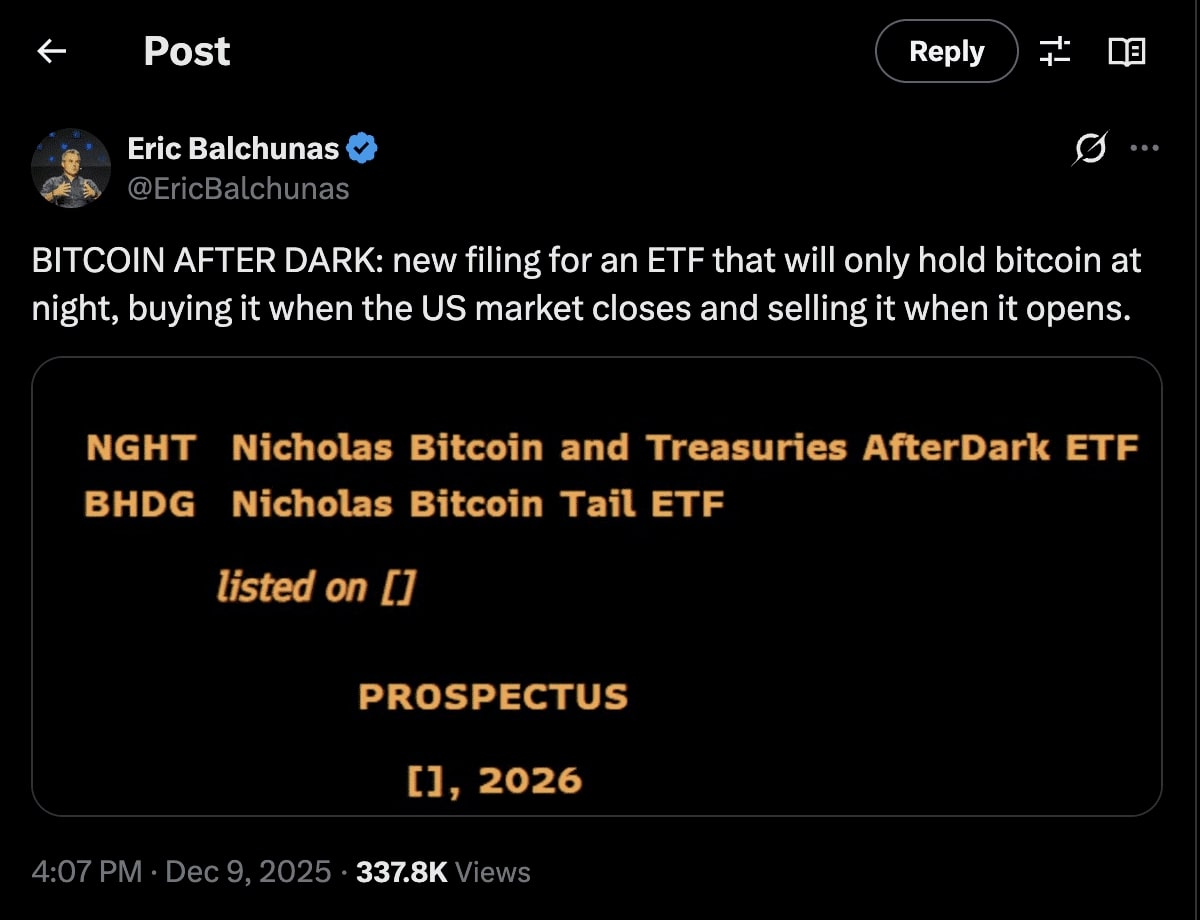
Pengajuan ETF Bitcoin 'After-Dark' Menargetkan Keuntungan Semalam saat Penerbit Mengejar Alpha Baru
POPULER
Mata uang kripto yang sedang tren saat ini dan menarik perhatian pasar yang signifikan
Harga Kripto
Mata uang kripto dengan volume trading tertinggi
Baru Ditambahkan
Mata uang kripto yang baru saja masuk listing dan tersedia untuk trading