The cryptocurrency market is highly volatile and fast-paced. Futures trading, as an efficient and flexible derivative tool, is increasingly favored by users. This article addresses the 10 most commonThe cryptocurrency market is highly volatile and fast-paced. Futures trading, as an efficient and flexible derivative tool, is increasingly favored by users. This article addresses the 10 most common
Belajar/Trading Guide/Futures/Futures FAQ: 10 Questions to Kickstart Crypto Futures Trading

Futures FAQ: 10 Questions to Kickstart Crypto Futures Trading

Sep 21, 2026MEXC
7 menit

The cryptocurrency market is highly volatile and fast-paced. Futures trading, as an efficient and flexible derivative tool, is increasingly favored by users. This article addresses the 10 most common questions about futures trading, covering trading logic, operational tips, fee structures, and risk mechanisms. Whether you are a beginner or an advanced trader, you will find clear answers and practical advice here.

1. What is cryptocurrency futures trading? Who should do it?


Futures trading refers to derivative trading based on the price fluctuations of crypto assets. Users do not need to actually hold the tokens but trade "contracts" that represent a bet on the future market price direction to go long or short and profit accordingly.

Futures trading is ideal for:

  • Investors with some market insight who want to profit from short-term price movements
  • Those who want to use limited capital with high leverage to improve capital efficiency
  • Users who want to profit even during downtrends

Example: User A predicts BTC will rise in the short term. When the price is 60,000 USDT, they open a long position with 10x leverage, requiring only 6,000 USDT margin to control a 60,000 USDT position. When BTC rises to 63,000 USDT, they close the position and net a 3,000 USDT profit (a 50% return).

After understanding the basic logic of Futures trading, let's look at how it differs from Spot trading to help you choose the right method.

2. What are the differences between futures and spot trading?


The biggest difference between futures and spot trading is whether you actually own the underlying asset. In spot trading, you buy and hold the actual tokens. In futures trading, you only trade price movements without owning the tokens.

Other differences include profit logic, operation methods, and risk characteristics:

Aspect
Futures Trading
Spot Trading
Ownership
No, only trade contract prices
Yes, hold actual assets
Profit Direction
Can go long or short
Profit only when price rises
Leverage
Supports high leverage
Generally, no leverage
Suitable For
Short-term, arbitrage, hedging
Long-term holding, dollar-cost averaging

Example: A user believes ETH priced at 3,500 USDT will fall and opens a short futures position. When ETH drops to 3,000 USDT, they close the position and earn 500 USDT. A spot trader can only hold and wait for a price increase.

Now that we understand the nature of trading, next, we look at the cost structure and fees in futures trading.

3. What are MEXC's Futures fees? How can traders reduce costs?


On MEXC, users pay different fees based on order type:

  • Maker (limit order): When placing an order on the order book without immediate execution, 0% fees are charged.
  • Taker (market order): When an order is executed immediately, it incurs a 0.02% fee.

Example: User A buys BTC Futures worth 10,000 USDT using a market order and pays 2 USDT in fees. User B uses a limit order and pays zero fees. For high-frequency traders, choosing the right order type can significantly reduce costs.


With fees clarified, many users want to know about leverage strategies. Next, we'll explain leverage logic and how to choose leverage multiples.

4. How do traders choose leverage? What leverage does Futures trading support?


MEXC Futures platform offers adjustable leverage from low to high multiples. Users can flexibly set leverage based on asset type, market volatility, and personal risk tolerance. Beginners are advised to use 3x–10x leverage for better risk management.

Example: User A uses 100 USDT margin to open a 10x leveraged position, controlling a 1,000 USDT position. If the market rises 5%, he gains 50 USDT; if it falls 5%, he loses 50 USDT.

Leverage amplifies both profits and risks, so understanding proper operation is crucial. Next, we cover the step-by-step trading process.

5. How to open and close Futures positions on MEXC


Trade Futures on MEXC by following these steps:

1) Log in and go to the Futures page
2) Select a trading pair (e.g., ETH/USDT) and set leverage
3) Choose margin mode: isolated or cross
4) Select order type: Limit, Market, or Trigger
5) Enter quantity and click Open Long or Open Short to establish a position
6) When the target price is reached, click Close to finish the trade


Example: User A expects a short-term drop in BTC and opens a 10x leveraged short position using a market order in the BTCUSDT Futures pair. When BTC falls from 120,000 USDT to 110,000 USDT, they close the position and earn a 10% return on leveraged capital.


6. What order types are supported? How can traders use them strategically?


MEXC Futures supports various order types to help users achieve different trading strategies:

Order Type
Description
Best Use Case
Limit Order

Executes at a specified price
Control entry price, arbitrage
Market Order
Executes immediately at the current price
Quick entry or stop loss
Trigger Order
Triggers an order when price meets a condition
Breakout strategy
Trailing Stop

Adjusts order price dynamically with market
Maximize profit
Post Only
Only posts to order book (no taker execution)
Save fees, avoid slippage


Example: User A sets a trigger order to go long on BTC when it breaks above 120,000 USDT, with take-profit at 125,000 and stop-loss at 113,000. This creates an automated trade setup.

Now that order types are clear, let's look at one of the biggest profit influencers: the funding fee mechanism.

7. What is a funding fee and why is it charged?


To keep futures prices in sync with the spot market, a funding rate mechanism is used. This involves periodic payments between long and short position holders:

  • When the market is bullish, longs pay shorts.
  • When the market is bearish, shorts pay longs.
  • Payments are exchanged every 8 hours at 00:00, 08:00, and 16:00 (UTC).

Example: User A holds a long BTC position during a bullish trend. If the funding rate is 0.01%, and User A holds a position worth 20,000 USDT, they pay 2 USDT to short position holders. The fee is exchanged between users, not collected by the platform.

After funding rates, a common question is: Why does my realized profit differ from what's shown during the trade?

8. Why is there a difference between unrealized and realized PNL?


The "Unrealized PNL" (Profit and Loss) shown during trading is only an estimate, based on current market prices. It does not include:

  • Unrealized PNL does not include fees, slippage, or funding fees;
  • Your Realized PNL is calculated upon closing the position, after all costs are deducted.

Example: A user sees an unrealized profit of 120 USDT while holding a long position. After closing the trade, only 108 USDT is credited. The difference came from a 2 USDT fee and 10 USDT funding payment.

Once the profit calculation logic is clear, we can then look at how to manually calculate PNL to help manage position performance more effectively.

9. How can traders calculate Futures PNL? USDT-M vs Coin-M


Futures trading has two major types of settlement methods:

USDT-M (Futures settled in USDT) :

  • Long PNL = (Close Price – Entry Price) × Quantity × Size
  • Short PNL = (Entry Price – Close Price) × Quantity × Size

Coin-M (Futures settled in crypto: BTC, ETH, etc.):

  • Long PNL = (1 / Entry Price – 1 / Close Price) × Quantity × Size
  • Short PNL = (1 / Close Price – 1 / Entry Price) × Quantity × Size

Example: A user opens a long ETH position at 3,000 USDT, holding 2 contracts (each worth 1 ETH). If the closing price is 3,200 USDT: Profit = (3,200 – 3,000) × 2 = 400 USDT

Now that we understand PNL, let's look at one of the most critical risk elements: liquidation.

10. What is liquidation? How is the liquidation price calculated?


When the margin balance is insufficient to cover losses, the platform will triggerliquidation, automatically closing positions to prevent negative equity.

Trigger conditions: Margin Balance + Unrealized PnL ≤ Maintenance Margin

Calculations:

Long Positions: Liquidation Price = (Maintenance Margin – Margin Balance + Entry Price × Quantity × Size) / (Quantity × Size)
Short Positions: Liquidation Price = (Entry Price × Quantity × Size – Maintenance Margin + Margin Balance) / (Quantity × Size)

Example: A user opens a long BTC position at 60,000 USDT with 50x leverage. If BTC drops to 58,000 USDT and margin becomes insufficient, the position will be liquidated at the liquidation price to prevent further loss.

Want to learn more? Read: "What is Liquidation?" and "MEXC Futures Liquidation FAQ."

11. Summary: Strategy + Risk Management = Profitable Futures Trading


Futures trading is a high-risk, high-reward tool. It suits users who have market insight and prioritize risk management. By understanding leverage, mastering order logic, minimizing costs, and managing funding and liquidation risks, you can make volatility work in your favor.

MEXC offers flexible leverage, powerful order tools, and a transparent fee structure, making it an ideal platform for both beginners and experienced futures traders to learn and grow.

*BTN-Trade Futures Now&BTNURL=https://www.mexc.com/futures/BTC_USDT*

Recommended Reading:


Disclaimer: This information does not provide advice on investment, taxation, legal, financial, accounting, consultation, or any other related services, nor does it constitute advice to purchase, sell, or hold any assets. MEXC Learn provides information for reference purposes only and does not constitute investment advice. Please ensure you fully understand the risks involved and exercise caution when investing. MEXC is not responsible for users' investment decisions.
Peluang Pasar
Logo ELYSIA
Harga ELYSIA(EL)
$0.001752
$0.001752$0.001752
-1.12%
USD
Grafik Harga Live ELYSIA (EL)

Artikel Populer

Lihat Selengkapnya
Review Bitget 2026: Skor 3,8 dari 5, Copy Trading Paling Lengkap, dan Tiga Tanggal Penting Keluarnya Bitget dari Jepang

Review Bitget 2026: Skor 3,8 dari 5, Copy Trading Paling Lengkap, dan Tiga Tanggal Penting Keluarnya Bitget dari Jepang

Per 25 September 2026, Bitget meraih skor 3,8 dari 5 pada penilaian enam dimensi kami: unggul di derivatif, mendapat skor sementara 3,5 untuk keamanan setelah insiden hot wallet senilai sekitar US$351
IPO Oura 2026: Tanggal, Harga, Valuasi, dan Cara Dagang OURA

IPO Oura 2026: Tanggal, Harga, Valuasi, dan Cara Dagang OURA

Oura, perusahaan di balik Oura Ring, diperkirakan akan menetapkan harga penawaran umum perdana (IPO) di Amerika Serikat pada pekan tanggal 28 September 2026 dan mencatatkan sahamnya di Nasdaq Global S
Bisakah Trading Futures Saham di Akhir Pekan? Apa yang Terjadi pada Likuiditas Saat Wall Street Tutup

Bisakah Trading Futures Saham di Akhir Pekan? Apa yang Terjadi pada Likuiditas Saat Wall Street Tutup

Sabtu pagi, sebuah berita tentang perusahaan yang Anda ikuti baru saja muncul, dan order book Futures saham perusahaan tersebut di MEXC tetap terbuka. Jadi, ya, Anda bisa trading Futures saham di akhi
Seberapa Dalam Likuiditas MEXC? Kedalaman Order Book, Slippage, dan Data Laporan Pihak Ketiga

Seberapa Dalam Likuiditas MEXC? Kedalaman Order Book, Slippage, dan Data Laporan Pihak Ketiga

Likuiditas menentukan selisih antara harga saat Anda mengeklik untuk bertransaksi dan harga saat order Anda benar-benar tereksekusi. Halaman ini melacak likuiditas MEXC dengan cara yang sama seperti p

Berita yang Sedang Tren

Lihat Selengkapnya
OJK Atur Kompetensi Finfluencer dan Tanggung Jawab Promosi Kripto

OJK Atur Kompetensi Finfluencer dan Tanggung Jawab Promosi Kripto

OJK menerbitkan POJK 6/2026 yang mengatur kompetensi finfluencer serta tanggung jawab perusahaan atas promosi aset kripto di Indonesia.

Indonesia Blokir Akses Polymarket setelah Diklasifikasikan sebagai Judi Online

Indonesia Blokir Akses Polymarket setelah Diklasifikasikan sebagai Judi Online

Indonesia memblokir akses ke Polymarket setelah Komdigi mengklasifikasikan kontrak prediksinya sebagai judi online dan menelusuri akun terkait.

Pendapatan DCI Indonesia Naik 33,2% pada Semester I 2026

Pendapatan DCI Indonesia Naik 33,2% pada Semester I 2026

Pendapatan DCI Indonesia naik 33,2% menjadi Rp1,77 triliun pada semester I 2026, dengan layanan kolokasi menyumbang 94,5% dari penjualan.

Pengawasan Kripto Indonesia Beralih ke OJK Setelah Penerapan Sistem CFX

Pengawasan Kripto Indonesia Beralih ke OJK Setelah Penerapan Sistem CFX

OJK mengambil alih pengawasan kripto Indonesia dari Bappebti pada Januari 2025, memperbarui kerangka perdagangan yang melibatkan sistem CFX.

Artikel Terkait

Lihat Selengkapnya
Ambang Nol, Slippage Nol: Cara Berdagang Futures Saham AS di MEXC

Ambang Nol, Slippage Nol: Cara Berdagang Futures Saham AS di MEXC

Baru-baru ini, saham konsep AI melonjak drastis, dengan valuasi raksasa teknologi mencapai rekor tertinggi, sehingga pasar saham AS menjadi sorotan utama bagi investor global. Namun, sebagian besar pe
Mengurutkan Ulang Informasi Posisi untuk Pengalaman Perdagangan yang Lebih Lancar

Mengurutkan Ulang Informasi Posisi untuk Pengalaman Perdagangan yang Lebih Lancar

Dalam perdagangan Futures, posisi yang telah dibuka akan muncul dalam Posisi Terbuka. Daftar Posisi Terbuka mencakup Pasangan Perdagangan, Posisi, Harga Masuk Rata-Rata, Harga Wajar, Est. Harga Lik.,
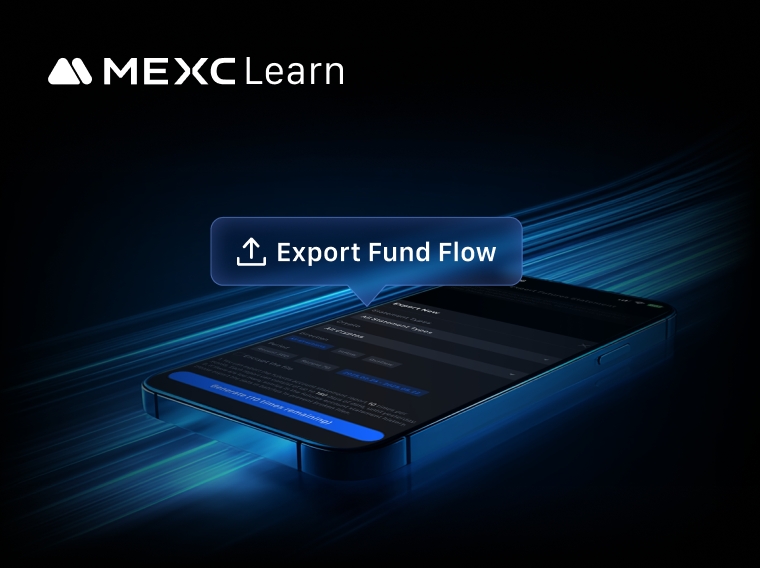
Panduan Pemula: Cara Mengekspor Data Riwayat Posisi Futures untuk Meningkatkan Kinerja Perdagangan

Panduan Pemula: Cara Mengekspor Data Riwayat Posisi Futures untuk Meningkatkan Kinerja Perdagangan

Dalam perdagangan futures, menguasai dan menganalisis data perdagangan lampau Anda adalah langkah pertama untuk menjadi pedagang yang lebih berpengalaman. Fitur ekspor data Riwayat Posisi Futures MEXC
Apa itu Margin Call? Panduan Singkat untuk Mekanisme Manajemen Risiko Utama dalam Perdagangan Futures

Apa itu Margin Call? Panduan Singkat untuk Mekanisme Manajemen Risiko Utama dalam Perdagangan Futures

Memahami mekanisme margin call merupakan pelajaran wajib bagi setiap pedagang futures, mulai dari pemula hingga ahli. Margin call bukan hanya merupakan persyaratan pasif yang ditetapkan oleh platform,


Daftar di MEXC
Daftar & Dapatkan Bonus hingga 10,000 USDT
Apa DNA Wall Street Anda?
Apa DNA Wall Street Anda?Apa DNA Wall Street Anda?
6 orang. Setiap orang dapat bagian dari $30K NVDAX.

Gabung ke Komunitas MEXC

Dapatkan listing, acara, dan perkembangan terbaru secara real time langsung dari saluran Telegram resmi kami.

25 rb+ anggota