1. What Is Liquidation (Margin Call)? When Does It Most Often Occur? Forced liquidation happens when an account's maintenance margin rate falls below the platform's requirement, prompting the trading1. What Is Liquidation (Margin Call)? When Does It Most Often Occur? Forced liquidation happens when an account's maintenance margin rate falls below the platform's requirement, prompting the trading
Belajar/Trading Guide/Futures/What Is Liquidation? A Complete Guide to Its Mechanism, Price Calculation, and Risk Management

What Is Liquidation? A Complete Guide to Its Mechanism, Price Calculation, and Risk Management

Sep 21, 2026MEXC
9 menit

1. What Is Liquidation (Margin Call)? When Does It Most Often Occur?


Forced liquidation happens when an account's maintenance margin rate falls below the platform's requirement, prompting the trading platform to forcibly close positions to prevent further losses.

In simple terms, when market prices fluctuate sharply and your account funds are insufficient to maintain your current positions, the system will automatically sell your long positions or buy back your short positions to protect platform funds and maintain market stability.

This situation is most common in cryptocurrency futures and leveraged trading, especially during high-volatility markets. For example, if asset prices suddenly drop (or spike against a short position) and your account balance falls below the required maintenance margin, the platform will automatically liquidate part or all of your positions according to preset rules to cover the margin gap.

Example: Suppose you buy Ether (ETH) with 10x leverage. If ETH price suddenly drops sharply, and your margin rate becomes insufficient, the system will automatically liquidate your position to prevent further losses.

To reduce the risk of unnecessary liquidations caused by low liquidity or price manipulation, MEXC uses a Fair Price mechanism. When calculating whether to trigger liquidation, the system references the fair price instead of extreme last-trade prices, effectively minimizing unnecessary liquidations.


2. How Is Liquidation Triggered?


In crypto Futures trading, the trigger conditions and calculations for liquidation depend on whether you use Isolated Margin or Cross Margin. Understanding these rules helps you evaluate risks and plan strategies in advance.

2.1 What Is Isolated Margin?


In Isolated Margin mode, each position's margin is calculated independently. Losses affect only that position and do not impact other positions or your overall account balance. This mode helps control risk for individual positions and is suitable for risk-averse traders or those managing multiple dispersed positions.

Isolated Margin Mode Pros and Cons:

  • Pros: Risk isolation, suitable for running multiple strategies simultaneously.
  • Cons: Lower margin utilization per position. No automatic redistribution of funds after liquidation.

2.1.1 Liquidation Price Calculation in Isolated Margin


Trigger condition: Position Margin + Unrealized PNL ≤ Maintenance Margin

Long position: Liquidation Price = (Maintenance Margin - Position Margin + Entry Price × Quantity × Size) / (Quantity × Size)

Short position: Liquidation Price = (Entry Price × Quantity × Size - Maintenance Margin + Position Margin) / (Quantity × Size)

Note: The formulas above do not include trading fees, so the actual liquidation price may vary slightly.

Example: You buy 1 ETH perpetual Futures contract at 4000 USDT with 10x leverage in isolated margin mode.

  • Initial position margin: 400 USDT (4000 / 10)
  • Maintenance margin rate: 0.5%
  • Maintenance margin: 4000 × 0.5% = 20 USDT

Liquidation Trigger Condition:
Liquidation occurs if: Position Margin + Unrealized PNL ≤ 20 USDT

If ETH drops to 3500 USDT, unrealized loss = (4000 − 3500) × 1 = 500 USDT

Total margin = 400 − 500 = −100 USDT < 20 USDT Liquidation triggers, and your 400 USDT margin is lost.

2.2 What Is Cross Margin?


In Cross Margin mode, all available account funds form a common margin pool for all positions. Losses from one position can be automatically covered by other positions' margins. This reduces the risk of single-position liquidation but may cause multiple positions to liquidate if the total margin is insufficient.

Cross Margin Mode Pros and Cons:

  • Pros:

Higher margin utilization: Pooled funds support multiple positions.
Avoids frequent liquidations: Losses in one position can draw from other positions to delay liquidation.

  • Cons:

Risk contagion: One position's loss can quickly consume account funds, triggering other liquidations.
Harder risk management: Individual position risks are less isolated.

2.2.1 Liquidation Price Calculation in Cross Margin


In Cross Margin mode, all of a user's available margin is used to support their positions. 

Example:

Suppose an account has 1,000 USDT and holds both BTC and ETH long positions in cross margin mode. If ETH suddenly drops sharply and incurs large losses, the margin from the BTC position will be automatically used to cover the ETH losses. If the total margin is still insufficient, both positions may be liquidated simultaneously.

2.3 Risks and Strategy Recommendations


From the formulas and examples above, we can see:

  • Isolated Margin offers risk isolation, making it suitable for single strategies or low-volatility markets.
  • Cross Margin provides higher capital efficiency, but risks are interconnected across positions, making it suitable for traders with sufficient funds and diversified strategies.
  • In high-risk situations, you can manually increase position margin or reduce leverage to widen the gap between the liquidation price and the entry price, reducing the likelihood of forced liquidation.

Aspect
Isolated Margin
Cross Margin
Margin Calculation
Each position is calculated independently
All positions share margin
Risk Impact
Risk limited to a single position
Risks are linked across multiple positions
Suitable For
Risk-averse, single-strategy traders
Capital-efficient, diversified-strategy traders
Liquidation Risk
Only the position at risk is liquidated
Liquidation may affect all positions

3. Why Liquidation Is Essential


In high-leverage and high-volatility crypto derivatives markets, liquidation is a core risk management mechanism that protects both platform funds and market stability. It serves as an essential tool to prevent risk from spilling over from a single account and directly impacts traders' profits and losses. Understanding why liquidation is essential helps investors develop more robust position management and risk control strategies.

How Liquidation Protects the Market

  • Prevent uncontrolled losses: When margin is insufficient, the system automatically closes positions to prevent losses from exceeding the account's capacity, protecting both the trader and the platform.
  • Stabilize market order: Timely liquidation of high-risk positions reduces the chain reaction caused by individual account liquidations, mitigating systemic risk.
  • Enhance risk awareness: Liquidation rules encourage traders to continuously monitor leverage and margin levels, avoiding excessive risk-taking.

What Traders Should Consider

  • Missed rebound opportunities: After short-term extreme volatility, even if prices quickly recover, liquidated traders cannot participate in subsequent rebounds.
  • Exacerbated losses: In extreme market conditions, insufficient liquidity may cause slippage, resulting in losses exceeding expectations.
  • Impact on trading confidence: Frequent liquidations can disrupt trading plans, weakening execution and psychological stability.

While liquidation serves as a necessary market mechanism for platform stability, traders bear the cost when positions are forcibly closed. The key to successful trading lies in proactive risk management—controlling leverage and maintaining sufficient margin to avoid liquidation altogether.

4. Liquidation Trigger Logic and Handling Process


When liquidation is triggered, the system executes it in the following order: first the system cancels orders, then matching between long and short positions, followed by laddered liquidation, and finally resulting in bankruptcy takeover. This approach allows positions to be gradually liquidated according to the user's risk limits, preventing all positions from being liquidated at once and controlling user risk.

4.1 Cancel Orders: In Cross Margin mode, all current open orders in the account will be canceled. In Isolated Margin mode, if auto-margin addition is enabled, all open orders for the current Futures will be canceled. After canceling orders, if the maintenance margin rate is still ≥ 100%, the system proceeds to the next step.

4.2 Self-Matching Between Long and Short Positions: For Cross Margin accounts with both long and short positions, the system will reduce positions by matching longs and shorts internally. After this step, if the maintenance margin rate remains ≥ 100%, the system moves to the next step.

4.3 Laddered Liquidation: If the user's position is already at the lowest risk tier, the system moves directly to the next step. If the position's risk tier is higher than the lowest, a step-down process is applied: part of the position in the current tier is taken over by the liquidation engine at the bankruptcy price, lowering the risk tier. The margin rate is then recalculated using the new maintenance margin rate. If the liquidation conditions are still met, the process repeats until the position reaches the lowest tier.

4.4 Bankruptcy Takeover: When the position is at the lowest tier but the margin rate is still ≥ 100%, the remaining position is taken over by the liquidation engine at the bankruptcy price. Note: This takeover bypasses the matching system, so the bankruptcy price will not appear in the order book or on candlestick charts.

5. What Happens After Liquidation Engine Takes Over


When a user's position is taken over by the liquidation engine at the bankruptcy price: If the position can be executed on the market at a price better than the bankruptcy price, the remaining margin will be added to the insurance fund. If the position cannot be executed above the bankruptcy price, any deficit (negative balance) will be covered by the insurance fund.

If the insurance fund is insufficient to cover the deficit, the remaining portion of the liquidated position will be taken over by the automatic position reduction system.

6. How to Avoid Liquidation


6.1 Add Margin or Reduce Leverage


You can reduce the risk of liquidation by adding more margin to your position or lowering your opening leverage, which moves the liquidation price further away from the current market price.

6.2 Set Stop-Loss Orders


Setting a stop-loss price is an effective way to prevent liquidation. It helps limit potential losses and protects your orders from being forcibly closed.

Note: Stop-loss or take-profit orders may fail to execute due to rapid market fluctuations or insufficient position volume available for closing. If triggered successfully, the order will be filled at the market price, which may differ from the set price due to market volatility.

6.3 Enable Liquidation Alert Notifications


In the Futures trading preferences, you can turn on liquidation alerts and set a margin rate threshold. The MEXC platform will notify you when a position's margin rate reaches or exceeds your set value, with a maximum of one alert per position every 30 minutes.


7. Conclusion


Liquidation is a key risk control mechanism in cryptocurrency futures trading, directly affecting investors' capital security and trading outcomes. A thorough understanding of the differences between Isolated Margin and Cross Margin, as well as the calculation methods for liquidation triggers, can help traders allocate margin wisely, adjust leverage strategically, and effectively reduce the risk of liquidation.

During periods of high market volatility, actively using stop-loss strategies, promptly adding margin, and enabling liquidation alert notifications are essential tools for protecting your funds. Choosing a position mode that matches your risk tolerance and combining it with comprehensive risk management strategies allows you to operate steadily in a volatile market and maximize potential returns.

Therefore, when engaging in Futures trading, it is recommended to manage risk first, then pursue profit, supported by careful market analysis and scientific risk management, to safeguard your funds and achieve long-term, stable investment returns.


Recommended Reading:


Currently, MEXC offers a 0-fee Trader's Fest. By participating, users can significantly reduce trading costs, allowing them to save more, trade more, and earn more. On MEXC, you can not only enjoy low-cost trading through this event but also stay in tune with market trends, seize fleeting investment opportunities, and embark on a journey to grow your wealth.

Disclaimer: This information does not provide advice on investment, taxation, legal, financial, accounting, consultation, or any other related services, nor does it constitute advice to purchase, sell, or hold any assets. MEXC Learn provides information for reference purposes only and does not constitute investment advice. Please ensure you fully understand the risks involved and exercise caution when investing. MEXC is not responsible for users' investment decisions.
Peluang Pasar
Logo Lagrange
Harga Lagrange(LA)
$0.07258
$0.07258$0.07258
-1.83%
USD
Grafik Harga Live Lagrange (LA)

Artikel Populer

Lihat Selengkapnya
Review Bitget 2026: Skor 3,8 dari 5, Copy Trading Paling Lengkap, dan Tiga Tanggal Penting Keluarnya Bitget dari Jepang

Review Bitget 2026: Skor 3,8 dari 5, Copy Trading Paling Lengkap, dan Tiga Tanggal Penting Keluarnya Bitget dari Jepang

Per 25 September 2026, Bitget meraih skor 3,8 dari 5 pada penilaian enam dimensi kami: unggul di derivatif, mendapat skor sementara 3,5 untuk keamanan setelah insiden hot wallet senilai sekitar US$351
IPO Oura 2026: Tanggal, Harga, Valuasi, dan Cara Dagang OURA

IPO Oura 2026: Tanggal, Harga, Valuasi, dan Cara Dagang OURA

Oura, perusahaan di balik Oura Ring, diperkirakan akan menetapkan harga penawaran umum perdana (IPO) di Amerika Serikat pada pekan tanggal 28 September 2026 dan mencatatkan sahamnya di Nasdaq Global S

Bisakah Trading Futures Saham di Akhir Pekan? Apa yang Terjadi pada Likuiditas Saat Wall Street Tutup

Bisakah Trading Futures Saham di Akhir Pekan? Apa yang Terjadi pada Likuiditas Saat Wall Street Tutup

Sabtu pagi, sebuah berita tentang perusahaan yang Anda ikuti baru saja muncul, dan order book Futures saham perusahaan tersebut di MEXC tetap terbuka. Jadi, ya, Anda bisa trading Futures saham di akhi

Seberapa Dalam Likuiditas MEXC? Kedalaman Order Book, Slippage, dan Data Laporan Pihak Ketiga

Seberapa Dalam Likuiditas MEXC? Kedalaman Order Book, Slippage, dan Data Laporan Pihak Ketiga

Likuiditas menentukan selisih antara harga saat Anda mengeklik untuk bertransaksi dan harga saat order Anda benar-benar tereksekusi. Halaman ini melacak likuiditas MEXC dengan cara yang sama seperti p

Kabar Kripto Terpopuler

Lihat Selengkapnya

Supermicro Mulai Mengirim Nvidia Vera Rubin NVL72: Apa Artinya bagi AI Infrastructure?

Supermicro Mulai Mengirim Nvidia Vera Rubin NVL72: Apa Artinya bagi AI Infrastructure?

Ringkasan: Super Micro Computer (NASDAQ: SMCI) mengatakan pada 23 September 2026 bahwa perusahaan kini mulai mengirim Nvidia Vera Rubin NVL72 racks dengan direct liquid cooling serta deployment servic

Mengapa Saham Viking Therapeutics Melonjak? Hasil Penurunan Berat Badan VK2735 Dijelaskan

Mengapa Saham Viking Therapeutics Melonjak? Hasil Penurunan Berat Badan VK2735 Dijelaskan

Saham Viking Therapeutics (NASDAQ: VKTX) melonjak pada Selasa, 22 September 2026, setelah perusahaan melaporkan topline results dari studi maintenance VK2735, obat obesitas eksperimental miliknya. Pas

Mengapa Stok Sandisk Melonjak Setelah S & P 100 Inklusi: Penyimpanan AI & Arus Indeks

Mengapa Stok Sandisk Melonjak Setelah S & P 100 Inklusi: Penyimpanan AI & Arus Indeks

Ikhtisar Pasar ekuitas global dan rantai pasokan semikonduktor mengalami penetapan harga valuasi yang nyata sebagai mekanika inklusi indeks bersinggungan dengan permintaan perangkat keras transformati

CoinEx Turun: Apa yang Terjadi dengan CoinEx Token (CET)? Panduan Pembelian Kembali & Penarikan

CoinEx Turun: Apa yang Terjadi dengan CoinEx Token (CET)? Panduan Pembelian Kembali & Penarikan

Ikhtisar Kebangkrutan pertukaran terpusat dan risiko solvabilitas counterparty mewakili titik fokus abadi bagi peserta pasar aset digital global. Token platform pertukaran, secara struktural terkait d

Berita yang Sedang Tren

Lihat Selengkapnya
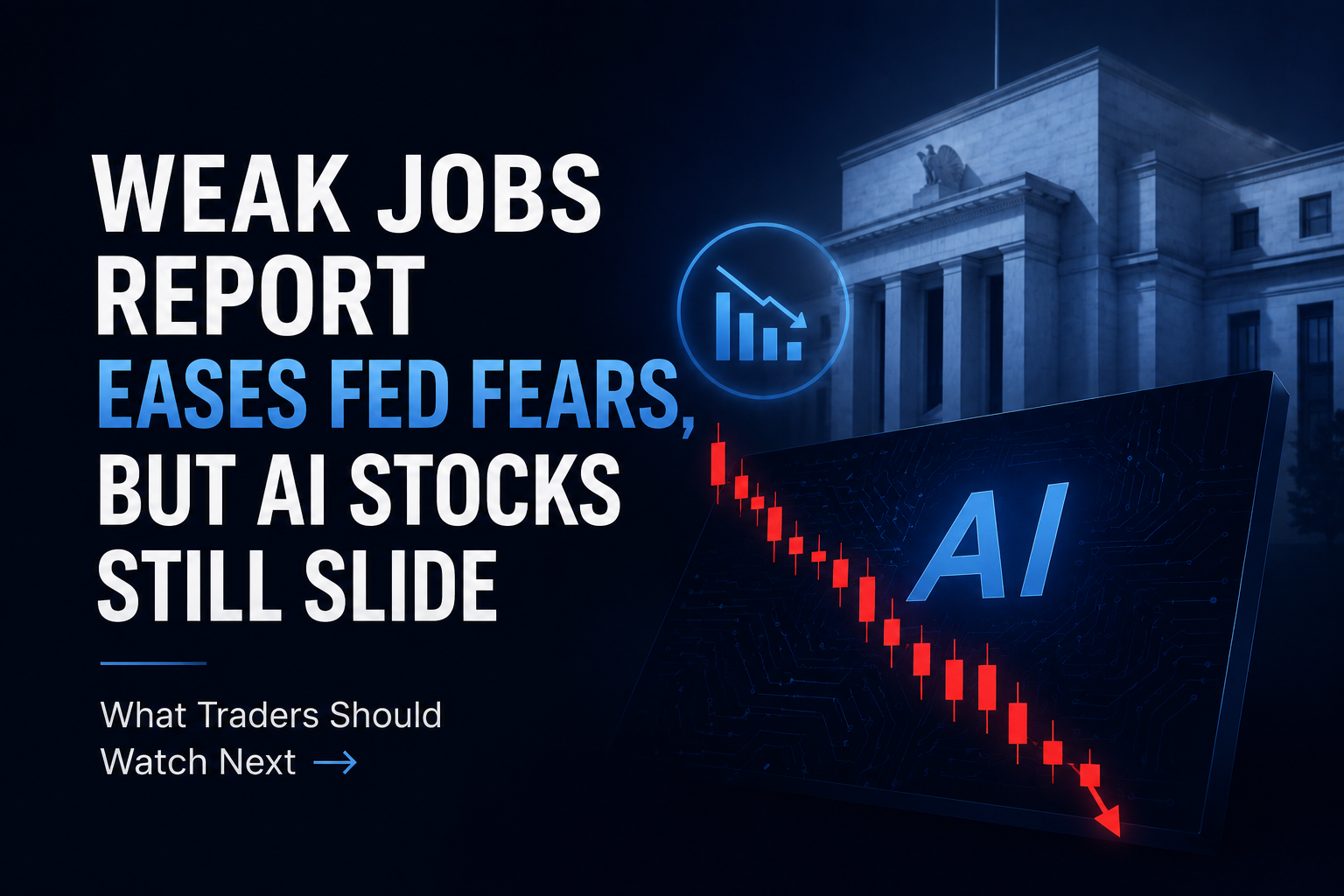
Laporan Pekerjaan yang Lemah Meredakan Kekhawatiran Fed, Tetapi Saham AI Tetap Turun: Apa yang Harus Diperhatikan Trader Selanjutnya

Laporan Pekerjaan yang Lemah Meredakan Kekhawatiran Fed, Tetapi Saham AI Tetap Turun: Apa yang Harus Diperhatikan Trader Selanjutnya

Laporan pekerjaan AS bulan Juni mengisyaratkan perlambatan ekonomi yang jelas, meleset dari ekspektasi dan menurunkan kekhawatiran kenaikan suku bunga Federal Reserve. Meskipun imbal hasil Treasury le

Indonesia Blokir Akses Polymarket setelah Diklasifikasikan sebagai Judi Online

Indonesia Blokir Akses Polymarket setelah Diklasifikasikan sebagai Judi Online

Indonesia memblokir akses ke Polymarket setelah Komdigi mengklasifikasikan kontrak prediksinya sebagai judi online dan menelusuri akun terkait.

Pendapatan DCI Indonesia Naik 33,2% pada Semester I 2026

Pendapatan DCI Indonesia Naik 33,2% pada Semester I 2026

Pendapatan DCI Indonesia naik 33,2% menjadi Rp1,77 triliun pada semester I 2026, dengan layanan kolokasi menyumbang 94,5% dari penjualan.

Pengawasan Kripto Indonesia Beralih ke OJK Setelah Penerapan Sistem CFX

Pengawasan Kripto Indonesia Beralih ke OJK Setelah Penerapan Sistem CFX

OJK mengambil alih pengawasan kripto Indonesia dari Bappebti pada Januari 2025, memperbarui kerangka perdagangan yang melibatkan sistem CFX.

Artikel Terkait

Lihat Selengkapnya
Ambang Nol, Slippage Nol: Cara Berdagang Futures Saham AS di MEXC

Ambang Nol, Slippage Nol: Cara Berdagang Futures Saham AS di MEXC

Baru-baru ini, saham konsep AI melonjak drastis, dengan valuasi raksasa teknologi mencapai rekor tertinggi, sehingga pasar saham AS menjadi sorotan utama bagi investor global. Namun, sebagian besar pe
Mengurutkan Ulang Informasi Posisi untuk Pengalaman Perdagangan yang Lebih Lancar

Mengurutkan Ulang Informasi Posisi untuk Pengalaman Perdagangan yang Lebih Lancar

Dalam perdagangan Futures, posisi yang telah dibuka akan muncul dalam Posisi Terbuka. Daftar Posisi Terbuka mencakup Pasangan Perdagangan, Posisi, Harga Masuk Rata-Rata, Harga Wajar, Est. Harga Lik.,
Panduan Pemula: Cara Mengekspor Data Riwayat Posisi Futures untuk Meningkatkan Kinerja Perdagangan

Panduan Pemula: Cara Mengekspor Data Riwayat Posisi Futures untuk Meningkatkan Kinerja Perdagangan

Dalam perdagangan futures, menguasai dan menganalisis data perdagangan lampau Anda adalah langkah pertama untuk menjadi pedagang yang lebih berpengalaman. Fitur ekspor data Riwayat Posisi Futures MEXC
Apa itu Margin Call? Panduan Singkat untuk Mekanisme Manajemen Risiko Utama dalam Perdagangan Futures

Apa itu Margin Call? Panduan Singkat untuk Mekanisme Manajemen Risiko Utama dalam Perdagangan Futures

Memahami mekanisme margin call merupakan pelajaran wajib bagi setiap pedagang futures, mulai dari pemula hingga ahli. Margin call bukan hanya merupakan persyaratan pasif yang ditetapkan oleh platform,


Daftar di MEXC
Daftar & Dapatkan Bonus hingga 10,000 USDT
Apa DNA Wall Street Anda?
Apa DNA Wall Street Anda?Apa DNA Wall Street Anda?
6 orang. Setiap orang dapat bagian dari $30K NVDAX.

Gabung ke Komunitas MEXC

Dapatkan listing, acara, dan perkembangan terbaru secara real time langsung dari saluran Telegram resmi kami.

25 rb+ anggota